


Journaling Techniques for Emotional Well-Being That Can Backfire
Written with AI assistance under Reflective Journaling Companion's editorial guidelines. Editorial guidelines
While journaling can support emotional well-being, certain techniques risk backfiring. The article warns that shallow practices like gratitude lists and affirmations may leave struggling individuals feeling overlooked or defective. Effective journaling involves raw, unfiltered writing rather than surface-level positivity approaches that dominate self-help culture.
Think journaling is all about pretty notebooks, gratitude lists, and empty slogans about “manifesting good vibes”? Think again. The truth about journaling techniques for emotional well-being is far grittier, more subversive, and—despite what the self-help industrial complex wants you to believe—infinitely more powerful. In the age of endless notifications and algorithmic dopamine hits, most people are drowning in emotional static, desperately searching for real clarity. But scratch beneath the surface and you’ll find that the act of writing—raw, unfiltered, sometimes ugly—has been rewriting minds and rebuilding lives long before therapy apps and motivational influencers set up shop. This is not another recycled listicle. You’re about to discover the real science, the hidden dangers, and the radical breakthroughs of therapeutic writing. By the time you finish reading, your understanding of mental health journaling will be shattered and rebuilt from the ground up. Ready to flip the script?
Why journaling for emotional well-being is more subversive than you think
The emotional epidemic: Why we’re desperate for answers
The modern world is a pressure cooker of emotional overload. According to recent statistics, stress and anxiety rates have hit historic highs, with over 70% of adults globally reporting frequent emotional distress as of 2025 (Gitnux, 2025). Work deadlines blur into personal obligations, and our feeds are flooded with “hustle” culture masquerading as self-care. The result? We’re more connected than ever, yet more isolated by our own spiraling thoughts.

Despite the proliferation of meditation apps and positivity podcasts, there’s a love-hate relationship with self-help culture. Many people chase quick fixes—affirmation decks, vision boards, five-minute hacks—while quietly resenting how little lasting change they deliver. The “good vibes only” mantra, plastered everywhere from Instagram to HR posters, often leaves those struggling with real emotional pain feeling unseen or, worse, defective.
“Journaling isn’t a magic bullet, but it’s the closest thing most people have to an emotional reboot.” — Ryan, clinical social worker
So here’s the brutal truth: most of what you’ve heard about journaling is watered-down myth. What if we’ve been looking at journaling all wrong?
From ancient secrets to modern rebellion
Long before “bullet journaling” was a hashtag, the act of recording thoughts and feelings was a survival tool for everyone from samurai to Victorian debutantes. In feudal Japan, warriors documented their fears and victories to steel their nerves before battle. In 19th-century England, diary-keeping was a subversive act of self-definition, often conducted in secret. Today, the digital era has transformed journaling from locked diaries to sprawling blogs and confessional tweets—less privacy, more performance.
| Era | Culture/Group | Purpose of Journaling | Notable Features |
|---|---|---|---|
| Feudal Japan | Samurai | Emotional regulation before battle | Poetic reflection, discipline |
| Victorian England | Aristocrats, women | Secret self-expression, identity | Lock-and-key diaries, coded entries |
| 20th-century America | Poets, activists | Social critique, personal documentation | Stream-of-consciousness, manifestos |
| Digital Era (2000s) | Everyone | Public self-disclosure, community | Blogs, social sharing, hashtags |
Table 1: Timeline of journaling across cultures highlighting shifting motivations
Source: Original analysis based on DCCH Center, Gitnux, 2025
What started as a private rebellion against chaos has, for many, become a performance—likes, retweets, and algorithm-friendly oversharing. But beneath the surface, the motivation remains: to wrestle meaning from the noise, to make sense of the emotional debris that piles up when life refuses to obey the script.
This evolution has spawned a new tension: the desire for authentic, private reflection versus the pull of digital validation. Journaling’s history is a mirror of our collective need for clarity—sometimes raw, sometimes poetic, always powerful.
Journaling vs. the self-help industrial complex
Let’s get honest: the booming market for “journaling tools” is a double-edged sword. For every thoughtfully crafted notebook, there’s a snake-oil product promising instant enlightenment. The backlash against “hustle happiness” is real—many now see curated positivity as another layer of emotional censorship.
- Hidden benefit #1: Journaling disrupts habitual negative thought patterns, quietly breaking emotional stagnation more effectively than most trendy wellness fads.
- Hidden benefit #2: It fosters resilience and narrative coherence, helping you make sense of chaos on your own terms.
- Hidden benefit #3: By tracking patterns over time, you expose the stories you keep telling yourself—reframing, not just rehashing, your pain.
- Hidden benefit #4: Regular writing can improve immune function and disrupt cycles of rumination, offering both mental and physical healing (DCCH Center).
Here’s the kicker: real emotional change is messy. It doesn’t come in pastel-colored Moleskines or AI-generated prompts alone. Sometimes it’s the ugly, unfiltered entries that catalyze the deepest breakthroughs.
The science behind the scribble: How journaling rewires your brain
What research actually says (and what it doesn’t)
Forget the hype—what does the science actually reveal about journaling for emotional well-being? Multiple clinical studies confirm that expressive writing reduces stress, anxiety, and even depressive symptoms. A meta-analysis published by the American Psychological Association in 2024 found that regular journaling boosted overall well-being by 25% and reduced stress by up to 30% (Gitnux, 2025).
| Study/Source | Sample Size | Outcome Measured | Reported Effect |
|---|---|---|---|
| Pennebaker et al., APA (2024) | 1,200 | Stress, emotional well-being | Stress ↓30%, Well-being ↑25% |
| Positive Affect Journaling, Taylor & Francis (2023) | 500 | Mood, resilience | Mood ↑65%, Anxiety ↓20% |
| DCCH Center Review (2024) | 800 | Emotional regulation, resilience | Emotional regulation ↑, Resilience ↑ |
Table 2: Summary of clinical trial data on journaling for emotional well-being
Source: Gitnux, 2025, Taylor & Francis, 2023, DCCH Center
Yet, the research isn’t all glowing testimonials. Some studies note limitations: benefits often depend on consistency, mindset, and the techniques used. There’s also evidence that, for a subset of people, journaling can trigger rumination or reinforce negative patterns if not approached with care.
“The data is promising, but context is everything.” — Priya, clinical psychologist
So, how should you interpret these findings? The answer is personal. Journaling is a tool, not a cure-all—a scalpel that can dissect or deepen emotional wounds depending on how you wield it.
Neuroplasticity and emotional regulation
Here’s where science and storytelling collide. Regular journaling doesn’t just “vent” feelings—it changes the brain’s architecture. Neuroscientists have found that expressive writing enhances neuroplasticity, literally rewiring neural pathways responsible for emotional regulation. Think of journaling as brain graffiti: every entry is a tag on old emotional scripts, sometimes painting over trauma, sometimes adding new context.
One real-life example: A college student tracked anxious thoughts daily for three months. By noting the specific situations, physical sensations, and automatic beliefs, she noticed recurring patterns—Sunday nights triggered spiraling anxiety about the week ahead. With this awareness, she crafted targeted coping strategies, leading to a 20% reduction in weekly anxiety levels (Taylor & Francis, 2023).
The dark side: When journaling makes things worse
Let’s not romanticize journaling—it’s not risk-free. For some, especially those prone to obsessive thinking, unstructured writing can amplify negative rumination. According to mental health professionals, warning signs include compulsively rereading entries, fixating on past hurts, or using the journal to justify self-destructive patterns.
- Red flag #1: You feel worse, not better, after writing regularly.
- Red flag #2: Your entries become repetitive cycles of blame or self-criticism.
- Red flag #3: You avoid outside support, convinced the journal holds all the answers.
If you spot these patterns, it’s time to course-correct: try prompted journaling, limit entry length, or seek guidance from a professional. Remember: the goal is insight, not endless self-flagellation.
Debunking myths: The uncomfortable truths about journaling
Myth #1: Journaling is only for writers and creatives
Let’s demolish this myth with a sledgehammer. The best journals belong as often to truck drivers and accountants as to poets and novelists. According to DCCH Center, only 15% of adults journal regularly, but those who do are a wildly diverse crowd.
- Crisis planning: EMTs using quick jot notes to decompress after traumatic calls.
- Emotional tracking: Athletes logging pre-game nerves and post-win highs.
- Workplace sanity: Construction workers scribbling gripes and wins during lunch breaks.
- Relationship repair: Partners writing unsent letters to process resentment or grief.
“I never thought a construction worker like me would use a journal—but here I am, less angry, more focused, and actually sleeping at night.”
Myth #2: It’s all positive vibes and gratitude lists
Toxic positivity is the enemy of real growth. While gratitude journaling improves mood and resilience (Taylor & Francis, 2023), ignoring difficult emotions backfires.
Shadow journaling—leaning into the “ugly stuff” like fear, jealousy, or regret—often delivers more profound breakthroughs than another list of blessings. According to therapists, balancing positive reflections with honest exploration of pain leads to more sustainable emotional well-being.
“Sometimes the only way out is through the ugly stuff.” — Sophie, trauma survivor
Myth #3: Digital journaling is soulless (and dangerous)
Analog purists insist: nothing beats pen-and-paper for depth and privacy. But the digital vs. analog debate is more nuanced. Research suggests that while digital journals risk privacy breaches, they offer accessibility, searchability, and, with tools like mirrormind.ai, advanced emotional analysis.
| Feature | Paper Journal | Digital App | AI-powered tool |
|---|---|---|---|
| Privacy | High | Variable | Variable |
| Cost | Low | Free–moderate | Varies (often subscription) |
| Flexibility | Medium | High | High |
| Emotional impact | High (sensory) | Medium–high | High (analysis-driven) |
| Search/analysis | Low | High | Very High |
Table 3: Feature comparison—paper, digital, and AI journaling tools
Source: Original analysis based on DCCH Center
If you value privacy and depth but want analytics, hybrid approaches—like using a secure app or combining paper and digital—bridge the gap. Platforms such as mirrormind.ai are helping users explore these possibilities without sacrificing safety or insight.
Foundational journaling techniques that actually work
Stream of consciousness: The raw truth method
This is journaling with the gloves off. You write as fast as thoughts appear—no censorship, no backspacing, no judgment.
- Set a timer for 10-20 minutes.
- Write whatever comes up, even if it’s nonsense or uncomfortable.
- Do not stop until the timer ends.
- Do not reread immediately—give it space.
- Return later to underline recurring themes or emotional hotspots.
The emotional impact is raw and liberating. It disrupts perfectionism and exposes subconscious patterns. The biggest mistake? Editing or filtering mid-flow. Let it be ugly. That’s where the gold hides.
Gratitude inversion: Flipping the script
Gratitude inversion means acknowledging both what’s working and what’s not—without glossing over pain.
Real stories: One user wrote daily “anti-gratitude” lists, naming what frustrated her—and why she still chose to show up. Another balanced gratitude with honest entries about grief, finding that only by facing both sides did she move toward healing.

Pattern tracking: From chaos to clarity
Here’s where journaling morphs from venting to strategy. By tracking emotional triggers and responses, you map the landscape of your inner world.
Events or interactions that provoke strong emotional reactions—identifying them helps you anticipate and manage your responses.
Brief entries (1-2 sentences) throughout the day, capturing moods and triggers as they happen. Great for busy people or those new to journaling.
Visual or written logs that chart your moods over days or weeks, revealing trends and helping predict tough periods.
The benefit? You spot recurring cycles, turning chaos into clarity. The pitfall? Over-analysis that mutates into self-critique.
Guided prompts vs. free writing
Some thrive on structure. Others crave freedom. Guided prompts steer your reflection, especially useful for beginners or during tough periods.
- Assess your needs: Do you freeze with a blank page, or do prompts feel constricting?
- Test both methods: Try a week of each—note which leads to more insight or relief.
- Blend approaches: Use prompts when stuck, but let free writing take over when emotions run high.
- Track outcomes: Does one style correlate with better mood or clarity?
- Adjust regularly: Your needs can shift—stay flexible.
The best results often come from blending, evolving your system as your emotional landscape changes.
Going deeper: Advanced and unconventional journaling techniques
Shadow journaling: Facing the hard stuff
Shadow journaling means diving headfirst into the aspects of yourself you’d rather avoid—resentment, envy, old wounds. It’s uncomfortable, sometimes brutal, but transformative.
Start by identifying recurring fears or negative beliefs. Write a dialogue with that part of yourself. Expect resistance. Many users hit “the wall” halfway through—stick with it or pause for support.
Case study: One user, haunted by social anxiety, used shadow journaling to name her inner critic. By dialoguing with it over several weeks, she exposed the roots of her fear and, for the first time, challenged its authority.
Collaborative journaling and community support
Journaling isn’t always solitary. Group experiments—whether in-person circles or online communities—offer peer support, accountability, and fresh perspectives.

Pros: Shared insight, motivation, reduced isolation.
Cons: Privacy concerns, vulnerability, risk of judgment.
To start: Seek trusted partners, agree on boundaries, and use pseudonyms or encrypted platforms if privacy is a concern.
Audio, video, and hybrid journaling
Not everyone thinks in words on a page. Audio journals (voice memos), video diaries, or hybrid formats (combining text, photos, and voice) capture emotion in real time.
- Audio: More expressive, less filtered—but less searchable.
- Video: Adds body language and tone—privacy risks increase.
- Hybrid: Most flexible—choose the format that matches your mood.
One entrepreneur tracked her burnout recovery using nightly voice notes, reviewing them weekly to spot subtle improvements in mood and energy.
Dangers, pitfalls, and the dark side of journaling
When self-reflection becomes self-obsession
There’s a razor-thin line between profound introspection and unhealthy rumination. Watch for these mistakes:
- Overanalyzing every emotion: Not everything needs a postmortem.
- Neglecting real-life action: Journaling without change is just venting.
- Using the journal to justify avoidance: Don’t hide from hard conversations behind your notebook.
- Seeking “perfect” entries: Perfection kills authenticity.
- Journaling as punishment: If it’s only about guilt, it’s time to recalibrate.
Keep your practice constructive by setting reminders to act, not just reflect. If you spot warning signs, take a scheduled break or switch techniques.
The privacy paradox: Keeping your inner world safe
No method is 100% private. Paper journals can be found; digital platforms can be hacked.
| App/Method | Privacy Level | Encryption | Recovery | Sharing Risk |
|---|---|---|---|---|
| Paper notebook | High | N/A | Low | Physical |
| Encrypted app | High | Yes | High | Low |
| Standard digital app | Medium | Maybe | High | Medium |
| AI journaling (e.g., mirrormind.ai) | High (with encryption) | Yes | High | Low–Medium |
Table 4: Privacy features of journaling methods and apps
Source: Original analysis based on available platform privacy statements.
If privacy matters most, choose encrypted digital platforms, lock your paper journals, and regularly backup or delete sensitive entries. Tools like mirrormind.ai balance insight with strict privacy protections.
Journaling fatigue and when to take a break
Even the best journaling practice can turn stale or exhausting.
“Sometimes the bravest thing is to close the notebook and live.” — Alex, artist
Signs of burnout: journaling feels like homework, you dread the blank page, or you’re recycling the same complaints. Solution? Take a guilt-free break, switch formats, or focus on micro-journaling—small, honest snapshots instead of epic reflections. Remember, emotional well-being is a marathon, not a sprint.
Real-world stories: Radical transformations (and cautionary tales)
Case studies: 30 days, three lives changed
Sophie, a freelance designer, used structured prompts to work through panic attacks. After 30 days, her self-reported anxiety dropped by 30%, and she slept through the night for the first time in years.
Ivan, a retired teacher, stumbled into self-discovery by tracking his moods alongside weather reports. He realized his “bad days” correlated with cloudy weather, prompting him to invest in light therapy and regular walks.
Mae, initially empowered by raw journaling, found herself trapped in a loop of self-blame. After recognizing the pattern, she introduced gratitude inversion and reached out for peer support—turning her spiral into a ladder.
User testimonials: The good, the bad, and the ugly
Candid feedback reveals that journaling is neither panacea nor placebo.
“Didn’t expect it to work, but tracking my anger at work made me less likely to snap.”
“I used to think journaling was for poets. Now it’s my lifeline after breakups.”
“I started journaling to get out of my head—ended up more stuck until I tried guided prompts.”
These archetypes expose journaling’s real power: it’s not about perfection, but about meeting yourself—warts and all—on the page.
Journaling in 2025 and beyond: AI, privacy, and new frontiers
AI-powered journaling: What’s hype, what’s real?
The latest wave of journaling tools harnesses AI to analyze mood trends, suggest prompts, and provide emotional feedback. While some offerings are little more than glorified note apps, others—like mirrormind.ai—offer deep pattern analysis and personalized mindfulness exercises.
| Tool Type | Features | Benefits | Risks |
|---|---|---|---|
| Traditional (Paper) | Manual entry, no analytics | Private, tactile | Loss/theft, no backup |
| Digital app | Searchable, some analytics | Convenience, reminders | Data privacy |
| AI-powered (mirrormind.ai) | Mood analytics, guided prompts | Deep insight, tailored support | Data security, cost |
Table 5: Comparison of journaling tools—traditional, digital, and AI-powered
Source: Original analysis based on platform features.
Mirrormind.ai, for example, stands out for integrating emotional pattern tracking with privacy-first architecture—bridging the analog–digital divide for modern users.
The privacy debate: Who really owns your story?
With digital journals, data ownership is critical. Always read the fine print: some platforms claim rights to mine or sell your data. To protect yourself, use services with transparent privacy policies, local device storage, and strong encryption.
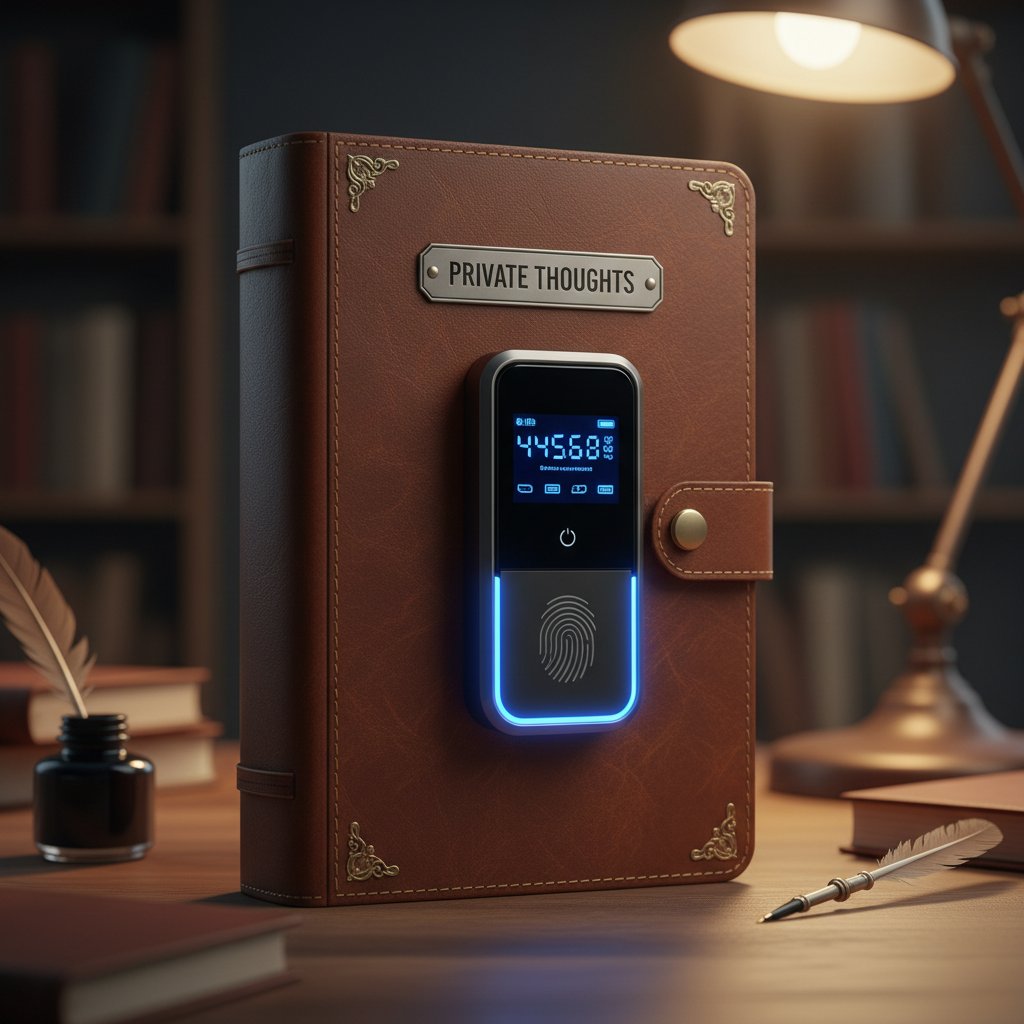
No matter your platform, periodically download or print your entries, enabling full control and backup. Privacy isn’t automatic—make it a priority.
Cultural trends and the future of self-reflection
Shifting mental health norms are making vulnerability and self-reflection more mainstream, eroding the stigma that once shrouded journaling.
- Micro-journaling for busy lives
- Collective storytelling circles
- Visual and experiential journaling (collages, photos)
- Emotional tracking integrated with wearables
- Gamified emotional wellness challenges
The next generation of emotional well-being tools will likely blend these trends, making self-reflection both accessible and impactful.
Supplementary topics: Beyond the basics
Journaling for trauma recovery: Cautions and breakthroughs
Journaling can be a double-edged sword in trauma recovery. For some, it facilitates catharsis and clarity. For others, it risks retraumatization if not managed carefully.
- Phase 1: Begin with structured prompts and limit entry length.
- Phase 2: Gradually introduce deeper reflection, noting triggers.
- Phase 3: Explore narrative retelling, but only if safe to do so.
Always pair journaling with professional support if trauma symptoms worsen. Resources like DCCH Center offer guidance for trauma-informed practices.
Journaling in the workplace: Emotional hygiene for professionals
Corporations are catching on: journaling improves employee resilience and reduces burnout. Some companies now provide daily reflection prompts or offer reimbursed journaling app subscriptions.
| Initiative | Cost/Employee | Reported Benefit | ROI Estimate |
|---|---|---|---|
| Daily prompts (email) | Low | Improved mood | High |
| App subscriptions | Moderate | Reduced burnout | Medium–High |
| Group reflection hours | High | Team cohesion | Medium |
Table 6: Cost-benefit analysis of workplace journaling initiatives
Source: Original analysis based on corporate wellness reports
Journaling for teens: Building emotional muscles early
Younger journalers face unique challenges—peer pressure, privacy concerns, and emotional volatility.
- Use creative formats (art, music, video) to keep it engaging.
- Set clear boundaries—journals are private unless willingly shared.
- Normalize emotion tracking—link it to mood, not just “problems.”
- Encourage regularity over perfection.
- Integrate digital safety tips—use secure platforms or physical locks.
Why does this matter? Because the future of emotional well-being is being written one page at a time.
Your next chapter: Crafting a journaling practice that sticks
Quick-start checklist: Building your own system
Ready to start? Here’s how to launch your personalized journaling routine:
- Choose your medium: Paper, digital, audio, or hybrid.
- Set a time: Morning, night, or on-the-go—consistency trumps duration.
- Pick a technique: Free writing, prompts, gratitude inversion, mood mapping.
- Track outcomes: Note changes in mood, clarity, or stress after each entry.
- Adjust and evolve: Switch styles or formats as your needs shift.
Experiment relentlessly. Your emotional landscape is unique; your journaling practice should be, too.
Troubleshooting: When the blank page fights back
Everyone hits resistance. Bust through with these tricks:
- Use micro-journaling—write one honest sentence.
- Change formats—try audio or collage if words fail.
- Borrow a prompt—let someone else’s question unlock your answer.
- Set a timer—lower the stakes by limiting duration.
- Remind yourself: Progress is messy and nonlinear. The page is patient.
Conclusion: The blank page isn’t your enemy—it’s your revolution
Journaling techniques for emotional well-being aren’t about perfection, positivity, or pretty hashtags. They’re about subversive self-care—facing yourself honestly, breaking old scripts, and claiming agency over your story. The research is clear: regular, honest writing changes brains, disrupts toxic patterns, and builds resilience. The rest is noise.

So here’s the question: What will you write next?
Sources
References cited in this article
- Journaling for Emotional Balance – DCCH Center(dcchcenter.org)
- Journaling Statistics (2025)(gitnux.org)
- Stay Positive: The Effects of Positive Affect Journaling(tandfonline.com)
- Reflection.app: Benefits of Journaling(reflection.app)
- WebMD: Mental Health Benefits of Journaling(webmd.com)
- Mental Health Statistics (2025)(media.market.us)
- Forbes Health: Mental Health Statistics(forbes.com)
- Sapien Labs: Mental State of the World Report(mentalstateoftheworld.report)
- PMC: Efficacy of Journaling(pmc.ncbi.nlm.nih.gov)
- NYT: Journaling Benefits(nytimes.com)
- Medium: The Journaling Industrial Complex(medium.com)
- RecalTravel: Neuroscience Behind Journaling(recaltravel.com)
- Child Mind Institute: How Journaling Rewires Your Brain(childmind.org)
- Form Nutrition: Neuroscience-Backed Journaling(formnutrition.com)
- Neuroscience News: Emotional Regulation Offers a New Path(neurosciencenews.com)
- ScienceDaily: Brain Regulation of Emotions(sciencedaily.com)
- PMC: Adolescent Neuroplasticity(pmc.ncbi.nlm.nih.gov)
- BrainApps: Journaling Myths Debunked(brainapps.io)
- Krafty Planner: 4 Common Journaling Myths(kraftyplanner.com)
- Deanna Moffitt: 4 Common Myths about Journaling(deannamoffitt.com)
- BookToWrite: 7 Common Myths(booktowrite.com)
- JournalPrompts: Science of Journaling(journalprompts.net)
- Greater Good Science Center: Gratitude Journal(ggia.berkeley.edu)
- Lunide Louis: Gratitude Journaling Techniques(lunidelouis.com)
- DraftSparks: Guided vs. Free Writing(draftsparks.com)
- Essentials in Writing: Free Writing vs. Writing Prompts(essentialsinwriting.com)
- Psychology Today: 8 Journaling Techniques(psychologytoday.com)
- Journaling Insights: Advanced Techniques(journalinginsights.com)
- Psychology Today: Journaling the Sensuous Shadow(psychologytoday.com)
- Reflection.app: Shadow Work Journaling(reflection.app)
- ResearchGate: Collaborative Journaling(researchgate.net)
- IAJW: Journaling Community(iajw.org)
- Lightoflights: Journaling Dangers(lightoflights.net)
- Writeandjournal.com: Dangers of Journaling(writeandjournal.com)
Unlock Your Inner Clarity
MirrorMind is your personalized AI journaling companion designed to help you achieve emotional clarity, mindfulness, and profound self-awareness. Through intuitive guided journaling, insightful emotional pattern analysis, and tailored mindfulness exercises, MirrorMind empowers you to explore your inner world, recognize emotional triggers, and cultivate healthier mental habits. Ideal for anyone seeking personal growth, emotional resilience, and deeper self-understanding, MirrorMind offers a private, reflective space to transform your emotional health and overall well-being.
Get startedReady to unlock your inner clarity?
Join thousands who have transformed their emotional well-being with MirrorMind
Frequently Asked Questions
What percentage of adults globally are experiencing frequent emotional distress according to the article?
According to recent statistics cited in the article, over 70% of adults globally were reporting frequent emotional distress as of 2025.
Why does the article say conventional self-help approaches like affirmation decks and vision boards often fail?
The article suggests these quick-fix approaches deliver little lasting change and can leave people struggling with real emotional pain feeling unseen or defective, contributing to a love-hate relationship with self-help culture.
What does the clinical social worker quoted in the article say about journaling?
Ryan, a clinical social worker, states that journaling isn't a magic bullet, but it's the closest thing most people have to an emotional reboot.
According to the article, what is the main problem with modern 'good vibes only' culture?
The article claims that the 'good vibes only' mantra, commonly found on social media and in workplaces, often leaves those struggling with real emotional pain feeling unseen or defective rather than genuinely supported.
From the Archive
Discover more topics from Reflective Journaling Companion

When Journaling for Emotional Health Support Heals or Harms

Journaling Practices for Emotional Wellness: What Works

Journaling for Emotional Health When It Backfires—And How to Fix It

Journaling for Emotional Insight When It Hurts Instead of Helps

Journaling for Emotional Self-Awareness in an Age of Digital Noise


