


Journaling for Deeper Self-Understanding That Actually Works
Written with AI assistance under Reflective Journaling Companion's editorial guidelines. Editorial guidelines
Most journaling advice keeps people stuck in surface-level repetition rather than genuine insight. While 75% report increased clarity, over half repeatedly hit the same mental walls. Real transformation requires moving beyond writing thoughts alone—it demands questioning your narratives, embracing discomfort, and avoiding pitfalls like echo chambers, perfectionism, and performative honesty that masquerade as progress.
What if most of what you think you know about journaling for deeper self-understanding is just another comforting myth? The spiral of self-reflection isn’t always as tranquil or transformative as Instagram would have you believe. While the world shouts about “manifestation” and “morning pages,” beneath the hashtags, a rawer, more complicated reality pulses. Real journaling doesn’t just catch stray thoughts—it exposes the wiring behind them. It’s gritty, sometimes brutal, and often far from the pretty notebooks and soft filters. According to recent research from Gitnux (2025), while 80% of journalers experience more self-awareness, only 15% of adults journal regularly—and even fewer break through the surface to actually change. This isn’t a guide for the halfhearted. This is your invitation to crack the mirror, see what’s really there, and finally understand. Welcome to the unfiltered truth behind deep journaling.
Why most journaling advice keeps you stuck
The surface-level trap: why writing isn’t always reflecting
Let’s cut through the comforting fog: generic journaling, the kind peddled by influencers and self-help books, often keeps you spinning in circles. You pour your thoughts onto the page, hoping for a breakthrough, but six months in, you’re still rehashing the same anxieties, the same gripes, the same “aha” moments that fade in the daylight. This isn’t insight—it’s repetition disguised as progress. According to a 2025 Gitnux report, 75% of people say journaling increases clarity, but more than half admit they hit the same mental walls, again and again. The act of writing alone isn’t enough; what matters is daring to dig deeper, question your own narratives, and let discomfort guide you.

Hidden pitfalls of surface-level journaling:
- Echo chamber effect: You write the same complaints, reinforcing the idea that life never changes.
- Avoiding real issues: Skirting around uncomfortable truths and focusing on daily trivia.
- Validation over honesty: Subtly editing your thoughts to sound wise or positive—performative, not transformative.
- Perfection paralysis: Waiting for the “right” mood or perfect phrasing, so nothing real gets written.
- External comparison: Measuring your entries against curated social media posts, losing authenticity.
- Emotional numbing: Using journaling as a distraction, not a tool for change.
- Ritual without reflection: Filling pages just to say you did, not to see yourself clearly.
“Journaling is only as honest as you dare to be.”
— Jordan, psychologist
The myth of daily routines: it’s not about frequency
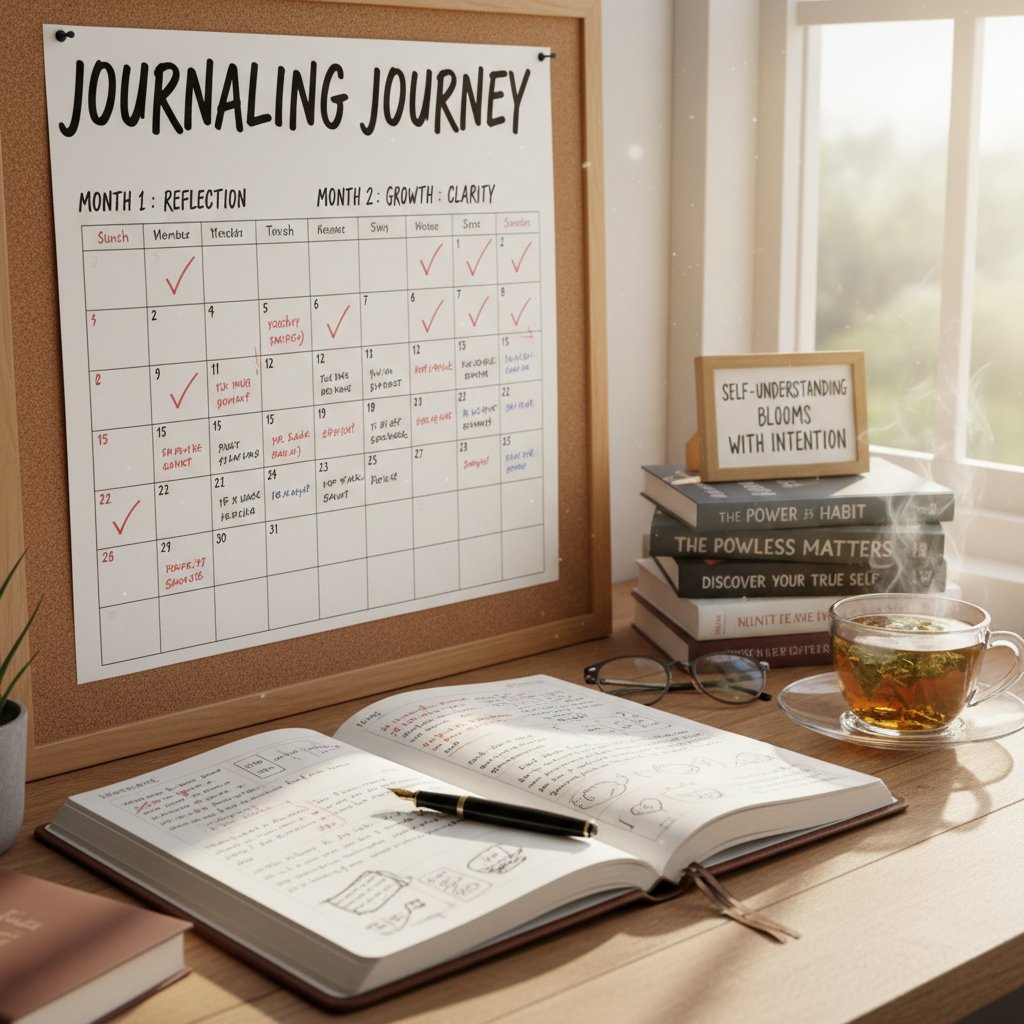
Here’s an inconvenient truth: writing every day won’t magically make you more self-aware. The myth that frequency equals progress is one of the most persistent traps in the productivity world. Research from Forbes (2024) and Gitnux Statistics, 2025 shows that 55% of people report improved emotional management with journaling, but there’s little correlation between daily writing and genuine self-insight. In fact, rigid routines often breed guilt and burnout, turning reflection into yet another box to tick.
| Journaling Frequency | % Reporting Greater Self-Insight | % Reporting Guilt/Pressure |
|---|---|---|
| Daily | 65% | 40% |
| 2-4x/week | 70% | 15% |
| Weekly | 50% | 5% |
| Sporadic | 30% | 2% |
Table 1: Comparison of journaling frequency and outcomes.
Source: Original analysis based on Gitnux, 2025, Forbes, 2024
What actually matters is intentionality and presence, not how often you put pen to paper. Some find liberation in writing sporadically, only when something inside demands it. Others thrive on structure but allow flexibility. The real breakthrough happens when you stop chasing routines and start listening to what you truly need.
When introspection becomes obsession
Let’s be brutally honest: not all reflection is good for you. Sometimes, the pursuit of self-understanding tips into self-absorption—a kind of intellectual narcissism. This is where journaling, intended to liberate, becomes a prison of over-analysis. Signs of “reflective fatigue” appear: constant rumination, paralysis by analysis, or a craving for insight that never truly arrives.
7-step checklist to recognize when journaling is no longer serving you:
- You feel drained, not relieved, after journaling.
- Your entries obsessively dissect the same event or emotion.
- You avoid action, waiting for the “perfect insight” before making decisions.
- Self-criticism or shame increases after each session.
- Your writing becomes defensive or justifies unhealthy patterns.
- You dread journaling but feel guilty when you skip it.
- Friends or therapists notice you’re stuck in your head, not in your life.
If you see yourself here, it’s time to reassess. Reflection should be a launchpad, not a quicksand.
What science actually says about journaling and self-awareness
Neuroscience of self-reflection: what’s happening in your brain?
Strip away the anecdotes—what does neuroscience say about writing for self-understanding? Recent brain imaging studies reveal that reflective journaling activates the medial prefrontal cortex (the center for self-related thinking), the amygdala (emotional processing), and the hippocampus (memory integration). According to Forbes, 2024, these neural activations help “reconsolidate” emotional memories, making them less distressing and more integrated into your sense of self.
| Brain Region | Function | Journaling Effect |
|---|---|---|
| Medial Prefrontal Cortex | Self-referential processing | Increases self-awareness |
| Amygdala | Emotional regulation | Reduces intensity of distress |
| Hippocampus | Memory integration | Links emotions and narrative |
Table 2: Neuroscience findings on journaling and brain function.
Source: Original analysis based on Forbes, 2024, Gitnux, 2025

The research is clear: intentional, reflective writing can literally reshape your brain’s relationship with memory and emotion. But the key word is “intentional”—mindless venting doesn’t have the same effect.
Unexpected benefits and hidden dangers
Deep journaling does more than help you “know yourself.” Studies show it strengthens empathy, fosters emotional regulation, and even boosts immune function (Gitnux, 2025). Yet, there’s a shadow side. Too much introspection can lead to rumination, reinforcing old wounds or negative self-narratives instead of healing them.
Six hidden benefits of deep journaling practices:
- Enhanced empathy: Translating your emotions to words helps you recognize them in others.
- Improved memory recall: Integrating experience with reflection cements learning.
- Greater creativity: Free association breaks pattern rigidity.
- Emotional catharsis: Releasing pent-up feelings in a safe space.
- Pattern awareness: Spotting recurring beliefs and triggers.
- Resilience under stress: Processing adversity before it calcifies into trauma.
But be warned: the act of writing can also cement unhelpful stories if left unchecked. According to People Development Magazine (2024), “Reflective prompts are powerful—but when misused, they can trap you in a loop of self-doubt rather than growth.”
The difference between narrative therapy and self-obsession
So where’s the line between healing and wallowing? Narrative therapy, a research-backed approach, uses writing to help individuals re-author their stories—intentionally shifting the narrative to foster growth. But without structure, reflective writing can slip into what psychologists call “narrative bias”—the tendency to cling to old stories or identities, even when they hurt.
Definition List:
A therapeutic approach using storytelling and reflection to separate a person from their problems and re-author personal narratives for healing and empowerment.
A state of cognitive and emotional exhaustion caused by excessive introspection or repetitive journaling without actionable insight.
The unconscious tendency to interpret new experiences only in ways that confirm existing personal narratives, limiting growth or change.
Intentional journaling, when practiced with awareness, steers you toward transformation—not just deeper self-absorption.
How to break through: methods for radical self-discovery
Shadow journaling: facing what you usually avoid
Shadow journaling dives into the parts of yourself you’d rather ignore: envy, fear, resentment, the “unacceptable” emotions society teaches you to suppress. Rooted in Jungian psychology, shadow work through journaling lets you integrate these disowned parts, leading to genuine self-acceptance and freedom from unconscious sabotage.
To start shadow journaling safely:
- Begin in a secure, private space.
- Set an intention: what aspect of your life do you avoid reflecting on?
- Acknowledge discomfort as a sign of progress, not failure.

Six steps to integrate shadow work into journaling:
- Identify recurring negative emotions or triggers.
- Write candidly about the first time you remember feeling this way.
- Explore what part of yourself you’re rejecting or denying.
- List what you gain and lose by holding onto this shadow.
- Dialogue with this part as if it were a separate character.
- Close by affirming what you’ve learned—no judgment, just observation.
Shadow journaling isn’t for the faint of heart, but it’s where real transformation begins.
Prompt engineering: ask better questions, get deeper answers
The power of your journaling is only as strong as the questions you ask. Generic prompts (“What am I grateful for?”) rarely spark genuine insight. Instead, embrace specificity and discomfort.
Three prompts for deeper self-understanding:
- “What truth am I avoiding right now, and why?”
- “How would my life change if I let go of this story?”
- “Whose voice do I hear in my inner critic, and what do I need to say back?”
Seven unconventional journaling prompts for radical insight:
- Describe a moment you felt completely out of control—what did you learn?
- List all the ways you self-sabotage, then write why you believe you deserve better.
- Imagine your life five years ago; what would your past self think of you now?
- Write about a time you betrayed your own values—what was the cost?
- Name three emotions you rarely admit to feeling.
- If you had to live today on repeat for a month, what would you change?
- What’s one belief you inherited, not chose? Does it still serve you?
The right prompt is a pry bar, not a mirror—use it to crack yourself open.
Somatic journaling: get out of your head and into your body
Most journaling happens above the neck—dissecting thoughts, cataloguing feelings. But the body holds memory, too. Somatic journaling bridges the gap, anchoring reflection in physical sensation. Begin each session by noticing where you feel tension, heat, or numbness. Describe these sensations before writing about the emotions or events attached to them.
A step-by-step somatic journaling session:
- Find a quiet spot, sit comfortably.
- Close your eyes and scan your body, head to toe.
- Notice where you feel discomfort or energy.
- Write a brief, sensory description (e.g., “tight chest, fluttery stomach”).
- Ask, “What does this sensation want me to know?”
- Reflect on how your physical state mirrors your emotional state.
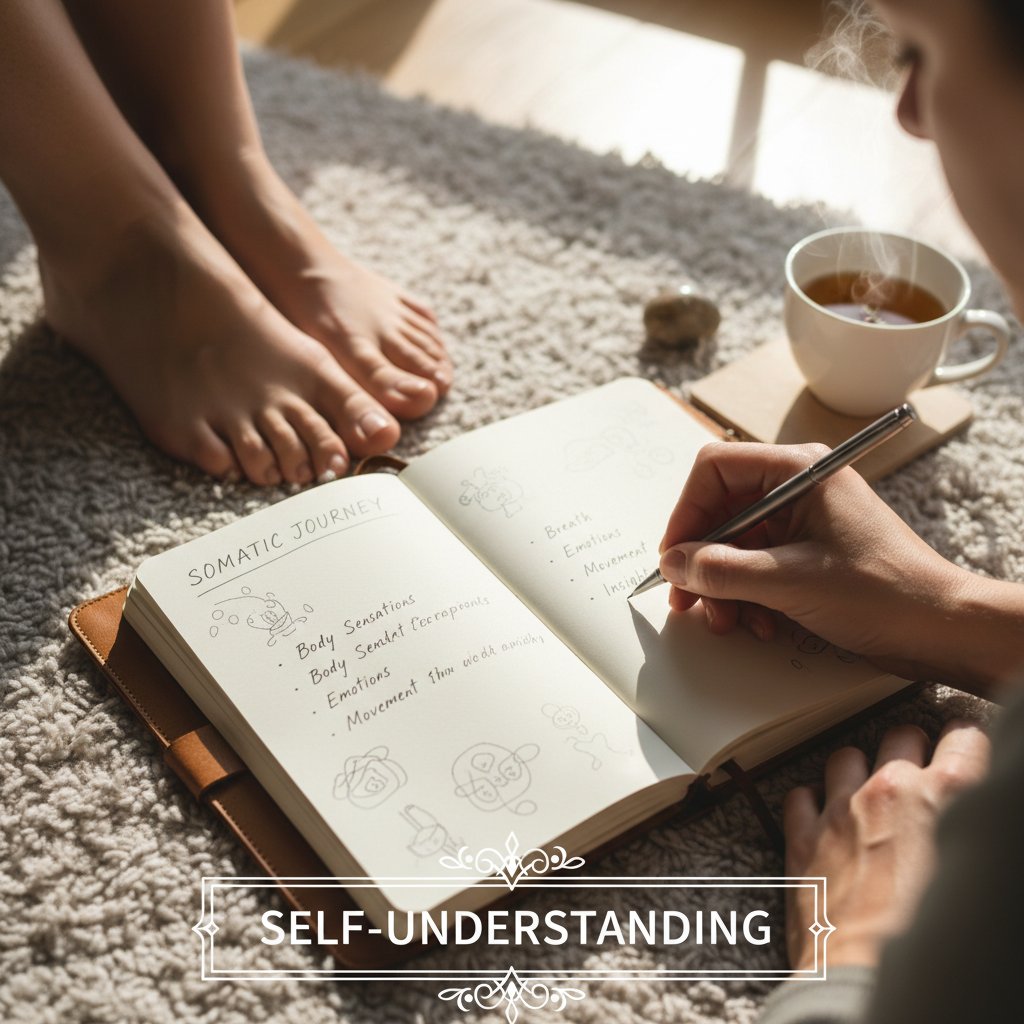
Somatic journaling helps you break the loop of endless thinking and connects your insights to real change.
Real stories: how different people journal for real transformation
The artist: using chaos to find clarity
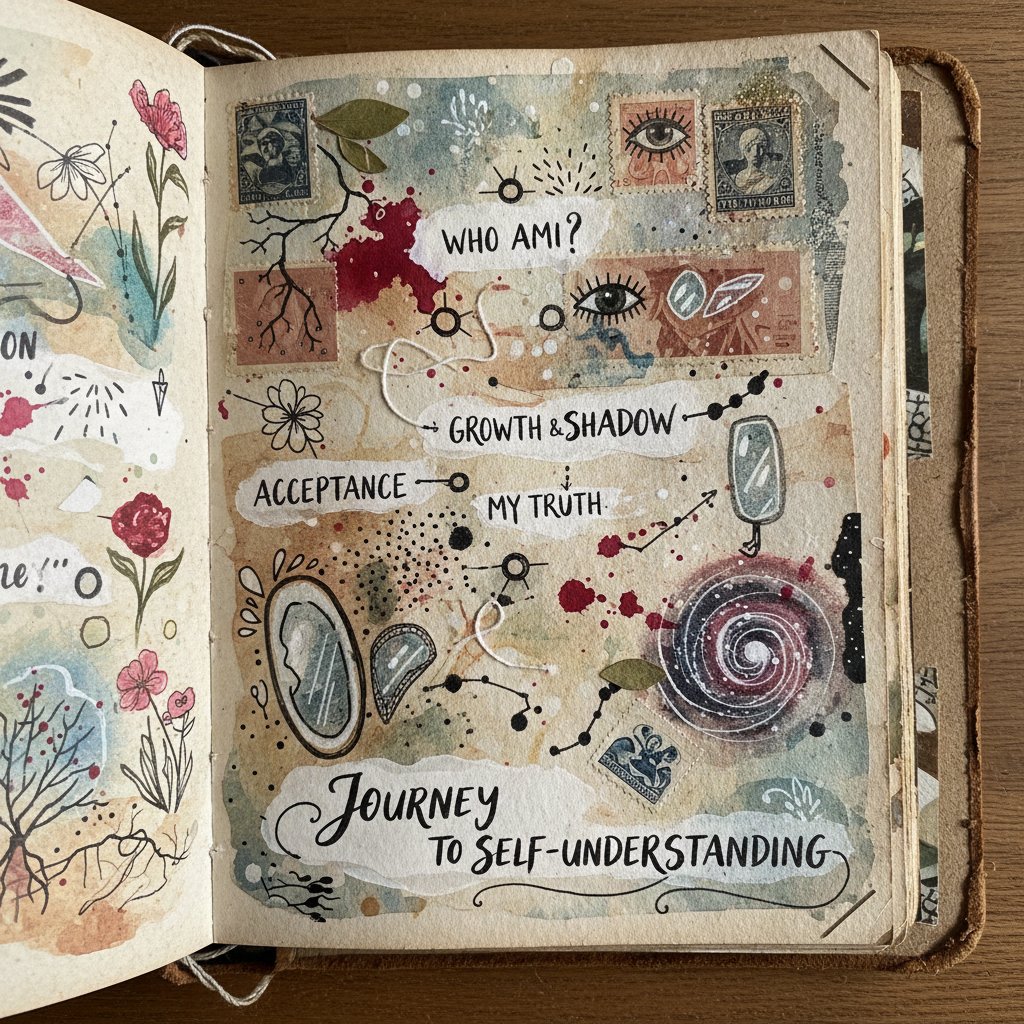
Maya is a painter who approaches journaling like her art—messy, nonlinear, and unapologetically raw. Her entries are a riot of color, doodles, and half-finished sentences. She rejects the idea of a “right way” to journal. Instead, she lets intuition dictate the process—sometimes writing upside down, sometimes painting over old words with bold reds and blues. The outcome? Maya reports that her journaling banishes creative blocks and reveals patterns she never saw before: “My journal isn’t a record, it’s a storm. Somewhere in the chaos, I find myself.”
Her techniques:
- Collaging images and words for complex emotions.
- Revisiting old entries, then ripping out or painting over pages that no longer serve her.
- Using music or scents to trigger new reflections.
The skeptic: turning data into insight
Alex approaches journaling like a scientist, tracking mood, sleep, and recurring themes with meticulous care. He logs each entry with a timestamp, then highlights patterns with color-coded tags. Over six months, this data-centric approach revealed that his worst moods always followed specific social interactions—insights he never gleaned from talk therapy alone.
| Date Range | Entries/Week | Avg. Mood | Major Breakthrough | Setbacks |
|---|---|---|---|---|
| Jan–Feb | 5 | 4/10 | Identified trigger | Overanalyzing |
| Mar–Apr | 3 | 6/10 | Noticed progress | Skipped days |
| May–Jun | 4 | 7/10 | Theme: boundaries | None notable |
Table 3: Alex’s journaling data and impact on self-insight.
Source: Original analysis based on journaling practice case studies.
Alex’s experience proves that data-driven journaling can surface connections invisible to memory alone—transforming skepticism into actionable insight.
The survivor: journaling through trauma and back
After losing a loved one, Maya (yes, a different Maya) turned to reflective writing not for answers, but for survival. Her pages were soaked in pain and confusion. Only when she stopped censoring herself—abandoning “shoulds” and letting the truth spill out—did healing begin. She offers these tips for safe, supportive journaling in tough times:
- Set time limits—don’t dwell endlessly.
- Use grounding techniques before and after writing.
- Share entries with a trusted confidant or therapist when ready.
- Remember, it’s okay to step away when it gets too much.
“Writing was the only place I could tell the truth, even when it hurt.”
— Maya
Modern journaling: tech, privacy, and AI companions
Analog vs. digital: what changes when the page glows?
There’s something primal about the scratch of pen on paper. But digital journaling (and its AI-powered cousins) is surging in popularity. The difference isn’t just sensory—it’s psychological. Handwriting is slower, tactile, and more conducive to emotional processing, according to Forbes, 2024. Digital journaling, meanwhile, offers searchability, pattern recognition, and even real-time emotional analysis.
| Tool Type | Sensory Experience | Pattern Tracking | Privacy Control | Emotional Insight |
|---|---|---|---|---|
| Analog (Paper) | High (tactile) | Manual | Private (physical) | Subjective |
| Digital (App/Word Doc) | Moderate | Search/filtering | Cloud-dependent | Limited prompts |
| AI-powered (e.g., mirrormind.ai) | Variable | Automated | Encrypted/secure | Guided analysis |
Table 4: Feature matrix comparing journaling tools.
Source: Original analysis based on Forbes, 2024

But tech comes with risks—cloud leaks, algorithmic privacy holes, and the gnawing sense that someone, somewhere, could read your secrets. The best tools, like mirrormind.ai, prioritize encryption and user control, but vigilance is still vital.
The rise of AI-powered journaling: opportunity or risk?
AI journaling tools are everywhere, claiming to “analyze” your feelings and “guide” insight. Sites like mirrormind.ai position themselves as a new resource for those ready to see their emotional patterns mapped and decoded. The opportunity? Spotting blind spots and emotional triggers that would otherwise slip by unnoticed; receiving tailored prompts; and building emotional intelligence at scale.
But beware: over-reliance on tech can numb intuition, making you dependent on external analysis. And while encryption is standard, no system is entirely invulnerable. The nuanced, ambiguous truths of self-understanding sometimes elude even the best algorithm.
“Sometimes a machine sees what you’re too close to notice.”
— Jordan
The sweet spot is using AI as a supplement, not a surrogate, for your own reflection.
Common mistakes and how to avoid them
Overthinking, rumination, and the spiral trap
Reflection and rumination are cousins—but only one leads to growth. Reflection clarifies and catalyzes change; rumination traps you, replaying the same failures or anxieties on a loop. According to People Development Magazine (2024), over 40% of journalers risk this spiral without clear boundaries or prompts.
Practical tips to disrupt overthinking cycles:
- Set time or page limits.
- Use prompts focused on solutions, not just problems.
- Physically change locations when stuck.
5-step intervention for escaping the rumination spiral:
- Notice when your thoughts cycle without resolution.
- Pause and rewrite the entry as if advising a friend.
- Set a timer—when it goes off, stop writing.
- Shift focus: write about an unrelated topic or physical sensation.
- End with a grounding statement or gratitude list.
Forcing meaning: when your journal becomes a performance
It’s easy to start writing for your “future self” or an imaginary audience. This performative journaling turns truth into theater, filtering every emotion for palatability. Authenticity gets swapped for curation; growth for self-delusion.
Authenticity vs. curation means embracing imperfection, letting go of the urge to “look wise” on the page. Real transformation is messy, awkward, and often ugly.
Six red flags that your journaling is performative, not transformative:
- You edit entries for grammar or style.
- You avoid admitting mistakes or “unacceptable” feelings.
- Your writing echoes advice columns—generic, impersonal.
- You hesitate to write certain truths in case someone reads them.
- You focus more on analysis than lived experience.
- Your “breakthroughs” sound suspiciously like motivational posters.
If you spot these, it’s time to strip away the mask and get real.
Beyond the hype: cultural and historical roots of self-reflective writing
Journaling across cultures: what the West missed
The West didn’t invent self-reflective writing. In Japan, nikki bungaku—the “literature of diaries”—dates back over a thousand years, blending poetry, observation, and emotional candor. In Islamic tradition, muraqabah uses reflective writing for spiritual self-audit. Across Africa, oral histories and personal narratives serve similar purposes, blending individual and collective memory.
Western journaling often pursues self-improvement and achievement; non-Western traditions may focus on integration, humility, or spiritual alignment. Both paths offer deep insights, but each carries its own blind spots.

A timeline of journaling for self-understanding
From ancient scrolls to bullet journals to AI, the history of journaling is a story of evolving selfhood.
Major milestones in journaling history:
- Ancient Egypt (c. 2000 BCE): Personal scrolls for recording dreams and omens.
- Heian Japan (10th century): Nikki bungaku emerges, blending diary and prose.
- Medieval Islamic world: Reflective writing as spiritual self-examination.
- Renaissance Europe: Humanist scholars keep daily journals, merging observation with philosophy.
- 19th-century Europe: Romantic-era diaries focus on emotion and self-expression.
- 20th-century America: Psychological self-exploration enters mainstream; “Dear Diary” becomes a rite of passage.
- 1980s: Self-help boom brings guided journals and prompts.
- 2000s: Digital journaling apps proliferate.
- 2020s: AI-powered analysis and emotional tracking (e.g., mirrormind.ai).
Each era reshaped what “self-understanding” means—from spiritual discipline to radical authenticity to data-driven introspection. The tools change, but the hunger for self-knowledge endures.
Practical frameworks: how to use journaling for real change
The self-inquiry matrix: a tool for radical honesty
The self-inquiry matrix is a structured template that forces you to confront your assumptions, beliefs, and emotional blind spots. Each quadrant asks uncomfortable but essential questions.
How to create and use your own matrix:
- Divide a page into four sections.
- Label them: Situation, Emotion, Story, Reality.
- For each challenge or trigger, fill in each box honestly—especially the “Story” column, where you record your default narrative.
| Situation | Emotion | Story | Reality |
|---|---|---|---|
| Boss criticized report | Anger, shame | “I’m incompetent” | I made an error, but it’s fixable |
| Friend cancelled plans | Rejection | “Nobody values me” | Friend was unwell, not personal |
| Missed deadline | Guilt | “I always fail” | This was one setback, not a pattern |
Table 5: Sample self-inquiry matrix and usage.
Source: Original analysis based on multiple journaling methodologies.
Regular use uncovers the gap between your stories and what’s actually happening—your personal blind spot map.
Checklist: are you ready to go deeper?
Not everyone is immediately ready for the rigors of deep journaling. It requires more than curiosity; it demands courage and a willingness to face discomfort.
8-point self-assessment to gauge readiness:
- Am I willing to write honestly, even when it’s uncomfortable?
- Can I tolerate ambiguity and not-knowing?
- Do I accept that not all insights feel good at first?
- Am I prepared for old wounds to resurface?
- Will I respect my own privacy and set boundaries?
- Do I understand the limits of journaling, and seek help when needed?
- Am I ready to act on uncomfortable truths?
- Can I be patient with myself during setbacks?
If you answer “no” to more than two, consider starting with lighter prompts or using a supportive tool like mirrormind.ai to ease in.
If you’re not ready yet, that’s okay. Start where you are, with self-compassion.
From insight to action: bridging the gap
Self-awareness alone doesn’t change your life—action does. Countless journalers get stuck in “insight limbo,” endlessly analyzing but never moving forward. To bridge this gap:
- Set micro-goals based on each insight.
- Share your reflections with someone you trust for accountability.
- Revisit your journal entries weekly to track progress.
6 steps to implement journaling insights in your daily life:
- Identify one insight per session with actionable potential.
- Translate the insight into a concrete behavior change.
- Set a time-bound intention (e.g., “This week, I’ll…”).
- Log outcomes and emotional reactions.
- Adjust as needed; don’t expect perfection.
- Celebrate progress, however small.
Real transformation is built on tiny, consistent pivots—not grand gestures.
Advanced tactics: pushing past plateaus and blind spots
Pattern hunting: decoding your emotional loops
Patterns don’t just happen—they’re created. Advanced journalers track emotional loops by reviewing old entries and highlighting recurring phrases or themes. The process is forensic: searching for language that resurfaces under stress (“I always…”, “No one ever…”), then mapping connections to real events.
Three methods to track and disrupt unhelpful cycles:
- Color-code entries by emotion and review monthly.
- Use apps (or AI tools) to tag themes and quantify frequency.
- Write predictive entries—guessing how you might react to future stressors, then compare with actual outcomes.

Breakthroughs come when you finally see the loop—and choose something different.
Peer feedback and journaling circles: when to share, when to protect
Sharing your writing can accelerate growth—or backfire spectacularly. The benefits: accountability, fresh perspectives, courage to face difficult truths. The risks: judgment, loss of privacy, groupthink.
5 unconventional ways to get feedback without losing privacy:
- Share selected excerpts, not whole entries.
- Use anonymous feedback apps or groups.
- Pair journaling with verbal check-ins (audio entries).
- Swap journals with a trusted friend for one session only.
- Attend guided journaling circles with strict confidentiality rules.
Set boundaries: only share if it feels safe. When in doubt, protect your process.
Journaling for decision-making: clarity under pressure
Major decisions have a way of clouding judgment. Guided journaling can clarify motives, fears, and priorities.
Three journaling exercises for high-stakes choices:
- Write a letter to your future self explaining each option.
- List worst-case and best-case scenarios for each path.
- Visualize how you’d feel six months after making each decision.
“When everything feels urgent, writing slows the world down.”
— Alex
When the pressure mounts, your journal becomes a slow-motion replay—a place to pause and choose with clarity.
Journaling gone wrong: risks, controversies, and the dark side
When journaling traps you in your own story
Narrative bias is real—sometimes your journal becomes an echo chamber for self-limiting beliefs. Clinging to these old scripts, you unconsciously block new possibilities.
To break free:
- Reread entries with a critical eye.
- Ask, “What am I not seeing?”
- Seek feedback from someone who challenges you.
5 signs your journaling narrative needs rewriting:
- Every entry ends with the same complaint or theme.
- You justify self-sabotage instead of challenging it.
- You never question your own assumptions.
- You avoid exploring other perspectives.
- Your beliefs about yourself never change, no matter what happens.
Rewrite the story—or risk living it forever.
Privacy, vulnerability hangovers, and emotional exposure
Digital journaling is convenient, but it isn’t risk-free. Hacks, leaks, and emotional exposure can leave you feeling raw or even violated. Protect yourself by using encrypted platforms, keeping sensitive entries offline, and setting passwords. After a deep session, you may feel a “vulnerability hangover”—an emotional crash from overexposure. Ground yourself with self-care, social support, or simply stepping away for a while.
When to take a break—or quit journaling entirely
Journaling isn’t a life sentence. There are times when stepping back is the healthiest choice.
6 situations where stopping is the healthiest choice:
- Your writing increases shame or anxiety.
- You obsess over entries rather than living your life.
- You use journaling to avoid action.
- You feel unsafe or exposed, digitally or emotionally.
- Your therapist or loved ones express concern.
- You hate journaling, but feel guilty stopping.
If journaling no longer serves you, try alternatives:
- Voice notes or audio diaries.
- Movement practices (like dance or yoga) for self-reflection.
- Artistic expression (painting, music).
- Mindful walks or meditation.
The point is growth, not ritual.
Conclusion: reinventing your relationship with self-understanding
If you’ve made it this far, you already know: journaling for deeper self-understanding isn’t for the faint of heart—or for those addicted to easy answers. It’s a living process, evolving as you do. The unfiltered mirror shows you both what you are and what you could become, if you’re honest enough to look. Forget the rituals, the “shoulds,” the pretty notebooks. The only thing that matters is the courage to face your own mind—mess and all. Experiment with prompts, question old habits, and let yourself get uncomfortable. That’s where the real growth happens.
If you’re ready to take the next step, platforms like mirrormind.ai offer a modern companion for your journey—one that analyzes patterns, offers fresh perspectives, and evolves alongside you. But whatever tool you choose, remember: transformation starts the moment you stop writing for comfort and start writing for truth.

Sources
References cited in this article
- Gitnux Statistics(gitnux.org)
- People Development Magazine, 2024(peopledevelopmentmagazine.com)
- Forbes, 2024(forbes.com)
- Common Journaling Myths(americandiaryproject.com)
- Mindterra: Myths About Journaling(mindterra.co)
- Ablison: Journaling Statistics(ablison.com)
- Day One App: Journaling Tips(dayoneapp.com)
- Positive Psychology: Introspection(positivepsychology.com)
- Helpful Professor: Introspection(helpfulprofessor.com)
- NCBI: Positive Affect Journaling(ncbi.nlm.nih.gov)
- SharksMind: Science of Journaling(sharksmind.com)
- Wiley: Neuroscience of Self-Awareness(wires.onlinelibrary.wiley.com)
- Xpand Health: Neuroscience of Journaling(xpandhealth.com)
- Psych Central: Mental Health Benefits(psychcentral.com)
- Verywell Health: Journaling Benefits(verywellhealth.com)
- Amazon eBook: Power of Journaling 2024(amazon.in)
- MindBodyGreen: 77 Prompts(mindbodygreen.com)
- Spirituality Shepherd: Transformative Techniques(spiritualityshepherd.com)
- DesignDash: Shadow Work Journaling(designdash.com)
- Simon & Schuster: Shadow Work Journal(simonandschuster.com)
- Prompt Engineering Guide(promptingguide.ai)
- Georgia Tech: Responsible AI for Communication(iac.gatech.edu)
- Frontiers in AI: Prompt Effectiveness(frontiersin.org)
- Hello Inner Light: Somatic Journaling Guide(helloinnerlight.com)
- Stephanie Mara: Somatic Journaling(stephaniemara.com)
- Personal Transformation Stories(personaltransformation.com)
- Pew Research: AI and Privacy(iapp.org)
- RAND: AI & Privacy Law(rand.org)
- Medium: AI Journaling Tools(medium.com)
- Journaling Flow: Common Mistakes(journalingflow.com)
- The Slow Living Journal: Mistakes(theslowlivingjournal.com)
- Current Opinion in Psychology(sciencedirect.com)
- APA: Psychological Safety(apa.org)
Unlock Your Inner Clarity
MirrorMind is your personalized AI journaling companion designed to help you achieve emotional clarity, mindfulness, and profound self-awareness. Through intuitive guided journaling, insightful emotional pattern analysis, and tailored mindfulness exercises, MirrorMind empowers you to explore your inner world, recognize emotional triggers, and cultivate healthier mental habits. Ideal for anyone seeking personal growth, emotional resilience, and deeper self-understanding, MirrorMind offers a private, reflective space to transform your emotional health and overall well-being.
Get startedReady to unlock your inner clarity?
Join thousands who have transformed their emotional well-being with MirrorMind
Frequently Asked Questions
What percentage of people who journal actually experience lasting change?
According to the 2025 Gitnux research cited in the article, while 80% of journalers experience more self-awareness, only 15% of adults journal regularly—and even fewer break through the surface to actually change.
Why does generic journaling often fail to produce real insight?
The article explains that writing alone isn't enough; generic journaling often keeps people rehashing the same anxieties without daring to dig deeper, question their narratives, or let discomfort guide them. This results in repetition disguised as progress rather than true insight.
What is the 'echo chamber effect' in journaling?
According to the article, the echo chamber effect occurs when you write the same complaints repeatedly, which reinforces the idea that life never changes rather than creating actual transformation.
Does journaling increase clarity according to the research mentioned?
Yes, a 2025 Gitnux report cited in the article states that 75% of people say journaling increases clarity, but more than half admit they hit the same mental walls again and again despite this perceived clarity.
What distinguishes real deep journaling from surface-level journaling?
Real journaling exposes the wiring behind your thoughts and is described as gritty and sometimes brutal, requiring you to crack the mirror and see what's really there, rather than simply catching stray thoughts or performing wisdom for appearance.
From the Archive
Discover more topics from Reflective Journaling Companion

Journaling for Self-Understanding: Why Common Approaches Fail

Journaling to Foster Personal Growth: Why It Backfires

How Journaling for Self-Awareness Actually Works

Journaling for Personal Development: Why It Backfires

Journaling Prompts for Self-Understanding: Why Most Fail
