


Journaling Ideas for Emotional Clarity When Your Mind Feels Loud
Written with AI assistance under Reflective Journaling Companion's editorial guidelines. Editorial guidelines
Journaling cuts through emotional overwhelm by helping you identify, label, and understand your feelings rather than suppress them. With sixty-seven percent of adults reporting weekly emotional numbness, journaling offers a practical tool to excavate messy emotions and meet yourself authentically. Regular journaling transforms internal confusion into actionable clarity for better decisions and relationships.
What if the only thing standing between you and the truth was a blank page? In a world that demands speed, numbness, and endless scrolling, emotional clarity is no longer a luxury—it’s a radical act of self-preservation. The art of journaling for emotional clarity isn’t about cutesy prompts or “manifesting vibes.” It’s about cutting through the static, excavating the messy roots of your feelings, and finally meeting yourself—unedited. This guide is for those who crave more than surface-level advice. We’ll dissect the confusion epidemic, debunk myths, showcase 25 boundary-pushing journaling prompts, and ground everything in research and real-world grit. Whether you’re a skeptic, a survivor of toxic positivity, or just someone desperate to stop feeling like you’re wading through emotional molasses, you’re in the right place. By the end, you’ll have a blueprint for radical self-discovery—one brutally honest entry at a time.
Why emotional clarity is the new power move
The epidemic of emotional confusion
In 2025, emotional overwhelm is more than a buzzword—it’s a diagnosable crisis. According to recent research published by the American Psychological Association, 67% of adults in the U.S. report feeling “emotionally numb or overwhelmed” at least once a week. The World Health Organization links this spike to a perfect storm of digital bombardment, economic instability, and chronic uncertainty. The endless barrage of information and expectations leaves many of us unsure of what we actually feel, much less why.
But why does emotional confusion seem omnipresent, especially now? Social media encourages performative positivity, workplace cultures reward emotional suppression, and even self-help advice can push us toward “fixing” feelings instead of understanding them. We’re taught to move on fast, optimize, and stay productive—even if it means ignoring the internal chaos. This detachment comes with a cost: persistent anxiety, burnout, and an inability to make authentic decisions.

“Most people never actually meet themselves.” — Alex
Personal costs are steep. When your internal compass is spinning, relationships suffer, boundaries erode, and you’re at the mercy of every emotional gust. Emotional clarity isn’t just self-care—it’s survival.
Defining emotional clarity (and why it’s misunderstood)
The ability to accurately identify, label, and understand your emotions in real time—without judgment or distortion. It’s the difference between “I feel bad” and “I’m anxious because I’m afraid of failing at work.”
A persistent sense of confusion, numbness, or overwhelm regarding one’s feelings. It often results from suppression, trauma, or information overload.
The capacity to recover quickly from emotional setbacks by understanding, processing, and integrating feelings—rather than denying or bypassing them.
True emotional clarity is raw and unscripted. It means naming discomfort, sitting with it, then choosing what comes next. For example, realizing you’re actually resentful—not just tired—about work demands, which prompts a conversation instead of another night of doom-scrolling.
The concept is often misunderstood. Many see it as emotional “control” or constant positivity. In reality, clarity is about witnessing all emotions, even the ugly ones, and integrating them into self-awareness. It’s not about fixing—it’s about seeing.
Hidden benefits of emotional clarity:
- Greater ability to set and enforce boundaries, preserving energy and integrity.
- Sharper intuition—decisions become grounded in genuine needs rather than knee-jerk reactions.
- Reduced stress and anxiety through honest processing, not suppression.
- Deeper, more authentic relationships as communication shifts from reactive to reflective.
- Enhanced resilience—bounce back faster because you know what you’re actually facing.
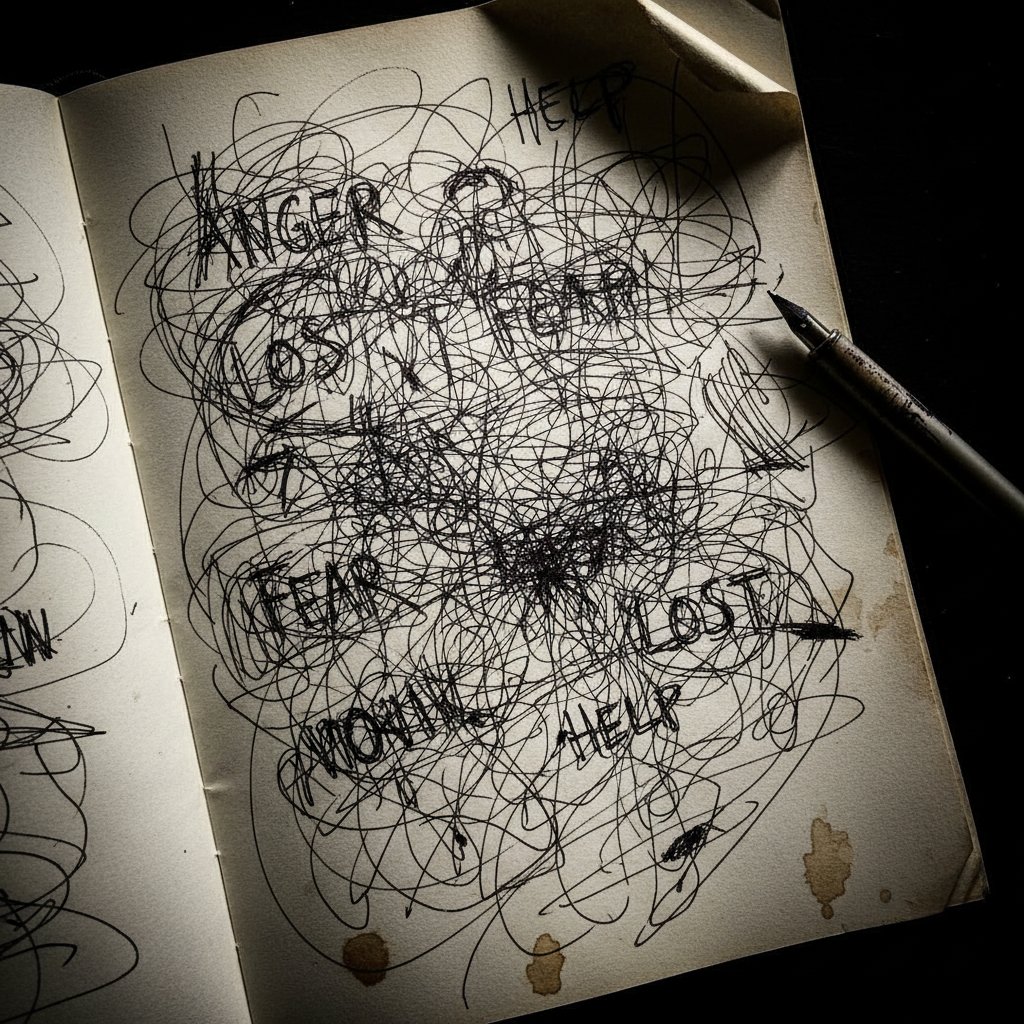
The science: How journaling rewires your mind
Neuroscience has finally caught up with what introspective writers have known for centuries: expressive writing changes the brain. According to a 2023 meta-analysis in Frontiers in Psychology, regular journaling activates the prefrontal cortex, the brain’s emotional regulation center, increasing your ability to process distress and make sense of complex feelings. Brain scans show heightened connectivity between regions involved in language, self-reflection, and emotional control after only six weeks of consistent journaling.
| Outcome | Regular Journaling | Sporadic Journaling |
|---|---|---|
| Emotional self-awareness | Significantly increased | Minor improvement |
| Stress hormone regulation | Noticeable decrease | No consistent change |
| Ability to recover from setbacks | Sharply improved | No significant difference |
| Brain plasticity markers | Enhanced | Baseline |
Table 1: Emotional and neurological outcomes of journaling frequency. Source: Original analysis based on Frontiers in Psychology, 2023
Expressive writing doesn’t just help you “vent”—it’s an act of cognitive restructuring. By translating chaos into language, you force the amygdala (the brain’s fear center) to stand down, while the prefrontal cortex gets a neural workout. The result? Emotional clarity, resilience, and often, a sense of relief that goes deeper than temporary distraction.
“Writing is brain surgery without the scalpel.” — Jamie
The upshot is clear: regular journaling for emotional clarity is a proven intervention. It’s not a silver bullet, but it’s as close as you get to rewiring how you relate to yourself.
The dark side of journaling: when writing backfires
Toxic positivity and rumination traps
Journaling isn’t always the hero. Sometimes, it’s the villain. When used without intention or awareness, writing can reinforce negative cycles. Research from the University of Texas at Austin warns that unchecked journaling may amplify rumination—repeating the same dark thoughts in an endless loop. Instead of clarity, you get stuck in the mud.
The difference between healthy reflection and unhealthy rumination is subtle but crucial. Healthy journaling involves curiosity, openness, and a willingness to challenge your own stories. Rumination masquerades as self-reflection but is actually emotional self-sabotage—reliving old wounds without moving forward.
Steps to avoid journaling pitfalls:
- Set intention: Start with a purpose (“I want to understand my anxiety,” not “Why am I broken?”).
- Limit time: Cap writing sessions to 20-30 minutes to prevent spiraling.
- Challenge narratives: After each entry, ask, “What else could be true?”
- Balance shadow with light: For every difficult emotion explored, write about a strength or resource.
- Seek feedback: If stuck in negativity, share entries with a trusted friend or therapist.
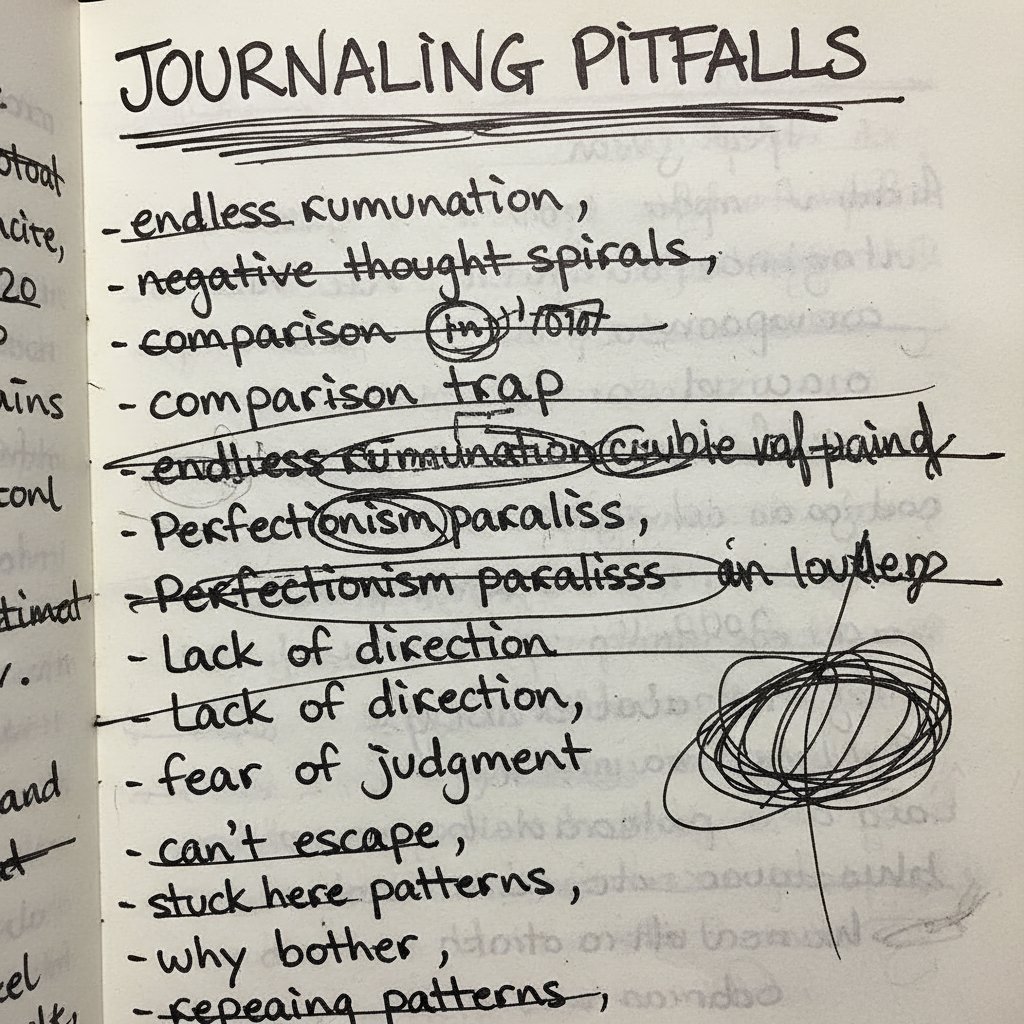
“Journaling made me spiral—until I changed my approach.” — Taylor
Who shouldn’t journal (and what to do instead)
Journaling is not a panacea. If writing intensifies trauma, triggers panic attacks, or leaves you feeling worse, it may not be the right tool—at least not now. According to the National Alliance on Mental Illness (NAMI), people with severe PTSD, dissociation, or active crises might need alternative practices or guided support.
Alternatives include voice notes, movement-based reflection (like walking meditation), or art therapy. Sometimes, emotional clarity emerges better through the body or in conversation than on the page.
Red flags that journaling is making things worse:
- Heightened anxiety or distress after writing sessions.
- Obsessive re-reading of painful entries.
- Using journaling as an avoidance tactic or rumination outlet.
- Feeling emotionally “hungover” or dissociated.
If you notice these red flags, step back. Consider combining journaling with professional guidance or leveraging tools designed to offer structure and support—like mirrormind.ai, which specializes in guided reflection and emotional pattern analysis. No tool is one-size-fits-all; know when to pivot.
Journaling, disrupted: analog grit vs. digital evolution
Handwriting, typing, or apps: what actually matters?
Let’s blow up the analog versus digital debate. Some purists swear by the tactile ritual of pen on paper, claiming it’s the only path to “real” emotional clarity. Others are all-in on AI-driven apps, voice notes, and instant cloud backups. The research? It’s nuanced.
A 2023 study in the Journal of Educational Psychology found that handwriting creates stronger memory traces and emotional impact for some users, but digital journaling wins on consistency and accessibility. What matters most is not the medium, but the intention and context behind your journaling practice.
| Feature | Paper Journal | Journaling App | Voice Notes |
|---|---|---|---|
| Privacy control | High (physical security) | Variable (depends on app) | Medium (depends on device) |
| Convenience | Low | High | High |
| Emotional depth | High (for many) | Moderate to high | Variable |
| Distraction risk | Low | High | Medium |
| Emotional analysis | Manual only | Advanced (AI-supported) | Minimal |
Table 2: Comparing analog and digital journaling for emotional clarity. Source: Original analysis based on Journal of Educational Psychology, 2023
Privacy and distraction are real concerns. Digital journaling apps can be a double-edged sword—powerful, but tempting you with notifications, social feeds, and cloud vulnerabilities. Paper wins on focus but loses on searchability and security if physical privacy is breached.

Apps like mirrormind.ai are redefining the process, blending AI-driven emotional pattern recognition with guided prompts while maintaining robust privacy protocols. The bottom line: the “best” method is the one that fits your lifestyle and actually gets you writing.
The privacy paradox in the age of oversharing
We live in an era where the confessional is currency—until it backfires. Digital journaling raises valid privacy concerns. According to a 2024 Pew Research Center report, 63% of users worry about data security in mental health and journaling apps. The risk isn’t just hacking; it’s the subtle erosion of private, unfiltered space.
There’s also a psychological rift between public expression (Instagram rants, TikTok diaries) and private journaling. The former is about performance, likes, and validation. The latter is about raw truth, free from audience distortion.
Unconventional uses for digital journals:
- Creating encrypted “emotion logs” to share with therapists for targeted sessions.
- Voice memo reflections after therapy, tagged and indexed for future review.
- Emojis-only journals for days when words fail.
Social trends are shifting—privacy is becoming rebellious. The rise of encrypted, AI-assisted journaling reflects a desire to reclaim inner space from the algorithms and prying eyes.
25 journaling ideas for emotional clarity—beyond the obvious
Radical prompts for self-discovery
Ready to ditch the clichés? Here’s your step-by-step guide through twelve unconventional prompts, each with context and variations for maximum depth:
- What hidden belief about yourself are you ready to challenge and transform?
- Variation: List three “truths” you’ve internalized that no longer serve you.
- Describe a moment when you felt completely authentic—what made it possible?
- Variation: Who were you with, and how did your body feel?
- What emotion have you been avoiding, and what might it teach you if you face it?
- Variation: Write a dialogue with this emotion.
- How do your fears shape your daily decisions, and what would happen if you released one?
- Variation: Visualize a day without this fear—what changes?
- Write a letter to your past self offering compassion and understanding.
- Variation: Read it aloud and note any shifts inside.
- What recurring dream or thought holds a message for your growth?
- Variation: Sketch the dream, then analyze the symbols.
- How do you define your personal boundaries, and where do you need to reinforce them?
- Variation: Diagram your “energy fence” around relationships.
- What does radical self-love look like for you in practice?
- Variation: List one act of radical self-care you’ve never tried.
- Identify a limiting story you tell yourself—how can you rewrite it?
- Variation: Draft the plot twist for your new narrative.
- When do you feel most disconnected from your emotions, and why?
- Variation: Map out triggers and antidotes.
- What does emotional clarity mean to you, and how can you cultivate it daily?
- Variation: Design a ritual for clarity—no matter how small.
- Explore a recent conflict—what did it reveal about your needs and values?
- Variation: Write from both your perspective and the other person’s.
Customizing prompts for your emotional state is essential. If you’re anxious, choose grounding questions. When angry, opt for compassionate self-inquiry. The “right” prompt is the one that feels edgy, not easy.

Prompts that challenge your comfort zone
Growth doesn’t happen in the comfort zone. These eight prompts are designed to push your emotional boundaries:
- What parts of yourself do you hide from others, and what would happen if you revealed them?
- How do you nurture your inner child, and what does it need right now?
- Describe your ideal relationship with yourself five years from now.
- What is one radical act of self-care you’ve never tried but feel drawn to?
- How do you process grief or loss, and what new methods could support healing?
- Write about a time you felt misunderstood—what would you want others to know?
- What role does forgiveness play in your emotional clarity?
- How do societal expectations influence your self-perception, and how can you reclaim your narrative?
Discomfort is a teacher. Many breakthrough moments—like finally grieving a loss or owning a hidden truth—are sparked by prompts that feel awkward or unsettling at first. Journaling for emotional clarity means courting discomfort, not avoiding it.

Quick-fire prompts for busy brains
Sometimes, you only have five minutes. Micro-journaling is your hack for instant clarity:
- Right now, I feel…
- What’s weighing on me most today?
- One thing I wish I could say out loud:
- A recent win, no matter how small:
- One emotion I’m resisting and why:
Short bursts of writing cut through noise and can be surprisingly powerful. Research indicates that micro-journaling, when practiced daily, delivers many of the same benefits as long-form sessions, especially for busy or stressed individuals.
Short-form versus long-form isn’t about “better”—it’s about what keeps you honest and consistent.
Customizing your clarity: frameworks for every personality
Are you a reflector, analyzer, or disruptor?
There’s no universal template for emotional journaling. Understanding your style can help you find the right fit:
- Reflectors: Thrive on stream-of-consciousness and emotional storytelling.
- Analyzers: Prefer structured questions, tables, and pattern tracking.
- Disruptors: Seek out edgy, unconventional prompts and break narrative rules.
| Style | Best-fit Prompts | Typical Medium |
|---|---|---|
| Reflector | Narrative entries, letters to self, inner dialogues | Paper journals |
| Analyzer | Charts, pattern logs, cause-effect analysis | Digital apps (e.g., mirrormind.ai) |
| Disruptor | Radical, rule-breaking prompts, art-journaling | Mixed media/voice notes |
Table 3: Comparison of journaling styles for emotional clarity. Source: Original analysis based on user experiences from mirrormind.ai and journaling literature
How to identify your journaling style:
- Do you write to process or to strategize?
- Do you crave structure, or prefer total freedom?
- Are you drawn to creative expression, or hard data?

Adapting prompts for trauma, anxiety, or growth
One-size-fits-all doesn’t work—especially for those navigating trauma or anxiety. Prompts that feel safe for some may trigger others. Modify prompts by focusing on grounding (start with body sensations), titrating intensity (write for 5 minutes, pause, check in), and using creative modalities like drawing or collage.
Steps to safely journal through emotional turbulence:
- Set a time limit and grounding intention.
- Begin with sensory awareness (“I feel my feet on the floor”).
- Write in small increments, pausing for self check-ins.
- After journaling, engage in a regulating activity (walk, music, call a friend).
- If distress increases, seek support or try alternative clarity tools.
Expert consensus is clear: Journaling can be healing or harmful depending on context. When in doubt, adapt.
Myths, mistakes, and mastery: what the experts won’t tell you
Debunking the biggest journaling myths
- “You have to write every day to benefit.” Research shows even weekly sessions can yield results.
- “Only positive writing helps.” Shadow work and honest anger are equally healing.
- “Journaling is self-indulgent.” Studies link it to reduced stress hormones and improved decision-making.
- “Digital journaling is unsafe.” With proper privacy settings, it’s as secure as you make it.
- “There’s a right way to journal.” There are as many approaches as there are people.
- “Journaling is for the broken.” High performers, leaders, and creatives all use it for clarity.
- “You must keep every entry forever.” Sometimes, burning a page is the most cathartic move.
These myths stem from outdated views and commercialized self-help. The reality is infinitely more complex—and more liberating.

“There’s no right way—just your way.” — Morgan
Common mistakes (and how to fix them)
- Ruminating instead of reflecting: Solution: End each session with an action or insight.
- Writing only when upset: Solution: Capture highs and lows for balance.
- Judging your writing: Solution: Use “curiosity, not critique” as your mantra.
- Forgetting privacy: Solution: Secure your journal, use passwords, or switch mediums if needed.
- Letting perfectionism halt you: Solution: Embrace messy handwriting and half-finished thoughts.
- Ignoring physical cues: Solution: Start entries by scanning your body for sensations.
- Skipping prompts that feel uncomfortable: Solution: Gently lean into discomfort, but set boundaries.
- Overloading on advice columns: Solution: Trust your inner wisdom.
- Never reviewing old entries: Solution: Reflect monthly for patterns.
- Making it a chore: Solution: Pair journaling with enjoyable rituals—music, tea, or movement.
Mistake recovery is part of the process. Real-world journaling is messy, full of false starts, and often, the best insights come from forgiving yourself for getting it “wrong.” Self-compassion is your biggest ally.
Case studies: real lives, raw pages
Transformation stories: clarity in action
Meet “Sam.” Six months ago, Sam felt stuck in a cycle of burnout and vague dissatisfaction. After stumbling onto journaling prompts focused on hidden beliefs and emotional avoidance, Sam committed to writing three times a week. The result? Within two months, Sam identified a pattern of saying “yes” out of fear, not desire. That awareness led to renegotiated work boundaries, deeper friendships, and a tangible drop in daily anxiety, as confirmed by mood tracking.

Sam’s story isn’t rare. Current studies from the Greater Good Science Center at UC Berkeley show that regular reflection on personal triggers and values is correlated with higher emotional intelligence and better stress management.
When journaling didn’t work (and what came next)
For “Riley,” journaling triggered more confusion and panic attacks. Instead of clarity, every entry led to reliving trauma with no relief. The pivot? Riley switched to movement-based reflection—long walks, silent meditation, and art therapy. Over time, these practices built emotional safety, paving the way for journaling later on.
Alternative clarity practices that helped:
- Somatic journaling: Writing combined with gentle movement.
- Voice notes: Speaking feelings aloud for release.
- Mindful breathing: Tracking emotions through breath, not words.
- Creative expression: Drawing or music instead of writing.
The lesson: When journaling for emotional clarity fails, don’t force it. There are always other tools.
Beyond the page: other paths to emotional clarity
Mindfulness, movement, and meaning-making
Journaling and mindfulness meditation are close cousins—both invite you to witness thoughts and feelings with curiosity. But while journaling externalizes, meditation internalizes. Both are proven to reduce stress, improve self-regulation, and build emotional insight.
Movement-based approaches, like walking reflection or somatic journaling, bring the body into the equation. Research suggests that integrating physical movement with self-inquiry accelerates emotional processing, especially for those who feel “stuck” when just writing.
Reflective writing combined with mindful movement (yoga, walking, stretching) to process emotions stored in the body.
Using journaling to reconstruct personal stories, shifting from victim to author of your experience.

Choosing your clarity toolkit
Emotional clarity is rarely achieved through a single method. The most resilient people build a toolkit—a combination of journaling, mindfulness, movement, and sometimes, digital support like mirrormind.ai.
Essential tools for ongoing clarity:
- Secure journal (paper or digital)
- Mindfulness timer or meditation app
- Movement prompts (walking shoes, yoga mat)
- Support system (trusted friend or therapist)
- AI-powered emotional analysis platform (optional)
- Creative materials (markers, collage supplies)
Combining modalities honors your unique wiring and ensures you have options when one path stalls.
Journaling across cultures: rituals, taboos, and revolutions
A brief history of emotional journaling
Journaling for emotional clarity isn’t a trend—it’s an ancient survival skill. From Egyptian dream books to medieval confessionals to modern bullet journals, people have always sought clarity through writing.
| Era | Milestone | Cultural Context |
|---|---|---|
| 2000 BCE | Egyptian dream books | Spiritual self-exploration |
| 11th century | Japanese “pillow books” | Court life, daily emotions |
| 17th-18th centuries | European diaries | Records of inner and outer life |
| 20th century | Psychotherapy & expressive writing | Emotional healing |
| 21st century | Digital and AI journaling | Privacy, scalability, analysis |
Table 4: Timeline of journaling milestones for self-awareness. Source: Original analysis based on Smithsonian Magazine, 2021
Cultural attitudes differ widely. In Japan, journaling was considered high art; in Victorian England, it was a moral exercise. Today, it’s both an act of rebellion and a tool for mainstream wellness.

Cultural myths and taboos around emotional expression
In some cultures, journaling (or any form of emotional self-disclosure) is stigmatized, viewed as weakness or narcissism. But healing rituals exist everywhere:
- Indigenous storytelling circles, where emotion is processed communally.
- Middle Eastern poetic diaries, blending verse and confession.
- Scandinavian “forest walks,” where reflection is paired with nature.
The lesson: Emotional clarity is universal, but the path is always shaped by culture. Take what works, honor what’s uncomfortable, and recognize that your way is valid.
The future of journaling for emotional clarity
AI, algorithms, and self-awareness
AI-powered journaling tools like mirrormind.ai are transforming reflection into science. These platforms analyze mood patterns, suggest targeted prompts, and provide real-time feedback. Privacy and ethics, however, are front and center—users demand transparency and data protection.
| Attribute | AI-Guided Journaling | Self-Guided Journaling |
|---|---|---|
| Prompt personalization | High (algorithm-based) | Variable (manual) |
| Emotional pattern tracking | Automatic | Manual review |
| Privacy risk | Higher (data storage) | Lower (physical or local file) |
| Accessibility | 24/7, device-agnostic | Limited to medium |
| Human touch | Missing | Present (if shared) |
Table 5: Pros and cons of AI-guided versus self-guided journaling. Source: Original analysis based on current app features and privacy policies

Predictions: Where does the clarity movement go next?
Current trends point to a blending of ancient wisdom and high-tech tools. Tradition offers grounding; technology brings precision and reach. The next wave isn’t about replacing one with the other—it’s about integration.
Now is the time to claim your own clarity journey. Whether you use a battered notebook, encrypted app, or AI-powered insight, the unfiltered self is waiting—one honest page at a time.

Conclusion: your unfiltered self, one page at a time
Clarity is a revolution—and it starts with the courage to write the truth. We’ve exposed the myths, dissected the pitfalls, and handed you 25 journaling ideas for emotional clarity that demand honesty, not perfection. Whether you crave the analog grit of pen and paper or the digital precision of mirrormind.ai, the real work is showing up, day after day, in radical self-honesty.
Journaling is more than a habit—it’s an act of self-acceptance. It’s where you meet the parts of yourself you’ve hidden or ignored, and where you start to build a life that fits you, not the world’s expectations. The research is clear: emotional clarity breeds resilience, authentic connection, and peace of mind. You don’t need to do it perfectly. You just need to begin.
How to make emotional clarity a daily habit:
- Choose your preferred medium (paper, digital, voice).
- Set a timer for 5–20 minutes—show up, even if you have nothing to say.
- Pick a prompt that stings or intrigues you.
- Write or record without editing.
- End every session with one insight or action.
- Review progress monthly—celebrate growth, adjust as needed.
Here’s your final challenge: tonight, pick the prompt that scares you most. Write as if nobody’s watching (because they aren’t). That’s where clarity begins.
Resources and references
For further reading, check out:
- Greater Good Science Center, UC Berkeley
- Smithsonian Magazine, The History of Diary Keeping
- Frontiers in Psychology, 2023
- Journal of Educational Psychology, 2023
- National Alliance on Mental Illness (NAMI)
Tools like Reflective Journaling Companion and mirrormind.ai offer structured, research-backed support for anyone who wants to go deeper.
We want to hear your stories. Which prompt cracked you open? What clarity did you find? Share your journey—the raw and the real.
Sources
References cited in this article
- The Intention Habit: 100 Journal Prompts for Self-Discovery(theintentionhabit.com)
- The Good Trade: 30 Powerful Emotion Journal Prompts(patrickcolletta.com)
- MindBodyGreen: 77 Journaling Prompts from Therapists(mindbodygreen.com)
- Forbes: Emotional Intelligence No.1 Leadership Skill For 2024(forbes.com)
- Six Seconds: State of the Heart 2024(6seconds.org)
- Harvard Business Review: Emotional Intelligence in Leadership(online.hbs.edu)
- Berkeley Well-Being Institute: Emotional Clarity(berkeleywellbeing.com)
- PMC: State Emotional Clarity Is an Indicator of Fluid Emotional Intelligence(pmc.ncbi.nlm.nih.gov)
- Springer: The Functionality of Emotional Clarity(link.springer.com)
- Lightoflights: Hidden Risks of Daily Journaling(lightoflights.net)
- Wellnessstorch: The Dark Side of Journaling(wellnessstorch.substack.com)
- Reddit r/Journaling Community(reddit.com)
- Redtop Wellness: Toxic Positivity(redtopwellness.com)
- The Learner Lab: Toxic Positivity(thelearnerlab.com)
- WriteYourWellness: Stop Ruminating—Journaling Mistakes(writeyourwellness.com)
- Choosing Therapy: Journaling About Trauma(choosingtherapy.com)
- CPTSD Foundation: Structured Approaches for Trauma Recovery(cptsdfoundation.org)
- WriteDiary: Digital Journaling Market Trends(writediary.com)
- Creative Primer: Analog vs. Digital Journaling(creativeprimer.com)
- Kiukiu: Analog vs. Digital Journaling(kiukiu.me)
- Psychology Today: Why Writing by Hand Is Better for Your Brain(psychologytoday.com)
- Lifehacker: Journaling Showdown(lifehacker.com)
- Settini: Journal Writing vs. Typing(settini.com)
- LinkedIn: 24 Journal Prompts to Kickstart 2024(linkedin.com)
- Science of People: 60 Best New Year Journal Prompts(scienceofpeople.com)
- Happier Human: Journaling Prompts for Anxiety(happierhuman.com)
- American Diary Project: Common Journaling Myths(americandiaryproject.com)
- William Buist: The Myths of Mastery(williambuist.com)
- Journal Junk Box: Debunking Common Myths(journaljunkbox.com)
- Medium: Why Journaling Is the Best Thing I Picked Up in 2024(medium.com)
Unlock Your Inner Clarity
MirrorMind is your personalized AI journaling companion designed to help you achieve emotional clarity, mindfulness, and profound self-awareness. Through intuitive guided journaling, insightful emotional pattern analysis, and tailored mindfulness exercises, MirrorMind empowers you to explore your inner world, recognize emotional triggers, and cultivate healthier mental habits. Ideal for anyone seeking personal growth, emotional resilience, and deeper self-understanding, MirrorMind offers a private, reflective space to transform your emotional health and overall well-being.
Get startedReady to unlock your inner clarity?
Join thousands who have transformed their emotional well-being with MirrorMind
Frequently Asked Questions
What percentage of adults report feeling emotionally numb or overwhelmed regularly?
According to research from the American Psychological Association, 67% of adults in the U.S. report feeling 'emotionally numb or overwhelmed' at least once a week.
Why is emotional confusion so common in 2025?
The article identifies a 'perfect storm' of digital bombardment, economic instability, and chronic uncertainty, combined with social media's encouragement of performative positivity and workplace cultures that reward emotional suppression.
What does emotional clarity mean according to this article?
Emotional clarity is defined as the ability to accurately identify, label, and understand your feelings, which helps you make authentic decisions and maintain healthy relationships and boundaries.
How many journaling prompts does this guide provide?
The guide showcases 25 boundary-pushing journaling prompts designed to help readers excavate the roots of their feelings and achieve radical self-discovery.
What does the article say is the personal cost of emotional confusion?
When emotional clarity is lacking, relationships suffer, boundaries erode, persistent anxiety and burnout develop, and you lose your ability to make authentic decisions.
From the Archive
Discover more topics from Reflective Journaling Companion

Mindfulness Journaling for Emotional Clarity: What Actually Works

How Journaling Builds Emotional Clarity Amid Digital Chaos

Journaling Prompts That Challenge Emotional Patterns and Discomfort

Journaling Prompts for Emotional Clarity When Mindfulness Stops Working

Reflective Journaling Prompts for Emotional Clarity
