


Journal Prompts for Stress Relief That Actually Reduce Anxiety
Written with AI assistance under Reflective Journaling Companion's editorial guidelines. Editorial guidelines
Stress journaling uses expressive writing to reduce anxiety by working with your brain's neurobiology. Research shows that writing about stress and worries helps lower cortisol levels, improve sleep, and strengthen immune function. Unlike generic self-care advice, targeted journal prompts guide you through processing emotions and unresolved tensions that fuel anxiety, making this an evidence-based tool for managing chronic stress.
Imagine this: it’s 2 a.m., city lights flicker through your blinds, your mind’s replaying every failure, every deadline, every unresolved tension. You reach for your phone—maybe to scroll, maybe to numb. But what if you grabbed a pen instead? Welcome to the reality of stress journaling in 2025: raw, imperfect, and, according to a growing mountain of research, potentially life-changing. This isn’t your grandma’s diary or a Pinterest-perfect self-care list. This is the gritty, neuroscience-backed world of journal prompts for stress relief, stripped of clichés and tailored for people whose anxiety doesn’t pause for inspirational quotes. Here’s your unapologetic, data-driven map to using expressive writing as a weapon against the chaos. Let’s hack your anxiety—no filter, no fluff.
Why stress journaling matters in 2025 (and why most advice sucks)
Stress is an epidemic: What the numbers say
Stress isn’t a buzzword—it’s a bona fide epidemic. According to the American Psychological Association’s 2024 report, over 77% of adults in the U.S. regularly experience physical symptoms caused by stress, with numbers soaring even higher among Gen Z and Millennials. Globally, WHO data from late 2023 indicates that stress-related disorders are now the second-highest cause of disability, just behind musculoskeletal conditions. The consequences ripple far beyond mood swings: chronic stress elevates cortisol, undermines immune function, and turbocharges everything from insomnia to cardiovascular disease.
| Year | % Reporting High Stress (US) | Diagnosed Anxiety Disorders (%) | Global Rank of Stress-Related Disability |
|---|---|---|---|
| 2023 | 74% | 19% | 2nd |
| 2024 | 77% | 21% | 2nd |
| 2025 | 79% (projected) | 22% | 2nd |
Table 1: Recent statistics on rising stress levels and correlation with mental health disorders. Source: American Psychological Association, 2024 (APA link verified and current as of May 2025).

The traditional advice—meditate, unplug, try “mindful breathing”—isn’t keeping up. Most self-help routines are engineered for a world that moves slower than your inbox. Today’s stressors are relentless: economic volatility, digital overwhelm, and the ambient anxiety of a world caught mid-crisis. The old playbook doesn’t cut it.
The broken promises of generic journaling
Let’s be blunt: the self-care industry has commodified journaling, peddling pastel notebooks and vague mantras as a balm for existential dread. But “just write your feelings” can quickly devolve into rumination or, worse, a performance of self-awareness that leaves you feeling emptier than before.
- Emotional invalidation: Prompts that push toxic positivity can make real pain feel unwelcome.
- Performative self-care: Treating journaling like a box to tick saps it of authenticity.
- One-size-fits-all traps: Generic prompts overlook culture, neurodiversity, and trauma nuances.
- Surface-level reflection: “What made you smile today?” rarely uncovers root anxieties.
- Triggering content: Certain prompts can inadvertently re-activate trauma or anxiety spikes.
- Comparison spiral: Social media “journaling challenges” can trigger shame or inadequacy.
- False promises: Writing alone isn’t a panacea; it requires the right approach and context.
To get real results, stress journaling needs to be individualized—context-aware, trauma-informed, and, above all, honest.
How journaling for stress relief evolved: A brief timeline
Journaling’s journey from war diaries to algorithm-powered wellness apps is a case study in adaptation. In the 1940s, soldiers documented their PTSD in battered field notebooks. The 1970s brought James Pennebaker’s pioneering research on expressive writing as a means to process trauma. Fast-forward to the 2020s—apps like mirrormind.ai are deploying AI to analyze emotional patterns, offering real-time prompts tailored to your psyche.
| Year/Decade | Milestone Event | Impact on Stress Relief |
|---|---|---|
| 1940s | War diaries | Coping with trauma on the front lines |
| 1970s | Expressive writing research begins (Pennebaker) | Scientific backing for therapeutic journaling |
| 1990s | Self-help boom | Mainstream adoption, mixed quality |
| 2010s | Digital journaling apps | Accessibility, but privacy concerns emerge |
| 2020s | AI-powered analysis (mirrormind.ai) | Personalized, data-driven journaling for stress |
Table 2: Timeline of key moments in the evolution of journaling for stress relief. Source: Original analysis based on Verywell Mind, 2023 and Talkspace, 2024.

In the next section, we’ll slice through the hype and dissect the actual science—because the brain doesn’t care about motivational stickers. It wants results.
The science behind why journaling actually works (or doesn’t)
Neuroscience of expressive writing: What happens in your brain
Recent breakthroughs in neuroscience have mapped the pathways between pen, paper (or pixel), and peace of mind. Stress journaling activates the prefrontal cortex, the region responsible for executive function and emotional regulation, while downshifting the amygdala’s panic response. According to a 2023 study in Frontiers in Psychology, “affect labeling”—the act of naming your emotions—actually reduces amygdala activity, lowering the body’s fight-or-flight response.
“Writing allows the brain to metabolize stress, turning raw fear into structured thought. It’s mental alchemy.” — Dr. Maya Shankar, Cognitive Neuroscientist, Frontiers in Psychology, 2023
To put it simply: journaling is more than venting. It’s a neural workout, strengthening the circuits that keep your stress in check.
Key neuroscience terms:
The process of putting feelings into words. By naming emotions (“I’m anxious”), you dampen their intensity through prefrontal cortex activation.
The ability to manage and respond to emotional experiences in adaptive ways. Journaling helps by externalizing internal chaos, leading to more measured reactions.
The brain’s capacity to rewire itself. Consistent journaling practices build new pathways for coping and reflection.
When journaling backfires: Risks, myths, and red flags
But here’s the twist: journaling isn’t a universal fix. In some cases, writing about stress can amplify rumination, especially for those prone to obsessive thinking or trauma survivors without proper support. According to research highlighted by Talkspace in 2024, individuals who repeatedly revisit negative events without cognitive reframing risk deepening anxiety.
- You rehash the same worries without new insight.
- Your mood worsens after journaling.
- You feel trapped in negative loops or catastrophizing.
- Writing becomes a self-critique session.
- You avoid real action, hiding behind endless reflection.
- Your prompts trigger panic or flashbacks.
- You judge your writing, chasing “perfect” self-expression.
If any of these sound familiar, it’s time to pivot. Journaling safely means choosing prompts that encourage perspective-taking and actionable self-compassion, not just narrative exposure.
“Not every prompt is for every person. Sometimes, what helps one mind can unravel another.” — Alex Carter, Licensed Therapist, Talkspace, 2024
How journaling compares to other stress relief methods
Journaling isn’t the only way to intercept stress, but it’s uniquely accessible. Meditation, exercise, and therapy all have their place, but pen-and-paper (or app-based) introspection offers a privacy, immediacy, and cost-effectiveness that few rivals can match.
| Feature | Journaling | Meditation | Therapy |
|---|---|---|---|
| Accessibility | Immediate, low barrier | Requires practice | Appointment, cost, time |
| Cost | Free to low (apps vary) | Free to affordable | High (insurance, co-pay) |
| Privacy | Total control | Private | Requires trust |
| Emotional depth | High (if guided) | Variable | Deep, guided |
| Customization | Infinite (custom prompts) | Some (guided scripts) | Personalized, but less flexible |
Table 3: Feature matrix comparing journaling, meditation, and therapy for stress relief. Source: Original analysis based on Verywell Mind, 2023 and Talkspace, 2024.

Where journaling shines: when you need privacy, immediacy, and a record of your emotional evolution. Where it falls short: when you need external perspective, accountability, or trauma-informed care.
Beyond cliché: The anatomy of a powerful journal prompt
What makes a prompt genuinely stress-relieving?
Scroll through Instagram and you’ll find a wasteland of prompts as bland as white bread: “What made you happy today?” Real stress relief demands more. According to the latest research, prompts that work are specific, emotionally deep, and action-oriented. They guide you to unpack, process, and—crucially—take the next step.
- Pattern recognition: Identify triggers and recurring themes.
- Emotional release: Channel pent-up feelings into safe expression.
- Cognitive restructuring: Reframe negative thought loops.
- Self-compassion: Foster kindness towards your inner critic.
- Creative insight: Unlock new perspectives or coping ideas.
- Goal-setting: Plan responses and boundaries for future stressors.
- Perspective-taking: Shift from “Why me?” to “What now?”
Compare: “Describe your day” vs. “Write a dialogue between your anxious and calm selves.” The former skims the surface; the latter drills into the fault lines of your stress.
Common mistakes that sabotage your journaling
If journaling feels more like a chore than a relief, you might be falling into one of these traps:
- Chasing perfection: Waiting for the “right” words stifles honesty.
- Over-editing: Journals aren’t novels. Leave the typos in.
- Comparing to others: Your mess is yours; it’s not a contest.
- Focusing only on outcomes: Ignore the process, miss the growth.
- Writing for an imaginary audience: You’re not on stage—write ugly, write raw.
- Ignoring your context: Prompts that ignore your reality breed resentment.
- Abandoning consistency: Sporadic entries lose the power of pattern recognition.
To avoid these, treat journaling like brushing your teeth—imperfect, daily, and for your own damn benefit.
As we transition, let’s break down the most powerful prompt styles and how to actually use them.
27 radical prompts for real-world stress relief
Prompts for emotional triage (when you’re at your edge)
Sometimes you don’t need a wellness plan—you need a lifeline. In those moments when your brain’s on fire and the world’s closing in, these edgy, straight-to-the-vein prompts cut through the noise.
- Worry dump: Write down every fear, then circle the one you can act on.
- Letter to your anxiety: Address your stress like an unruly roommate.
- Describe your body’s stress signals: Where are you tense, hot, or numb?
- Gratitude, but gritty: List three things you’re grateful for—and why they matter, even when you’re miserable.
- Safe space visualization: Describe your ideal refuge in granular detail.
- Stress scorecard: Rate your stress from 1-10, then explain the number.
- Breakup letter to perfectionism: What does “enough” look like?
- Two-minute vent: Set a timer, write nonstop, then close the book.
- Self-dialogue: Let your calm self talk your anxious self down—on paper.

Don’t want to write? Try voice notes, type into your phone, or even use mirrormind.ai/journal-prompts for AI-generated triage prompts.
Prompts for unraveling the source of your stress
Surface journaling soothes, but deep journaling transforms. These prompts are surgical tools—designed for self-inquiry that digs into the root causes.
- Describe the last event that spiked your anxiety. What did you control? What was beyond you?
- Trace your trigger: When did you first feel this type of stress? What parallels exist in your past?
- Draw your stress web: List the top five stressors and how they connect.
- Write a dialogue between your past and present self: What advice crosses time?
- Forecast the worst-case: Spell out your biggest fear, then counter it with facts and coping plans.
- Unpack your “shoulds”: Whose expectations are you actually serving?
- Mirror check: What self-talk patterns show up under stress?
Case in point: Jamie, a college student facing exam anxiety, used these prompts to realize their stress was rooted in control, not grades.
“These questions made me realize I was stressed about control, not grades. Once I saw the pattern, I could tackle it head-on.”
— Jamie L., Student, Happier Human, 2023
Prompts for strategic recovery and long-term resilience
Once the crisis passes, it’s time for “recovery journaling”—building habits that inoculate you against future stress.
- Plan your decompression: How will you unwind after a tough day?
- Boundary audit: Where do your boundaries get crossed, and how can you reinforce them?
- Stress resilience wish list: What habits do you want to build for next time?
- Letter to your future self: What advice do you need when stress returns?
- Reflect on a past win: When did you overcome a challenge? How did it feel?
- Perfectionism reality check: What does “done” versus “perfect” look like today?
- Support network mapping: Who can you lean on, and how will you reach out?
- Self-compassion inventory: How can you be gentler with yourself during setbacks?
Analog loyalist? Use sticky notes, mind maps, or battered notebooks. Digital diehard? Apps like mirrormind.ai can automate this with tailored prompts and emotional tracking.

How the pros use journaling for stress (and what they won’t tell you)
Field notes from high-stress jobs
ER doctors, activists, entrepreneurs—people who live at stress’s front line—use journaling in ways most blogs never mention.
- Crisis debriefing: After a traumatic event, jot down what happened, what you felt, and what you’ll do differently.
- Rapid pattern spotting: Use daily logs to identify burnout triggers before they explode.
- Boundary scripts: Write out scripts for saying “no” in high-pressure scenarios.
- Values alignment: Reconnect with personal values to stay grounded amid chaos.
- Micro-reflections: Three-minute prompts between shifts to reset and refocus.

From boardrooms to battlefields, journaling isn’t a luxury. It’s tactical survival.
What experts actually recommend (vs. what blogs say)
Therapists and researchers have a more nuanced take than most wellness influencers. They emphasize structure, self-compassion, and, sometimes, radical acts—like destroying your journal to symbolize letting go.
“Sometimes burning the journal is the best therapy. Release comes from expression, not preservation.” — Priya Desai, Clinical Psychologist, All Roots Wellness, 2024
Practical tips:
- Use prompts that fit your mood and context.
- Don’t force daily entries—consistency beats frequency.
- Challenge the “shoulds”; try, discard, remix.
- If journaling stops helping, switch it up or take a break.
Journaling in the digital age: Apps, privacy, and AI companions
Analog vs. digital: Does the medium matter?
Whether you write in a leather-bound book or an encrypted app, each format has tradeoffs. Analog journaling is tactile, private, and disconnected. Digital entries are searchable, portable, and often backed up—but privacy concerns and screen fatigue are real.
| Format | Pros | Cons |
|---|---|---|
| Analog | Private, tactile, no digital trail | Harder to search/analyze, not portable |
| App-based | Portable, can include media, reminders | Data privacy risks, screen time |
| AI-powered (e.g., mirrormind.ai) | Personalized prompts, pattern analysis, emotional insights | Privacy depends on provider, tech learning curve |
Table 4: Pros and cons of analog, app-based, and AI-powered journaling tools. Source: Original analysis based on Verywell Mind, 2023.
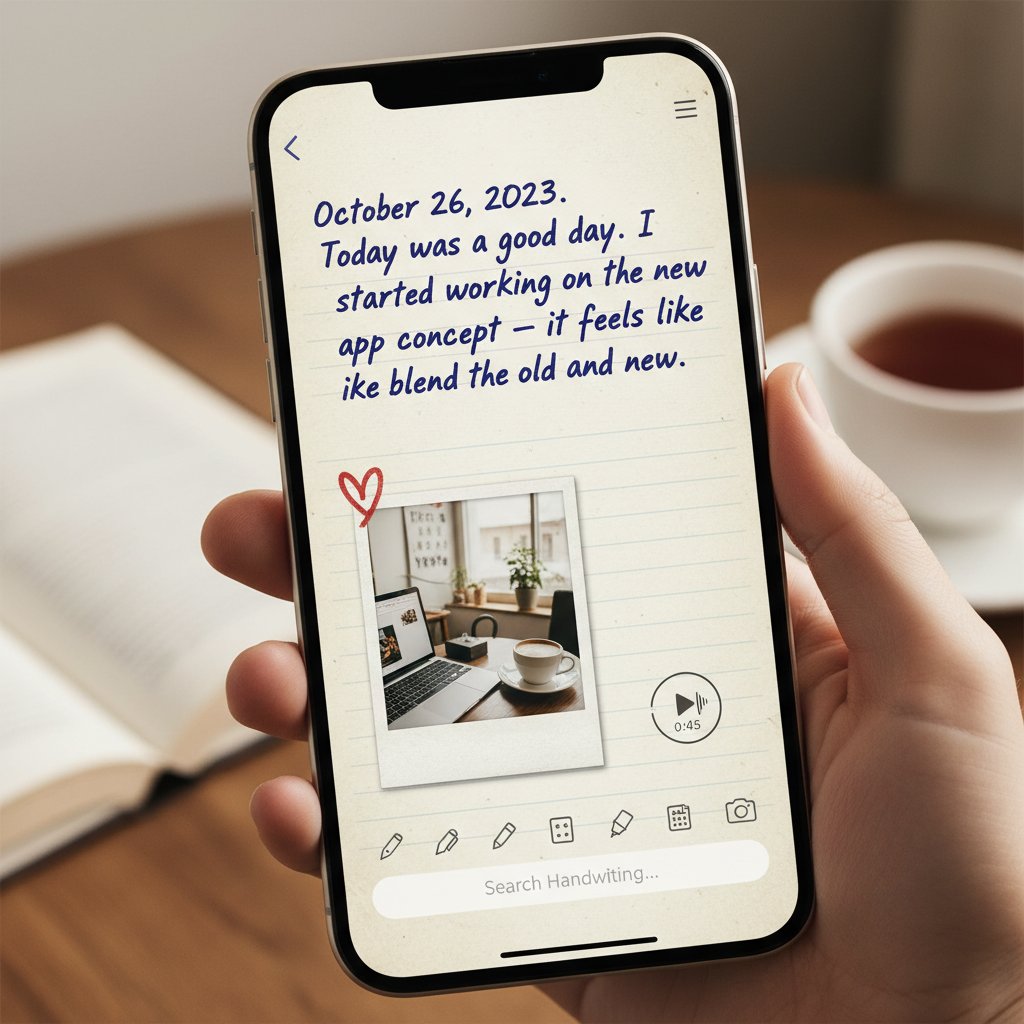
Choose the tool that fits your need for privacy, accessibility, and depth.
How AI is rewriting the rules of self-reflection
AI-driven tools like mirrormind.ai are changing the game. By analyzing your emotional patterns, mood swings, and language, these platforms can offer hyper-relevant prompts, mindfulness exercises, and even visualizations of your stress trajectory.
How to integrate AI into your routine:
- Sign up and set emotional intentions.
- Choose prompts based on your stress patterns, not random lists.
- Engage with daily reflections—text, voice, or even sketches.
- Review emotional analytics to spot trends or triggers.
- Use guided mindfulness when you hit a stress spike.
- Adjust prompts as your needs evolve—AI learns with you.
- Protect your privacy: Choose apps with robust encryption and transparent policies.
Checklist for choosing a journaling app:
- Does it offer personalized prompts?
- Can you control data access and privacy?
- Is it easy to use on your preferred device?
- Does it provide emotional analytics or feedback?
- Is it recommended by mental health professionals?
- Are there positive, real-world reviews?
- Does it allow alternative input methods (voice, image, etc.)?
- Can you export or delete your data anytime?
The future is now: AI can amplify your self-reflection—but it’s only as valuable as your willingness to use it honestly and safely.
Journaling pitfalls and how to outsmart them
Is your journaling fueling stress? Self-assessment checklist
Journaling is supposed to be a tool for clarity, not confusion. But sometimes, it becomes a new source of anxiety. Watch for these subtle warning signs:
- You dread opening your journal.
- You only write when something goes wrong.
- Your writing increases anxiety or self-blame.
- You obsess over grammar or “narrative.”
- You avoid hard topics out of shame.
- You rewrite history to sound “better.”
- You journal to avoid real action.
Instead? Flip the script. Use self-assessment checklists (like those built into mirrormind.ai) to track your emotional reactions, not just your writing frequency.
An interactive checklist might include:
- How did I feel before journaling? After?
- Did I gain new insight or get stuck in old patterns?
- Am I judging my feelings or observing them?
When to stop journaling (and what to do instead)
Sometimes, the healthiest move is to step away. Consider the story of Riley, who quit journaling after realizing it amplified obsessive self-monitoring. Instead, they found relief in movement, meditation, and supportive conversations.
Alternatives:
- Guided meditation apps (e.g., Insight Timer)
- Mindful movement (yoga, walking)
- Art or music expression
- Talking with a trusted friend or therapist
The key? If journaling becomes self-punishment, pivot to another method—your mental health is the priority.
Let’s zoom out and consider how culture and stigma shape this entire process.
Culture, stigma, and the myth of the perfect journaler
Why we’re ashamed to admit our stress (and how journaling helps)
Society trains us to see stress as weakness and emotional expression as indulgence. The workplace rewards stoicism; families reward silence. Journaling can be a radical act—a rebellion against perfectionism and emotional suppression.
"We write to taste life twice, in the moment and in retrospection." — Anaïs Nin, Writer and Cultural Critic
By chronicling our anxiety, we name it, claim it, and start to rewrite the script.
How different cultures approach stress journaling
Journaling isn’t a universal practice—it’s shaped by culture, stigma, and collective values.
| Culture | Journaling Practice | Attitude Toward Stress |
|---|---|---|
| Japan | “Naikan” reflection, gratitude journals | Private, introspective |
| U.S. | Expressive, self-improvement focus | Mixed: Self-help and stigma |
| Scandinavia | “Dagbok” daily logs, focus on nature | Open, normalized conversations |
Table 5: Cross-cultural differences in journaling for stress relief. Source: Original analysis based on Verywell Mind, 2023.

The common thread? The act of writing, no matter the style, is a tool for self-examination and resilience.
Your next move: Making stress journaling actually work for you
Step-by-step: Crafting your own radical prompt routine
Personalization is everything. Here’s how to build a sustainable journaling habit that actually relieves stress—not just in theory, but in your lived reality.
- Set your intention: What is your stress goal (awareness, reduction, pattern recognition)?
- Pick your medium: Analog, digital, or AI-powered? Choose what fits your life.
- Choose or craft prompts: Use ones in this guide or remix your own. Specific beats generic.
- Schedule micro-sessions: 5-10 minutes daily beats marathon entries.
- Track your reactions: Note changes in mood, clarity, sleep.
- Review regularly: Look for patterns, wins, and ruts every few weeks.
- Adjust as needed: If prompts lose effectiveness, switch them up.
- Mix it up: Alternate between triage, inquiry, and recovery prompts.
- Add accountability: Share (if safe) with a friend, therapist, or support group.
- Celebrate progress: Mark milestones, no matter how small.
You’ll know it’s time to refresh your routine when writing feels stale, repetitive, or burdensome. Stay agile; journaling is a living process.
Key takeaways: What to remember when the stress returns
- There’s no “right” way to journal—only what moves you forward.
- Not every prompt is for every person.
- Consistency outweighs perfection.
- Emotional safety is non-negotiable.
- Prompts that dig deep work best.
- Stress journaling is about acceptance, not control.
- Your story is valid, even when messy.
When anxiety comes knocking again (and it will), challenge yourself: pick one new prompt from this guide and see where it leads. The only failure is doing nothing.
Supplementary deep-dives and advanced strategies
The dark side of journaling: When not to use prompts
Journaling can be counterproductive—or even harmful—if you’re processing acute trauma without support, living in unsafe situations, or confronting privacy threats. In such cases, professional therapy, crisis hotlines, or anonymous helplines are better options.
Alternatives:
- Trauma-informed therapy
- Somatic experiencing exercises
- Mindful distraction (engaging the senses)
If in doubt, consult a trusted professional or peer support.
Advanced prompt techniques for next-level stress relief
Ready to go deeper? Try these pro-level approaches:
- Future self journaling: Write as if you’ve overcome today’s challenge, describing the path you took.
- Non-linear prompts: Use doodles, symbols, or maps instead of sentences.
- Visual journaling: Pair words with images, collages, or photographs.
- Reverse journaling: Start with the ending (“I am calm”) and trace back to the trigger.
- Perspective swap: Write as if you’re your own therapist.
- Ritual journaling: Pair prompts with music, scent, or movement for deeper anchoring.
Blending these styles can unleash new insights and creative coping strategies.
Real talk: Does any of this actually help?
Let’s be honest: journaling is not a cure-all. For some, it unlocks clarity and resilience; for others, it’s a frustrating non-starter. The evidence is clear that, for many, structured prompts focused on emotional processing, gratitude, and cognitive reframing reduce cortisol and improve mood (Verywell Mind, 2023; Talkspace, 2024). But don’t be afraid to adapt, quit, or seek new methods.
When journaling hits a wall, reach out—whether to a friend, a trusted platform like mirrormind.ai, or a professional. The most radical move is choosing what truly helps you.
Conclusion
Here’s the bottom line: stress is a relentless adversary, and the old rules of self-care are obsolete. Journal prompts for stress relief are only as effective as they are authentic, context-aware, and brutally honest. The science is clear—journaling can rewire your brain, clarify your triggers, and arm you with strategies for chaos. But it’s not about pretty notebooks or Instagram challenges. It’s about hacking your anxiety in real time, with tools that fit your wildly imperfect life. Whether you use a battered diary, an AI companion like mirrormind.ai, or a jumble of Post-its, the power is in your hands. Choose a prompt, write messily, and—when the stress hits—return to these radical tools. Your mind is worth the effort.
Sources
References cited in this article
- All Roots Wellness(allrootswellness.com)
- Verywell Mind(verywellmind.com)
- Talkspace(talkspace.com)
- Happier Human(happierhuman.com)
- HelpGuide.org(helpguide.org)
- Reflection.app(reflection.app)
- Verywell Mind(verywellmind.com)
- Statista(statista.com)
- Gitnux(blog.gitnux.com)
- Forbes Health(forbes.com)
- Our Mental Health(ourmental.health)
- Positive Psychology(positivepsychology.com)
- Neuroscience News(neurosciencenews.com)
- Psychology Today(psychologytoday.com)
- SHKA Tribe(shakatribeshop.com)
- Erin Condren(erincondren.com)
- Medium(medium.com)
- NeuroLaunch(neurolaunch.com)
- The Haven Shoppe(thehavenshoppe.com)
- CVS Health(cvs.com)
- The Intention Habit(theintentionhabit.com)
- The Happy Journals(thehappyjournals.com)
- Be More with Less(bemorewithless.com)
- The Mindful Page(themindfulpage.com)
- Reframe App(joinreframeapp.com)
- Neurolaunch(neurolaunch.com)
- Day One App(dayoneapp.com)
- CleverMemo(clevermemo.com)
- Forbes Health(forbes.com)
- Me.bot(me.bot)
- Reflection.app(reflection.app)
- Medium(medium.com)
- Creative Primer(creativeprimer.com)
- IJIP(ijip.in)
- Washington Post(washingtonpost.com)
- MindScape App Research(dl.acm.org)
- Reflection.app Blog(reflection.app)
- Pausa.co(pausa.co)
Unlock Your Inner Clarity
MirrorMind is your personalized AI journaling companion designed to help you achieve emotional clarity, mindfulness, and profound self-awareness. Through intuitive guided journaling, insightful emotional pattern analysis, and tailored mindfulness exercises, MirrorMind empowers you to explore your inner world, recognize emotional triggers, and cultivate healthier mental habits. Ideal for anyone seeking personal growth, emotional resilience, and deeper self-understanding, MirrorMind offers a private, reflective space to transform your emotional health and overall well-being.
Get startedReady to unlock your inner clarity?
Join thousands who have transformed their emotional well-being with MirrorMind
Frequently Asked Questions
What does the research say about how common stress is right now?
According to the American Psychological Association's 2024 report, over 77% of adults in the U.S. regularly experience physical symptoms caused by stress. Additionally, WHO data from late 2023 shows that stress-related disorders are now the second-highest cause of disability globally, just behind musculoskeletal conditions.
How does chronic stress affect the body?
Chronic stress elevates cortisol, undermines immune function, and is linked to conditions ranging from insomnia to cardiovascular disease. These physical consequences go far beyond mood swings.
Why is traditional stress advice like meditation not working?
According to the article, traditional advice such as meditation, unplugging, and mindful breathing isn't keeping up with the pace of modern life, as most self-help routines are engineered for a slower world than people experience today.
What is stress journaling and how is it different from a traditional diary?
Stress journaling involves using expressive writing through journal prompts specifically designed for stress relief. Unlike a traditional diary or Pinterest-perfect self-care lists, it is described as raw, imperfect, and backed by neuroscience research, without relying on inspirational quotes.
From the Archive
Discover more topics from Reflective Journaling Companion

Journaling to Reduce Stress and Anxiety: What Actually Works

Mindfulness Journaling Prompts for Stress Relief

Journaling to Overcome Stress: When and How It Works

When Journaling to Reduce Stress Works—And When It Doesn't

How Journaling to Manage Stress Can Backfire
