


Journal Prompts for Emotional Self-Awareness That Actually Work
Written with AI assistance under Reflective Journaling Companion's editorial guidelines. Editorial guidelines
Emotional self-awareness reveals blind spots that sabotage relationships and careers without your knowledge. Most leaders lack true self-awareness despite believing otherwise, according to research. Journal prompts designed to disrupt your inner status quo expose hidden emotional patterns, enabling you to understand yourself with brutal honesty and transform your interactions and decisions.
If you think you’ve got yourself all figured out, think again. Emotional self-awareness isn’t a feel-good hashtag or a therapy buzzword—it’s the raw, unvarnished reality check that most people dodge. The truth? Most of us are strangers to the emotional machinery operating behind our smiles, our outbursts, and even our “fine, thanks” autopilot. That’s where radical journal prompts for emotional self-awareness cut through the haze. Forget the fluffy affirmations and surface-level reflection; these prompts are engineered to disrupt your inner status quo, expose emotional blind spots, and spark the kind of clarity most people never experience. Whether you're a skeptic or a self-improvement devotee, buckle up. This is the roadmap to understanding yourself in a way that’s as confronting as it is transformative—no filters, no shortcuts, just the brutal honesty your growth demands.
Why emotional self-awareness matters more than you think
The high cost of emotional ignorance
Emotional blind spots aren’t just a personal nuisance—they’re catastrophic saboteurs, unraveling relationships and careers in slow motion. Consider the high-flying marketing executive who dominated every boardroom, only to implode after a string of public blowups and silent resentment from her team. She wasn’t cruel; she was oblivious—unaware that her unchecked frustration and terse feedback were infecting every interaction. This kind of emotional ignorance isn’t rare. According to the Institute of Human Factors (IHF, 2023), only 10–15% of leaders are truly self-aware, despite the majority believing otherwise. That gap isn’t just a statistical quirk—it’s a minefield.

| Outcome | Emotionally Aware Individuals | Unaware Individuals |
|---|---|---|
| Workplace Decisions | Adaptable, collaborative, high EQ leadership | Rigid, conflict-prone, poor morale |
| Relationships | Deeper connections, clear boundaries | Misunderstandings, recurring tension |
| Personal Well-being | Lower stress, improved resilience | Burnout, emotional volatility |
Table 1: Comparison of outcomes for emotionally aware vs. unaware individuals.
Source: Original analysis based on IHF, 2023; Forbes, 2024
"Most people think they’re self-aware, but the truth is far messier." — Dr. Maya, psychologist
The science of self-reflection: more than just feelings
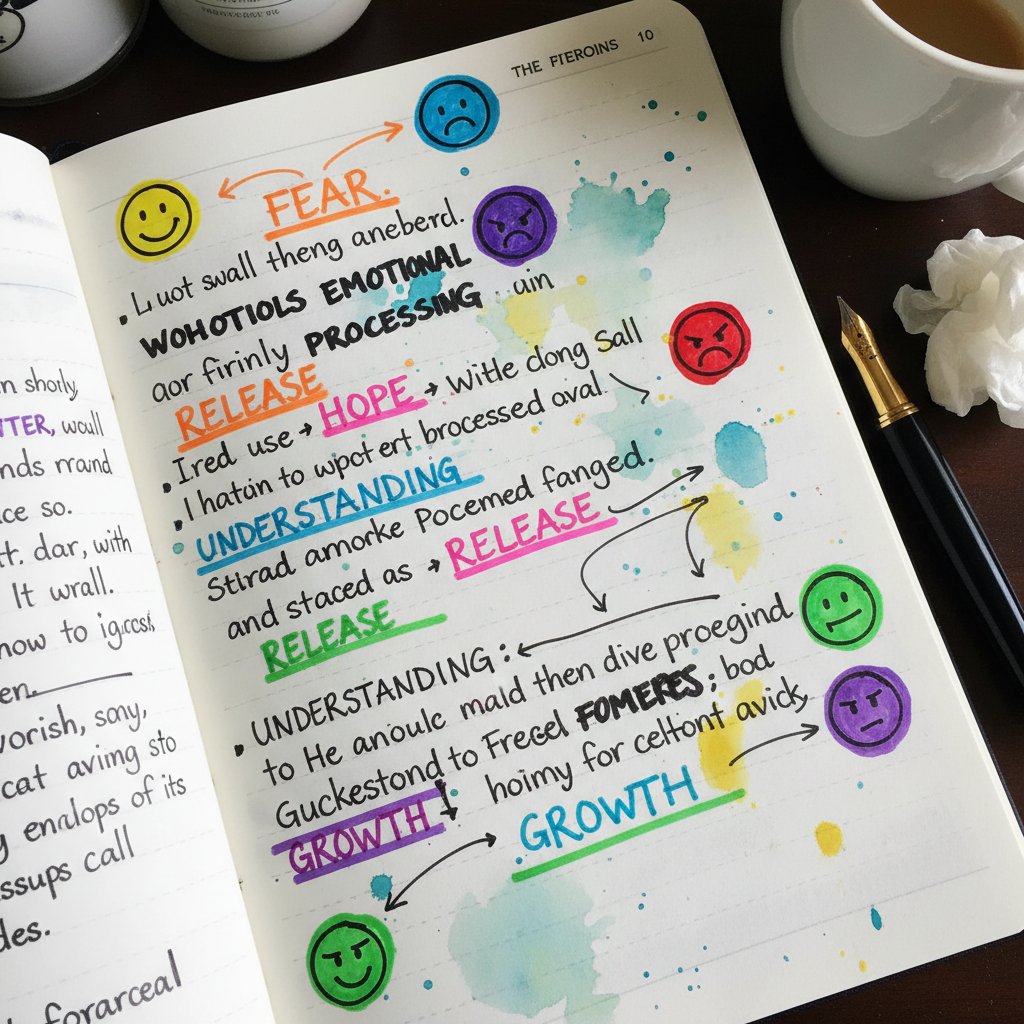
Journaling isn’t just a diary confessional—it’s neuroscience in action. Structured self-reflection rewires the brain’s emotional circuitry, according to recent studies in the field of affective neuroscience. Research from the University of Rochester Medical Center (2023) indicates that journaling about emotions can reduce anxiety by up to 40% and significantly boost mood within just a few weeks. Participants in these studies who engaged in daily emotional journaling reported improved immune function, better sleep, and even increased empathy—benefits that ripple far beyond the page.
- Improved immune response: Regular emotional processing correlates with fewer sick days and faster recovery from illness.
- Better sleep: Nighttime journaling helps offload rumination, making for deeper, more restorative rest.
- Increased empathy: A written record of emotional states fosters perspective-taking and compassion toward others.
Common myths about journaling for self-awareness
There’s a pervasive belief that journaling is only for the broken or those in the midst of crisis. This is nonsense. While it’s true that many people pick up a pen when life unravels, research shows the most profound growth comes from regular, intentional practice—regardless of external chaos. Another myth: “Any prompt is better than none.” In reality, shallow prompts can breed complacency, lulling you into surface-level reflection that masquerades as real insight.
- Journaling is only for people in crisis: False. Consistent self-reflection benefits everyone, not just the emotionally wounded.
- All prompts are equally effective: Deep, well-crafted prompts drive real change; generic ones often yield generic answers.
- You need to write for hours: Studies show that 10–15 minutes daily is optimal for reflection and emotional integration.
- It’s self-indulgent navel-gazing: Neuroscience and leadership research disagree—self-awareness is foundational for growth.
- You must have perfect grammar or style: The only requirement is honesty; content trumps form every time.
- Journaling is always safe: Without guidance, prompts can stir up overwhelm or reinforce unhealthy narratives.
- Digital journaling is less effective: Effectiveness depends on intention, not medium—see more in the analog vs. digital section.
"Journaling isn’t therapy, but it can be its own revolution." — Leah, introspective writing coach
The anatomy of a powerful journal prompt
What makes a prompt transformative, not just trendy
Not all journal prompts are created equal. A shallow prompt—“What made you smile today?”—may generate a fleeting sense of gratitude but rarely disrupts entrenched emotional patterns. In contrast, transformative prompts demand vulnerability and exploration of uncomfortable truths. For example, “What emotion do I avoid and why?” catapults you into the psyche’s back alleys, forcing confrontation with neglected feelings.
| Prompt Type | Features | When to Use |
|---|---|---|
| Surface | Positive recollection, low risk | Daily check-ins, building routine |
| Deep-Dive | Probes patterns, triggers, past wounds | Uncovering recurring themes, self-growth |
| Contrarian | Challenges assumptions, disrupts bias | Breaking self-delusion, seeking clarity |
Table 2: Feature matrix comparing prompt types and their optimal use.
Source: Original analysis based on Fifth Element Life, 2024; Spiritual Primate, 2024
Prompt fatigue is real—a symptom of trying to “hack” self-awareness with endless novelty. The trick is to alternate between surface and deep prompts, and to give yourself permission to pause, process, and revisit the hard stuff rather than sprint through a checklist.

How prompts can backfire: the dark side of self-reflection
Guided journaling isn’t without risks. When misapplied, prompts can reinforce delusion (“I’m always the victim”), foster rumination, or trigger emotional flooding. Over-identifying with narratives—especially traumatic ones—can cement unhelpful identities. Even well-intentioned prompts may lead to emotional overwhelm if they’re too invasive, especially without time for reflection or support.
- Red flags in journaling:
- Feeling consistently worse after writing
- Rehashing the same emotional wounds without new perspective
- Avoiding specific topics or emotional states repeatedly
- Using journaling to justify unhealthy patterns rather than challenge them
- Isolating emotionally after difficult entries
To mitigate these risks, experts recommend setting clear intentions, regulating the pace, and seeking support when tackling especially raw material. Journaling is powerful, but it’s not a replacement for professional help when needed.
Expert insights: designing prompts that change lives
The most effective prompts are designed with intention, rooted in psychological principles, and tailored to disrupt unexamined stories. According to Dr. Lisa Feldman Barrett, a leading affective neuroscientist, “A good prompt doesn’t just encourage reflection—it provokes emotional granularity, forcing us to label and differentiate complex states.”
Examples of transformative prompts:
- “Write a letter to your past self about an emotional wound you never addressed.” (Intent: Healing and integration)
- “What angered you recently, and what did your reaction reveal about your values?” (Intent: Understanding triggers, core beliefs)
- “Describe a moment when your emotional response surprised you. What did you learn?” (Intent: Pattern recognition, humility)
- “How do I express disappointment, and what are the costs and benefits of my approach?” (Intent: Behavioral analysis)
"A great prompt doesn’t give you answers—it asks the questions you’re afraid to face." — Theo, therapist
37 radical journal prompts for emotional self-awareness
Daily emotional check-ins for real-time clarity
Daily check-ins are the discipline behind emotional agility. They’re not about obsessing over every mood swing; they’re about tuning into the subtle shifts and recurring themes shaping your day-to-day choices. These seven prompts offer structure without rigidity—your emotional weather report, if you will.
- What am I feeling right now? — Use one word, then expand in two sentences.
- What triggered this feeling? — Identify a person, event, or thought.
- How did I respond to this emotion? — Write honestly, without judgment.
- Was my response helpful or harmful? — Analyze short-term and long-term impacts.
- What’s one thing I’m grateful for despite today’s challenges? — Anchor in resilience.
- Is there an emotion I’m ignoring or suppressing? — Name it, even if you don’t act on it yet.
- How can I support myself emotionally in the next 24 hours? — Commit to a small, concrete action.

Deep dives: uncovering hidden emotional patterns
Deep-dive prompts tear away the mask, exposing the roots of recurring emotional cycles. These are for the days when you’re ready to dissect old wounds and puzzling reactions—not for the faint of heart but transformative for those who persist.
- What emotion do I most avoid, and what scares me about it?
- Describe a memory where my emotional reaction felt out of proportion. What was beneath it?
- How do I express anger, and what has that taught me about myself?
- Write a letter to someone I resent but never confronted. What would I say if there were no consequences?
- What patterns do I notice in my romantic or friendship conflicts?
- How do my thoughts and feelings interact when I’m anxious?
- Recall a moment of pride or shame—what values were at play?
- How did my family handle difficult emotions, and how does that influence me today?
- What’s my default escape when emotional discomfort hits?
- Describe a time I surprised myself with compassion or cruelty. What was the context?
To use these prompts safely, set time boundaries, schedule decompression activities after writing, and revisit heavy topics only when emotionally resourced.
"Sometimes, the truth is in the patterns we refuse to see." — Alex, emotional literacy advocate
Contrarian prompts: challenge your emotional narratives
Uncomfortable questions are the antidote to self-delusion. Contrarian prompts are designed to jolt you out of autopilot, confronting cherished stories and forcing you to re-examine what you think you know about yourself.
- When was I last wrong about my own motives, and how did I realize it?
- Whose forgiveness am I withholding, and what am I gaining by doing so?
- What emotion do I criticize most harshly in others, and how does it show up in me?
- Where do I blame circumstances instead of owning my choices?
- What’s an unpopular feeling I’ve had that I rarely admit?
- How have I benefited from staying “stuck” in a familiar emotional pattern?
- Whose validation am I quietly chasing, and what’s the cost?
- What’s a belief about emotions I inherited but never questioned?
Processing discomfort is a skill: name the feeling, breathe, remind yourself that growth happens in the friction between comfort and challenge.

Relationship prompts: mapping your emotional impact
Journaling shines an unflinching spotlight on how you show up for others—and how they shape your inner world.
- How do I handle conflict with family? — List three recent examples and the emotions involved.
- What unspoken expectations do I have of friends?
- How do I communicate needs in romantic relationships? — Detail a time this succeeded or failed.
- Who in my life triggers strong emotions? — Explore why, and what this reveals.
- How do I respond to criticism at work or school? — Honest recounting, impacts noted.
- Describe a time I positively impacted someone’s emotions. What did I learn about myself?
Example responses might reveal self-sabotage, hidden generosity, or patterns of avoidance—all ripe for future growth.
Self-compassion and resilience: prompts for recovery
After emotional setbacks, the temptation to wallow or self-criticize is strong. These prompts build the muscle of gentleness and resilience, helping you move through pain without getting stuck.
- What would I say to a friend in my situation right now?
- Recall a time I bounced back from adversity. What did I do differently?
- List three emotional strengths I’ve shown recently.
- Describe a mistake I made, and how I can show myself understanding.
- What boundaries can I set to protect my well-being?
- How can I celebrate small wins in my emotional journey?

Case studies: real people, real breakthroughs
From burnout to balance: a professional’s journey
Meet Sam, a mid-career architect whose relentless schedule left him numb, short-tempered, and on the brink of collapse. He started with basic check-ins (“What am I feeling right now?”), gradually progressing to deep dives about anger, disappointment, and hidden fears of inadequacy. Within three months, Sam reported fewer blow-ups, deeper sleep, and revived curiosity at work.
| Step | Prompt Used | Emotional Shift | Outcome |
|---|---|---|---|
| 1. Daily Check-In | "What emotion is strongest right now?" | From numb to naming | Increased awareness |
| 2. Pattern Search | "What’s my biggest emotional trigger at work?" | Ownership of frustration | Reduced reactivity |
| 3. Deep Dive | "Write to your past self about burnout." | Compassion for self | Renewed boundaries |
| 4. Relationship | "Whose support have I ignored?" | Openness to feedback | Stronger team dynamics |
Table 3: Step-by-step breakdown of prompt usage and outcomes for burnout recovery.
Source: Original analysis based on 6seconds, 2024; mirrormind.ai use case analysis
Sam tried productivity hacks and meditation apps, but only structured journaling revealed the emotional roots of his burnout—and mapped a way forward.
Healing old wounds: journaling through trauma
Structured prompts can be lifelines in the aftermath of trauma. Take Maya, who journaled about a childhood wound using the prompt “Write a letter to your past self about an emotional wound you never addressed.” The process unearthed grief and anger she’d long buried, but it also opened space for self-compassion and forgiveness. Without boundaries, though, this approach risks re-traumatization. Maya learned to pace herself, seeking support when overwhelmed and using prompts that promoted safety.
- Start with grounding prompts before deep dives.
- Limit exposure time—set a timer for heavy topics.
- Debrief with a friend, therapist, or supportive resource.
- Monitor for emotional flooding—pause if distress spikes.
- Balance every hard prompt with a self-compassion exercise.

Growth in unexpected places: emotional self-awareness across cultures
Journaling isn’t a Western monopoly. In Japan, Naikan reflection blends written introspection with gratitude and responsibility. In South Africa, communal storytelling weaves emotional narratives into collective memory. A Brazilian entrepreneur credits her nightly “emotion log” for bridging cultural divides at work.
- Naikan reflection (Japan): Focuses on gratitude, obligations, and the impact of one’s actions on others.
- Ubuntu storytelling (South Africa): Uses group journaling to process trauma and foster empathy.
- Emotion logs (Brazil): Help monitor mood shifts and reframe setbacks as growth opportunities.
Globally, unconventional uses abound: artists sketch emotional states, athletes journal physical sensations alongside emotions, and some cultures blend journaling with ritual or prayer.
Analog vs. digital: choosing your journaling weapon
The tactile advantage: pen, paper, and presence
There’s an undeniable visceral magic to handwriting. Research from Princeton University (2014) shows that pen-and-paper journaling activates more neural pathways than typing, fostering deeper emotional processing and memory retention. Sensory engagement—the scratch of pen, the texture of paper—grounds you in the present, making emotions more tangible and the act of reflection more mindful.

AI-powered insights: the future of self-reflection
Digital tools—including mirrormind.ai—have democratized self-reflection, offering structure and AI-driven pattern analysis many analog methods can’t match. With privacy protocols evolving, these tools analyze emotional language, visualize trends, and flag emerging patterns, turning personal writing into actionable insight while respecting confidentiality.
| Feature | Analog Journaling | Digital Journaling (e.g., mirrormind.ai) |
|---|---|---|
| Sensory Engagement | High | Moderate |
| Emotional Analysis | Manual | Automated, real-time |
| Privacy Control | Physical security | Encrypted, user-controlled |
| Custom Prompts | Self-curated | AI-tailored, dynamic |
| Progress Tracking | Visual/manual | Charts, reports, timelines |
| Accessibility | Requires materials, space | Anywhere, any device |
| Distraction Risk | Lower | Higher (if unregulated) |
Table 4: Analog vs. digital journaling—benefits, drawbacks, and best uses.
Source: Original analysis based on mirrormind.ai, 2024; Spiritual Primate, 2024
"Tech won’t feel your feelings for you, but it can help you see them." — Jamie, digital wellness expert
Troubleshooting your journaling practice
Prompt fatigue: why it happens and how to overcome it
Prompt fatigue sneaks up when journaling shifts from discovery to obligation. Too many prompts, not enough integration. Motivation wanes. Your writing gets mechanical.
- Rotate between surface and deep prompts to prevent emotional overload.
- Take breaks—skip a day if needed; reflection isn’t a race.
- Revisit old prompts for new insights.
- Use voice notes or drawings to mix it up.
- Share select entries with a trusted friend for fresh perspective.
- Remind yourself of your “why.”
- Celebrate progress, even if small.
If boredom strikes, it’s a sign to switch gears—not to quit the practice entirely. The next section explores how to avoid common pitfalls and stay on track.
Common mistakes that block emotional growth
Over-identifying with negative emotions, rehashing the same wounds, or neglecting to challenge assumptions can all sabotage the power of journaling.
- Confusing venting with reflection: Name feelings, but always ask “why” and “what next.”
- Skipping uncomfortable prompts: Growth lives on the edge of discomfort.
- Writing only when upset: Build a balanced emotional record, not just a crisis log.
- Ignoring recurring patterns: If the same issue shows up, it’s a signal—not bad luck.
- Using journaling to justify, not challenge, stories: The goal is clarity, not self-affirmation.
- Neglecting follow-up actions: Insights mean little without real-world testing.
Recognizing self-sabotage is step one; the fix is a willingness to pivot, seek feedback, and try new formats when old ones go stale.
Beyond prompts: building lifelong emotional literacy
Integrating insights into daily life
The journal is a launchpad, not a landing spot. Emotional self-awareness only matters if it translates into action, whether that’s setting a boundary, apologizing, or making a different choice at work.
- Pause before reacting to emotion-laden situations.
- Communicate feelings clearly, using “I” statements.
- Set and revisit personal boundaries regularly.
- Reflect on emotional triggers post-conflict—not just in the heat of the moment.
- Integrate journaling insights into therapy, coaching, or mentorship sessions.
- Track emotional progress with monthly reviews.
- Practice empathy by mentally swapping roles in interpersonal conflicts.
- Use insights to adjust self-care routines, not just in crisis but proactively.

Advanced techniques: blending journaling with mindfulness and movement
Journaling’s power multiplies when paired with mindful movement or meditation. Try this blended session:
- Begin with five minutes of breathwork or body scan.
- Free-write on a chosen prompt for ten minutes, tracking physical sensations.
- Stand up and move—walk, stretch, or dance, letting emotion move through.
- Write a follow-up note: What shifted? What new insight surfaced?
- Close with a gratitude list or future intention.
Hybrid practices include voice journaling on a walk, drawing emotions before writing, or pairing prompts with guided imagery. These approaches strengthen the body-mind-emotion feedback loop, deepening integration.
The future of emotional self-awareness: trends and controversies
The rise of AI, privacy, and the quantified self
AI platforms like mirrormind.ai are rewriting the self-reflection rulebook, offering levels of analysis and pattern recognition unimaginable a decade ago. But as digital journaling grows, so do concerns about data privacy and emotional surveillance. Encryption and transparent privacy policies are now as essential as the prompts themselves.
| Year | Development |
|---|---|
| 2013 | First AI-assisted journaling app launches |
| 2017 | Emotional analysis features become mainstream |
| 2021 | Data privacy legislation expands to cover journaling tools |
| 2024 | Advanced AI tailoring prompts to individual histories |
Table 5: Timeline of developments in digital journaling and self-awareness tools.
Source: Original analysis based on mirrormind.ai; 6seconds, 2024
Societal shifts: emotional literacy as a core skill
Emotional self-awareness is no longer a luxury—it’s a non-negotiable life skill. Schools integrate SEL (social and emotional learning); employers rank EQ above technical prowess; communities host emotional literacy workshops.
- Enhances personal and professional relationships.
- Reduces stigma around mental health.
- Boosts adaptability in a volatile world.
- Promotes ethical leadership.
- Aids in conflict resolution.
- Supports lifelong learning.
- Fosters community resilience.

Controversies and unanswered questions
Some skeptics question whether journaling can truly disrupt entrenched emotional patterns for everyone, or if it privileges those with time, literacy, and self-motivation. Others warn of the echo-chamber effect—journaling reinforcing existing biases without external feedback.
- Does journaling benefit all personality types equally?
- Who gets left behind—those with language barriers or neurodiverse profiles?
- Can AI-driven journaling avoid replicating human biases?
- Where’s the line between healthy self-reflection and rumination?
- How can journaling integrate real-world feedback loops?
The debate is far from settled, but the consensus is clear: nuanced research and inclusive design are vital as emotional self-awareness becomes mainstream.
Jargon decoded: making sense of emotional self-awareness terms
Emotional granularity
The ability to identify and name nuanced emotions (e.g., “exasperated” vs. “angry”). High granularity is linked to better emotional regulation and mental health.
Self-compassion
Treating oneself with kindness during pain or failure, fostering resilience and growth.
Rumination
Obsessively thinking about problems or negative feelings, often blocking emotional progress.
Resilience
The capacity to recover quickly from difficulties—emotional elasticity, not just endurance.
Introspection
Examining one’s own thoughts, feelings, and motives. Central to journals that drive real change.
Affect labeling
Naming emotions as they arise—a skill that calms the brain’s alarm center (amygdala).
Emotional regulation
Managing emotional responses consciously rather than letting them control you.
Narrative identity
The evolving story you tell about yourself, shaped by life events and emotional meaning.
Self-narrative
A more granular, moment-to-moment version of narrative identity—your running internal commentary.
Prompt fatigue
Burnout or boredom from repetitive or shallow journaling prompts, signaling a need for variety or depth.
All these terms are more than jargon—they’re functional levers in the hands of anyone serious about using journaling for radical self-awareness.
Quick reference: your journal prompts for emotional self-awareness toolkit
Are you ready to go beyond cliché self-help? Use this checklist to be sure.
- I’m willing to face uncomfortable emotions, not just the pleasant ones.
- I can commit to regular (not perfect) journaling.
- I understand the risks of emotional overwhelm and have support if needed.
- I’m open to challenging my current self-narratives.
- I know the difference between venting and reflection.
- I plan to revisit entries for patterns, not just one-offs.
- I’ll balance deep dives with lighter prompts for sustainability.
- I’m aware of privacy needs (especially in digital tools).
- I’ll apply at least one insight from journaling to real life.
- I see this as a long-term practice, not a quick fix.
Revisit this toolkit as new challenges arise. Radical self-discovery isn’t a one-off event; it’s a lifelong experiment in curiosity, courage, and emotional honesty.
Conclusion
Journal prompts for emotional self-awareness aren’t for the faint of heart — they’re for those who crave radical clarity and real change. The data is clear: structured self-reflection can lower anxiety, improve relationships, and unlock levels of emotional intelligence and resilience most people never tap into. Whether you journal with ink-stained fingers or through AI-powered platforms like mirrormind.ai, the goal is the same: to know yourself, disrupt your narratives, and live with eyes wide open. As you dive into these 37 radical prompts and the insights throughout this article, remember—the only thing more dangerous than what you feel is what you refuse to see. Start reflecting. Start evolving. And above all, start being truly honest with yourself.
Sources
References cited in this article
- Fifth Element Life: 250+ Self-Awareness Journal Prompts(fifthelementlife.com)
- Spiritual Primate: 50 Journal Prompts for Emotional Awareness(spiritualprimate.com)
- Journaling Ace: 30 Journal Prompts for Emotional Awareness(journalingace.com)
- Forbes: Emotional Intelligence No.1 Leadership Skill for 2024(forbes.com)
- 6seconds: State of the Heart 2024 report(6seconds.org)
- IHF: The Importance of Self-Awareness in Leaders(ihf-fih.org)
- Emergent: Emotional Ignorance is Expensive(getemergent.com)
- Wiley: Cognitive Neuroscience of Self-Awareness (2024)(wires.onlinelibrary.wiley.com)
- Neuroscience News: Self-Reflection and Cognition(neurosciencenews.com)
- ScienceDirect: Cognitive Neuroscience of Self-Reflection(sciencedirect.com)
- Exam Study Expert: Thought-Provoking Journal Prompts(examstudyexpert.com)
- Positive Psychology: Journaling Prompts(positivepsychology.com)
- Crafting a Green World: DBT Journal Prompts(craftingagreenworld.com)
- Matthias Orgler: Power of Daily Emotional Check-Ins(matthiasorgler.com)
- Class Catalyst: SEL Check-Ins(classcatalyst.com)
- Day One App: Emotional Journaling(dayoneapp.com)
- Patrick Colletta: Emotion Journal Prompts(patrickcolletta.com)
- JournalPrompts.net: Reframing Prompts(journalprompts.net)
- The Good Trade: Best Journal Prompts for Every Emotion(thegoodtrade.com)
- LeStallion: Self-Compassion Journal Prompts(lestallion.com)
- JMIR Research Protocols: Self-Compassion and Resilience(researchprotocols.org)
- People Development Magazine: Journaling and Self-Awareness(peopledevelopmentmagazine.com)
- PubMed: Journaling about Stressful Events(pubmed.ncbi.nlm.nih.gov)
- Choosing Therapy: Journaling About Trauma(choosingtherapy.com)
- CPTSD Foundation: Structured Journaling for Trauma Recovery(cptsdfoundation.org)
- Creative Primer: Analog vs Digital Journaling(creativeprimer.com)
- Hello Brio: Digital vs Paper Journaling(hellobrio.com)
- Psychological Science: Handwriting and Memory(ncbi.nlm.nih.gov)
- News24: Mental Health Value of Pen and Paper(news24.com)
- Reflection.app: AI-Enhanced Journaling(reflection.app)
- Mindsera: Advanced AI Journal(mindsera.com)
- Medium: Top AI Tools for Journaling(medium.com)
Unlock Your Inner Clarity
MirrorMind is your personalized AI journaling companion designed to help you achieve emotional clarity, mindfulness, and profound self-awareness. Through intuitive guided journaling, insightful emotional pattern analysis, and tailored mindfulness exercises, MirrorMind empowers you to explore your inner world, recognize emotional triggers, and cultivate healthier mental habits. Ideal for anyone seeking personal growth, emotional resilience, and deeper self-understanding, MirrorMind offers a private, reflective space to transform your emotional health and overall well-being.
Get startedReady to unlock your inner clarity?
Join thousands who have transformed their emotional well-being with MirrorMind
Frequently Asked Questions
What is emotional self-awareness and why is it important?
Emotional self-awareness is understanding the emotional machinery operating behind your actions, reactions, and behaviors rather than operating on autopilot. According to the article, it matters because emotional blind spots can sabotage relationships and careers, and only 10–15% of leaders are truly self-aware despite most believing they are.
What are emotional blind spots and how do they harm us?
Emotional blind spots are areas where we're unaware of our emotional patterns and their impact on others. The article illustrates this with an example of a marketing executive whose unchecked frustration and terse feedback damaged her team's morale and relationships, despite her not being intentionally cruel.
How do emotionally aware individuals differ from unaware ones?
According to the article's comparison table, emotionally aware individuals make adaptable and collaborative workplace decisions, build deeper connections with clear boundaries, and experience lower stress and improved resilience, while unaware individuals tend to be rigid, conflict-prone, and prone to burnout.
What makes the journal prompts described in this article different from typical journaling?
The article states these prompts are engineered to disrupt your inner status quo, expose emotional blind spots, and spark clarity—cutting through fluffy affirmations and surface-level reflection with brutal honesty rather than shortcuts or filters.
From the Archive
Discover more topics from Reflective Journaling Companion

Journal Prompts for Emotional Self-Awareness and Growth

Journal Prompts to Improve Emotional Intelligence: What Actually Works

Journal Prompts for Emotional Empowerment and Mindfulness

Journal Prompts for Emotional Intelligence and Self-Awareness

Journaling Prompts for Emotional Awareness: Building Emotional Literacy


