


Reflective Journaling Prompts for Emotional Wellness That Actually Work
Written with AI assistance under Reflective Journaling Companion's editorial guidelines. Editorial guidelines
Reflective journaling for true emotional wellness requires personalized prompts that confront your actual patterns and emotional landscape, not generic templates. Research shows that quality and depth matter far more than daily volume, and effective prompts should push you toward uncomfortable clarity rather than surface-level comfort or aesthetics.
Ditch the shallow self-help scripts and generic affirmations. If you’re here, you’re after something real: the raw, sometimes uncomfortable clarity that only comes from deep, sometimes gritty, self-reflection. This isn’t about filling pages for the sake of it. This is about using reflective journaling prompts for emotional wellness and clarity to rip through your mental fog, face what holds you back, and see yourself—sometimes for the first time. Forget pretty notebooks and Instagrammable quotes: we’re diving into the psychological machinery that actually shifts your perspective. With research-backed prompts, cutting-edge insights, and zero tolerance for fluff, this guide is your roadmap to emotional wellness in 2025. Ready to rewrite your story? Let’s get uncomfortable.
Why most journaling advice is a lie (and what actually works)
The myth of 'one-size-fits-all' reflective prompts
The journaling world loves to sell easy fixes, but most advice recycles the same tired prompts—ignoring context, nuance, and the complexity of real human emotion. “Write about your day. List three things you’re grateful for.” Sound familiar? While these may provide fleeting comfort, research shows that reflective journaling for emotional wellness and clarity demands more than going through the motions1. True transformation requires prompts tailored to your unique emotional landscape, not universal templates.
- Context matters: Your history, triggers, and cultural background shape how you process emotions—and what you need to write about.
- Volume ≠ Depth: Filling pages daily can become mindless; quality beats quantity every time, as highlighted by recent research from NeuroBirdies (2023).
- Action over aesthetics: Journals are not trophies or curated timelines—they function best as safe dumping grounds for your messiest thoughts, a fact backed by creative coaches like Lauren Marie Fleming2.
- Personalization is power: Prompts that confront your real patterns—numbing, denial, anger, or vulnerability—drive clarity, not surface-level reflection.
“Journals are meant to be the dumping ground of ideas and feelings, not a collection of your most brilliant thoughts.” — Lauren Marie Fleming, Art of Manliness, 2023

The psychology behind effective emotional prompts
If you want journaling to change you, you need prompts grounded in psychological science. Techniques from Cognitive Behavioral Therapy (CBT), Self-Determination Theory, Positive Psychology, and Trauma-Informed Care create space for true emotional processing. It’s not just about “venting”—it’s about consciously surfacing, examining, and rewriting emotional narratives.
| Psychological Theory | How It Informs Prompts | Example Prompt |
|---|---|---|
| Cognitive Behavioral Therapy (CBT) | Challenging cognitive distortions | “What story am I telling myself that might not be true?” |
| Positive Psychology | Focusing on strengths, gratitude | “When did I feel most alive this week?” |
| Attachment Theory | Exploring relationship dynamics | “How do I respond when someone sets a boundary with me?” |
| Trauma-Informed Care | Honoring past wounds, safety | “What triggers feel unsafe—and why?” |
Table 1: Psychological frameworks for journaling prompts
Source: Original analysis based on NeuroBirdies, 2023, Art of Manliness, 2023
The evidence is clear: prompts that provoke curiosity, discomfort, or counter your usual narratives spark the greatest emotional breakthroughs. That’s why the best reflective journaling prompts for emotional wellness and clarity are often the ones that don’t feel easy.
What the latest research reveals about clarity and self-reflection
Current studies eviscerate the “write every day for results” myth. According to NeuroBirdies (2023), just 20 minutes of journaling, three times a week, is enough to create measurable improvements in emotional clarity and self-awareness3. The real magic happens not in frequency, but in the depth and honesty of your engagement.
| Study/Source | Key Finding | Implication for Journaling |
|---|---|---|
| NeuroBirdies, 2023 | 20 minutes, 3x/week maximizes benefits | Focus on quality sessions, not daily grind |
| Wit & Delight, 2023 | Personalized prompts outperform generic advice | Curate prompts that fit your current struggles |
| Art of Manliness, 2023 | Mindless writing can reinforce negative patterns | Use prompts to disrupt—not entrench—old stories |
Table 2: Summary of recent research on effective journaling practices
Source: Original analysis based on NeuroBirdies, 2023, Wit & Delight, 2023
Journaling works when it’s intentional and brave—when you step beyond autopilot and meet your thoughts head-on. That’s how you cut through the noise.
Red flags: when journaling becomes toxic
Journaling can become counterproductive, even damaging, if you’re not careful. According to mental health experts, these warning signs suggest it’s time to recalibrate your approach:
- Ruminating without resolution: Replaying the same grievances, reinforcing victimhood or helplessness.
- Self-blame spirals: Using your journal as a tool for self-criticism, shame, or punishment.
- Avoiding action: Endless analysis with no shift toward healing or change.
- Confusing productivity with progress: Obsessing over word counts or “perfect” entries while ignoring real emotional work.
If you spot these patterns, pause. Quality journaling for emotional wellness and clarity involves self-compassion, not self-flagellation. Shift your focus from obsessing over pain to exploring actionable insights—what can you actually do next?
The science and history of reflective journaling: from ancient rituals to 2025
How ancient cultures practiced radical self-reflection
Long before the bullet journal or AI-powered apps, humans craved self-understanding. Reflective practices date back millennia, woven into ritual, religion, and philosophy across civilizations.
- Ancient Egypt: Scribes documented dreams and omens, seeking meaning for personal and communal well-being.
- Stoic Rome: Philosophers like Marcus Aurelius journaled to dissect desires, fears, and ethical dilemmas—forming the bedrock of modern self-reflection.
- Japanese Naikan Therapy: Originated as a structured reflection on relationships, gratitude, and personal responsibility.
- Indigenous Traditions: Many Native American tribes used storytelling circles to process emotion and transmit wisdom, functioning as communal “journals.”

These practices all recognize something modern journaling sometimes forgets: writing is a way to confront, not escape, the self.
The neuroscience of journaling for emotional clarity
Modern neuroscience finally catches up to what mystics and philosophers intuited: reflective journaling rewires the brain. According to a 2023 analysis published in Psychology Today4, expressive writing (especially about emotions) activates the prefrontal cortex—the region responsible for insight and regulation—and downshifts the amygdala, lessening the grip of anxiety and fear.
| Brain Area | Journaling Effect | Impact on Emotional Wellness |
|---|---|---|
| Prefrontal Cortex | Heightened activation, logical processing | Enhanced self-reflection and decision-making |
| Amygdala | Reduced activity during emotional writing | Less emotional overwhelm, better mood |
| Default Mode Network | Stronger connectivity, creativity | Boosted sense of meaning, personal narrative |
Table 3: Neurological mechanisms behind journaling benefits
Source: Original analysis based on Psychology Today, 2023
“The act of naming and examining your emotions in writing literally changes how your brain processes stress and trauma.” — Dr. James Pennebaker, Psychologist, Psychology Today, 2023
The takeaway? Reflective journaling for emotional wellness and clarity isn’t just “woo.” It’s a neurological intervention, as valid as meditation or talk therapy.
Timeline: journaling’s evolution from taboo to trend
The journey from scribbled secrets to digital guided prompts is anything but linear. Here’s how reflective journaling transformed through the ages:
- Ancient Stone and Papyrus (2000 BCE–500 CE): Early self-reflection inscribed on stone tablets, scrolls, and papyrus (think Egyptian dream diaries).
- Philosophical Manuscripts (500–1500 CE): Stoics, monks, and scholars pen personal treatises—journals as tools for moral and existential inquiry.
- Private Diaries (1600s–1800s): Journaling goes private, with personal almanacs and “commonplace books” documenting inner and outer lives.
- Psychoanalysis and the 20th Century: Freud, Jung, and others harness journaling for subconscious exploration.
- Rise of Self-Help (1970s–2000s): Guided journals and therapy-inspired prompts become mainstream.
- Digital Age (2010s–2020s): Apps and social platforms disrupt privacy norms; AI and analytics enter the scene.
- 2025: Reflective journaling is a core wellness tool, merging ancient wisdom with cutting-edge technology.

The stigma is gone. Now, the question isn’t “should I journal?”—it’s “how do I do it in a way that shatters my emotional fog?”
31 reflective journaling prompts for emotional wellness and clarity (with advanced breakdowns)
Prompts for breaking emotional numbness
Emotional numbness is armor—a defense against overwhelm, but also a barrier to joy and clarity. The right prompts act like a psychological crowbar.
- When did I last feel something strongly—positive or negative? What triggered it?
- Where in my body do I sense tension right now? What might it be hiding?
- What am I avoiding thinking or feeling today? Why?
- Which emotion do I fear or judge most? How would my life change if I allowed it more space?
- Recall a recent moment of joy. What conditions made it possible? What blocks me from repeating it?
According to CBT research5, focusing on physical sensations and recent experiences can gently thaw shutdown states—making numbness less impenetrable.
Prompts that challenge your comfort zone
The edge of your comfort zone is where insight—and discomfort—collide. These prompts force you to color outside the lines.
- What relationship or habit drains me most, and why do I tolerate it?
- When did I last say “yes” to something I wanted to decline? What fear drove that choice?
- What is a belief I inherited that no longer serves me? How does it hold me back?
- How do I sabotage my own boundaries, and what would change if I stopped?
- What do I most want to hide from others—and what might happen if I shared it?
By systematically unsettling your routines, you create the friction necessary for transformation.
Prompts for radical honesty and self-confrontation
If you’re ready to go deeper, these prompts demand unvarnished self-honesty. No euphemisms, no sugarcoating.
- When have I let fear make my decisions for me?
- What is a painful truth I’m not willing to admit—even to myself?
- Who have I hurt (intentionally or not), and what responsibility do I avoid taking?
- When did I last celebrate myself, and why is that uncomfortable?
- What is my relationship with anger—how do I express, suppress, or weaponize it?
Radical honesty is the only antidote to self-deception, and it’s the foundation of true emotional wellness and clarity.
Advanced prompts for emotional pattern analysis
Pattern recognition is where journaling and psychological science converge. Use these prompts to spot, disrupt, and rewire your default emotional scripts.
| Prompt | Purpose | Associated Theory | Example Application |
|---|---|---|---|
| “What patterns repeat in my emotional reactions to criticism?” | Identifying triggers and responses | CBT | Noting defensiveness with authority figures |
| “Which stories about my past do I keep retelling, and why?” | Surfacing core beliefs | Narrative Therapy | Analyzing themes of betrayal or abandonment |
| “What feels intolerable for me emotionally, and how do I cope?” | Building tolerance for discomfort | Exposure Therapy | Tracking self-soothing strategies (e.g., numbing, distraction) |
| “How do my moods affect my choices today?” | Linking emotion and action | Mindfulness-Based CBT | Observing impulsive decisions during anxiety |
Table 4: Advanced prompts for emotional pattern analysis
Source: Original analysis based on Clearful, 2024, Brown Girl Trauma, 2023
These aren’t just questions—they’re X-rays for your psyche, designed to shatter autopilot and ignite conscious change.
Case studies: how real people shattered their emotional fog
From burnout to breakthrough: Alex’s story
Alex, a tech consultant, faced relentless burnout—insomnia, emotional numbness, and a creeping sense of disconnection. Journaling was suggested by a therapist, but the “dear diary” prompts felt pointless. Instead, Alex experimented with prompts like, “What am I pretending not to know about my exhaustion?” and “What would I do if I wasn’t afraid of disappointing others?”

“The first time I wrote honestly about my resentment—without editing or judging—the relief was physical. I stopped trying to sound wise and just dumped the mess out. That’s when I stopped feeling stuck.” — Alex R., Reflective Journaling User
- Tactic 1: Focused on body sensations (tightness, headaches) to bypass mental defenses.
- Tactic 2: Used prompts specifically challenging people-pleasing and perfectionism.
- Tactic 3: Measured progress not by mood, but by willingness to face discomfort.
Alex’s outcome: less burnout, more agency, and a clarity that lasted beyond the page.
When journaling backfired—and how to pivot
Journaling isn’t a panacea. For some—like Mia, who found herself ruminating endlessly—reflective writing became a trap. Her process revealed:
| Problematic Pattern | Description | Pivot Strategy |
|---|---|---|
| Rumination | Repeatedly writing about the same pain | Shift to action-oriented prompts |
| Self-judgment | Harshly critiquing every entry | Practice self-compassion exercises |
| Avoidance | Skipping hard topics | Tackle one “uncomfortable” prompt per week |
Table 5: When journaling becomes toxic and how to recalibrate
Source: Original analysis based on NeuroBirdies, 2023
Mia found relief by embracing quality over quantity—writing less, but digging deeper when she did.
Therapists and coaches: how pros use reflective prompts in 2025
Mental health professionals are no longer prescribing generic journaling. Instead, they curate prompts based on a client’s goals, traumas, and strengths.
“The most powerful prompts are those that challenge core beliefs gently but relentlessly. It’s about provoking insight, not reinforcing old pain.” — Dr. Lisa Bailey, Licensed Clinical Psychologist, Wit & Delight, 2023
A practice of confronting uncomfortable truths directly, even when they threaten self-image.
Journaling that ends each entry with a chosen action or experiment, rather than mere analysis.
Using prompts in structured phases—first building safety, then exploring, and finally integrating insights.
These techniques are all accessible to anyone willing to journal with intention—not just professionals.
Debunking the biggest myths about reflective journaling prompts
Journaling is only for the sentimental (wrong)
Journaling’s reputation as a soft, emotional outlet does it a disservice. Research from Wit & Delight, 2023 shows that engineers, executives, and skeptics benefit just as much from reflective writing as artists or therapists.
“Reflective writing is less about ‘getting in your feelings’ and more about ruthless self-inquiry.” — Dr. James Pennebaker, Psychology Today, 2023
Journaling is a tool for strategic thinking, emotional triage, and even leadership development. Sentimentality is optional.
You have to write every day for real results
This is one of the most persistent lies in the journaling world.
- Quality trumps frequency: As NeuroBirdies (2023) found, 20 minutes, three times a week is more effective than daily filler.
- Motivation matters: Forcing yourself when uninspired breeds resentment, not insight.
- Habit chaining helps: Journaling linked to existing routines (morning coffee, bedtime) boosts consistency without pressure.
Sustainable reflection comes from rhythm, not rigidity. Journaling for emotional wellness and clarity is about meeting yourself where you are—not adhering to arbitrary schedules.
Only positive prompts are healthy
Toxic positivity infects much of self-help culture. But evidence says otherwise.
- Shadow work prompts (exploring anger, envy, regret) disrupt denial and fuel growth.
- Critical reflection (examining limiting stories, failures) builds resilience.
- Balanced inquiry (celebrating wins and confronting wounds) creates grounded clarity.
Positive prompts have their place, but real emotional wellness demands a full-spectrum approach.
Journaling is not about “good vibes only”—it’s about truth. Sometimes that truth hurts. That’s how you know it’s working.
How to build a reflective journaling ritual that actually sticks
Step-by-step guide to creating your own prompt framework
You can’t brute-force emotional wellness. Sustainable change requires a ritual built for your quirks, not someone else’s.
- Clarify your “why”: Pinpoint what you really want—clarity, stress relief, pattern disruption, or self-acceptance.
- Audit your patterns: What topics do you avoid or obsess over? List them.
- Curate personalized prompts: Borrow ideas or write your own, ensuring each prompt targets your real needs.
- Set flexible rituals: Pair journaling with an existing habit (commute, coffee, post-workout).
- Structure sessions: Start with a check-in (“What am I feeling right now?”), progress to a prompt, and close with an action step.
- Track progress: Use a digital tool like mirrormind.ai or analog chart to monitor shifts in mood and insight.

Common mistakes (and how to avoid them)
Reflective journaling fails when it becomes mindless, performative, or punitive.
- Obsessing over aesthetics: Beautiful journals are useless if you’re censoring your truth.
- Writing for an imaginary audience: Your journal is not a memoir. Write ugly, messy, and honest.
- Using prompts as procrastination: Journaling without action is just rumination in disguise.
- Ignoring feedback loops: If your writing feels pointless or painful, pivot. Experiment with new prompts or formats.
The ritual should serve you—not the other way around.
Checklist: journaling for emotional insight in the real world
- Am I writing honestly, without censoring or editing?
- Does each prompt challenge or comfort me when needed?
- Am I tracking patterns, not just feelings?
- Do I close entries with curiosity or action—not just venting?
- Is my ritual sustainable and flexible?
- Am I using tools (digital or analog) that actually fit my lifestyle?
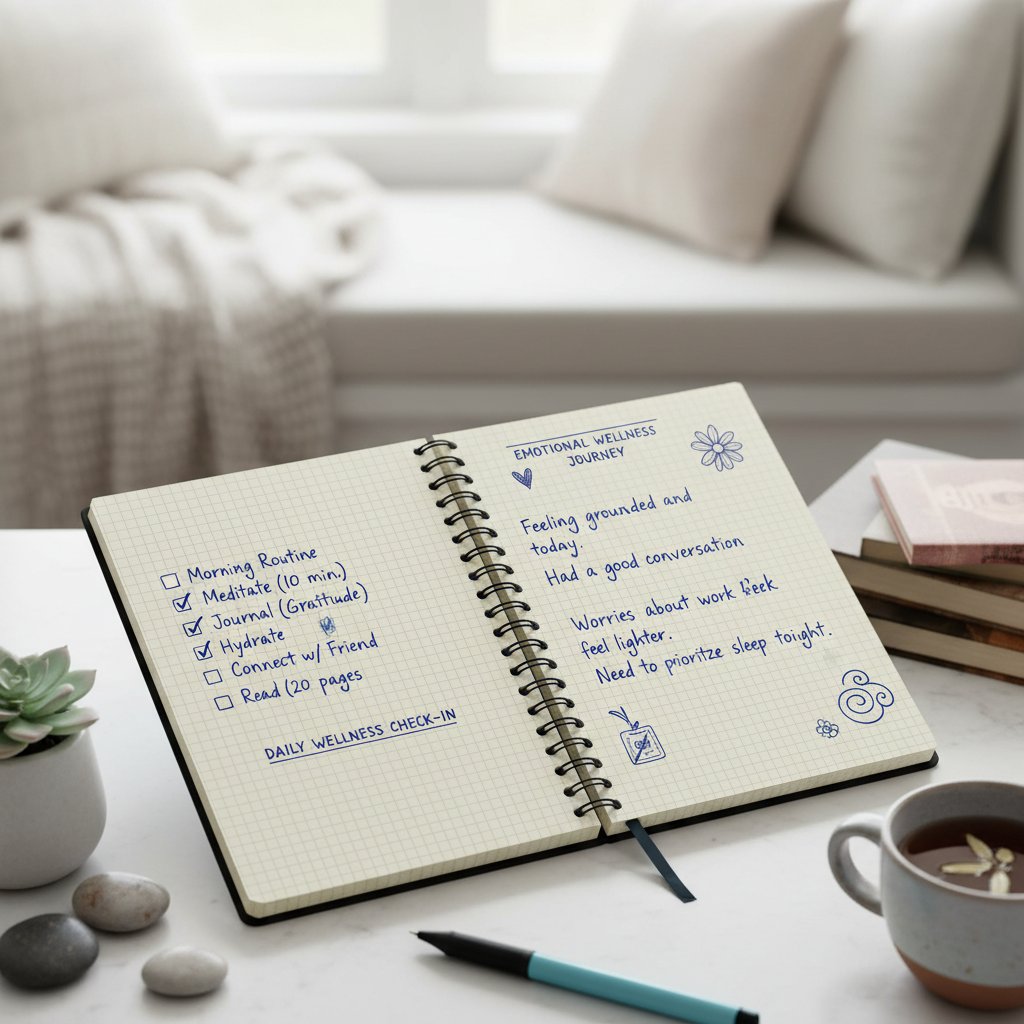
If you can tick these boxes, you’re on the path to clarity.
Digital vs. analog journaling: which method delivers clarity?
Comparing the science: screen vs. paper
Is it better to handwrite your emotional fog into submission, or let your thoughts flow onscreen? Research offers surprising nuance.
| Method | Strengths | Weaknesses |
|---|---|---|
| Analog (Paper) | Boosts memory, creativity, and presence | Harder to analyze patterns over time |
| Digital (Apps) | Searchable, analyzable, accessible | Risk of distraction, less physical memory |
| Hybrid | Combines depth with convenience | Requires intentional structure |
Table 6: Comparing digital and analog journaling effectiveness
Source: Original analysis based on Wit & Delight, 2023
Both methods work—if used intentionally. The best choice is the one that keeps you honest and consistent.
The hybrid approach: best of both worlds
More journalers are combining methods:
- Draft on paper, analyze digitally: Capture raw emotion first, then use apps for pattern tracking.
- Voice notes to written reflection: Speak feelings aloud, then transcribe for deeper insight.
- Photo journaling: Pair images with brief text to infuse emotional context.

This approach maximizes depth and data—fuel for real transformation.
Privacy, permanence, and the art of letting go
Definitions matter in the digital age.
Analog journals offer absolute privacy (unless lost); digital journals provide encryption but carry some risk. Choose based on your comfort with vulnerability.
Paper degrades, digital files can be lost. Regular backup—or ritual burning—can be cathartic.
Sometimes, destroying old entries is the ultimate act of emotional release. Don’t be afraid to start over.
In the end, the method is the servant—not the master—of your clarity journey.
Journaling in 2025: trends, tools, and the rise of AI-powered reflection
How reflective journaling apps are changing self-discovery
Today, apps aren’t just digital notebooks—they’re interactive coaches, mining your words for patterns, triggers, and growth opportunities.

- Pattern analysis: AI detects recurring themes and emotional triggers.
- Guided prompts: Algorithms tailor questions to your mood and progress.
- Emotional tracking: Visualizations turn abstract feelings into concrete data.
Apps like mirrormind.ai integrate cutting-edge technology with proven psychological frameworks, giving users a private space for relentless self-honesty and actionable feedback. The result? Emotional wellness and clarity, backed by data.
The role of mirrormind.ai and other resources in guided reflection
AI-driven platforms offer more than convenience—they close the gap between insight and action.
“Personalized prompts, emotional pattern analysis, and real-time feedback are redefining what it means to journal for clarity.” — Reflective Journaling Expert, 2025
By using tools designed for depth—not distraction—users can move beyond superficial reflection to enduring self-understanding.
The key is intentionality: a smart app is only as insightful as the honesty you bring to the process.
What’s next: emerging trends in emotional wellness
- Trauma-informed prompts become standard: Safety and consent are prioritized in every question.
- Collective journaling: Groups and communities share prompts, building resilience together.
- AI-assisted legacy projects: Journaling becomes a tool for life review, not just daily mood tracking.
- Micro-journaling: Ultra-short, frequent entries for tracking subtle shifts.
- Integration with therapy and coaching: Journals become part of the therapeutic record, with user consent.

Journaling’s future is collaborative, data-driven, and, above all, deeply personal.
Reflective journaling prompts for emotional wellness and clarity: your roadmap to real transformation
Synthesizing breakthroughs: key takeaways for deep change
- Quality beats frequency: Intentional, uncomfortable prompts drive clarity.
- Personalization is non-negotiable: One-size-fits-all advice is a trap.
- Neuroscience backs expressive writing: The brain changes when you get honest on the page.
- Toxic patterns can be reversed: Watch for rumination and self-judgment.
- Digital and analog both work: Choose the method that serves your truth.

These are not just tips—they’re the scaffolding for a lifelong practice of emotional wellness and clarity.
Your next steps: building a lifelong habit of radical self-reflection
- Define your goal: What do you want from your journal—relief, insight, change?
- Select prompts with intention: Choose a handful that challenge your comfort zone.
- Experiment with formats: Try digital, analog, or hybrid—track what works.
- Build in accountability: Use a journal buddy or digital check-ins.
- Review and recalibrate: Set aside time each month to reflect on your progress and pivot as needed.
The work is ongoing—but so is the reward. Clarity is a moving target, but every honest entry gets you closer.
Closing thoughts: clarity is just the beginning
Emotional wellness isn’t a destination—it’s an evolving practice. Reflective journaling prompts for emotional wellness and clarity are your compass, not your map. They won’t hand you easy answers, but they will force you to ask harder questions—the ones that matter.
“The truth is, clarity rarely arrives in a flash. It’s chipped out, line by line, in the quiet brutality of self-reflection.” — Reflective Journaling Advocate, 2025
Stick with it. The feeling of seeing yourself clearly is worth every ounce of discomfort.
Embrace the mess, challenge your narratives, and let the page become your mirror. This is where transformation begins.
Supplementary deep dives: adjacent topics and controversies
The myth of 'journaling works for everyone': who it doesn’t help (and why)
Reflective journaling is powerful, but not universally magical.
- Those with severe trauma: Writing about unprocessed trauma without support can retraumatize.
- Perfectionists: Journaling may turn into another arena for self-criticism.
- People with alexithymia: Difficulty identifying feelings can make emotional prompts frustrating.
- Time-starved individuals: Without prioritization, journaling becomes another failed “should.”
For these groups, alternative approaches or professional support might be more effective than solo journaling.
Some experiences require more than the page.
Unconventional uses for reflective journaling prompts
Journaling isn’t just for mood tracking or venting.
- Creative breakthroughs: Use prompts to uncover artistic blocks or new ideas.
- Conflict resolution: Write both sides of a disagreement to build empathy.
- Decision-making: Map fears and outcomes before major choices.
- Legacy building: Record wisdom or life lessons for future generations.
Journaling is a tool. Know when to wield it, and when to lay it down.
Societal impacts: from private diary to global movement
Reflective journaling has exploded in popularity, shifting from secret diaries to tools for social change.
| Era | Primary Use | Societal Impact |
|---|---|---|
| Pre-2000 | Private reflection | Personal growth, hidden struggles |
| 2000–2015 | Self-improvement fad | Normalization of emotional inquiry |
| 2016–2020 | Digital community | Online sharing, stigma reduction |
| 2021–2025 | Wellness revolution | Journaling as mainstream mental health tool |
Table 7: Societal evolution of reflective journaling
Source: Original analysis based on Art of Manliness, 2023

Journaling is now a movement—raising collective self-awareness, one entry at a time.
Footnotes
Sources
References cited in this article
- Brown Girl Trauma(browngirltrauma.com)
- YouAligned(youaligned.com)
- LeStallion(lestallion.com)
- Clearful(clearful.com)
- Wit & Delight(witanddelight.com)
- NeuroBirdies(neurobirdies.com)
- Art of Manliness(artofmanliness.com)
- Baronfig(baronfig.com)
- Stationery Snobs(stationerysnobs.com)
- ResearchGate(researchgate.net)
- Consilio Antiqua(consilioantiqua.com)
- Medium: Philosophical Journaling(medium.com)
- Recal Travel(recaltravel.com)
- Emotional Intelligence Canada(emotionalintelligence.ca)
- Toxigon(toxigon.com)
- Freely Written(freelywritten.com)
- Shift London(shiftlondon.org)
- The Intention Habit(theintentionhabit.com)
- Day One App(dayoneapp.com)
- Carla Corelli(carlacorelli.com)
- Ambitiously Alexa(ambitiouslyalexa.com)
- PubMed: Nursing Case Study(pubmed.ncbi.nlm.nih.gov)
- Thriving Center of Psychology(thrivingcenterofpsych.com)
- Reflection.app(reflection.app)
- LinkedIn: Alex Kremer(linkedin.com)
- YouTube(youtube.com)
- Reflection.app(reflection.app)
- Amazon: Transformational Journaling for Coaches, Therapists, and Clients(amazon.com)
- American Diary Project(americandiaryproject.com)
- The Essence of Being(theessenceofbeing.in)
- Forbes(forbes.com)
- Medium(medium.com)
- Steve R Morgan(stevermorgan.com)
Unlock Your Inner Clarity
MirrorMind is your personalized AI journaling companion designed to help you achieve emotional clarity, mindfulness, and profound self-awareness. Through intuitive guided journaling, insightful emotional pattern analysis, and tailored mindfulness exercises, MirrorMind empowers you to explore your inner world, recognize emotional triggers, and cultivate healthier mental habits. Ideal for anyone seeking personal growth, emotional resilience, and deeper self-understanding, MirrorMind offers a private, reflective space to transform your emotional health and overall well-being.
Get startedReady to unlock your inner clarity?
Join thousands who have transformed their emotional well-being with MirrorMind
Frequently Asked Questions
What's the difference between surface-level journaling and reflective journaling that actually works?
According to the article, surface-level journaling relies on generic, one-size-fits-all prompts like "list three things you're grateful for," which only provide fleeting comfort. Effective reflective journaling requires personalized prompts tailored to your unique emotional landscape and real patterns—such as those addressing numbing, denial, anger, or vulnerability—rather than universal templates that encourage mindless page-filling.
Why does the article say that volume doesn't equal depth in journaling?
The article cites recent research from NeuroBirdies (2023) showing that filling pages daily can become mindless. Quality beats quantity every time, meaning intentional, focused writing about meaningful topics creates more emotional wellness than the sheer act of writing large amounts.
What role does personalization play in effective reflective journaling?
The article emphasizes that your history, triggers, and cultural background shape how you process emotions and what you need to write about. Prompts that confront your specific patterns—rather than generic templates—drive real clarity and emotional transformation.
What is the intended purpose of a journal according to this article?
The article states that journals function best as safe dumping grounds for your messiest thoughts, not as curated collections or trophies, and quotes creative coach Lauren Marie Fleming: "Journals are meant to be the dumping ground of ideas and feelings, not a collection of your most brilliant thoughts."
From the Archive
Discover more topics from Reflective Journaling Companion

Reflective Journaling Prompts for Emotional Balance: Moving Beyond Quick Fixes

Reflective Journaling Prompts for Emotional Growth and Wellness

Reflective Journaling Prompts for Emotional Growth That Actually Work

Reflective Journaling Prompts That Actually Drive Emotional Growth

Journaling Prompts for Emotional Wellness: What Research Supports


