


Journaling to Increase Self-Awareness Without Falling Into Self-Delusion
Written with AI assistance under Reflective Journaling Companion's editorial guidelines. Editorial guidelines
Journaling increases self-awareness by creating space for honest reflection in our distraction-filled digital world. Research shows that truly self-aware individuals experience better career outcomes, healthier relationships, and improved mental health, yet only 10-15% of people achieve genuine self-awareness. Regular reflective journaling helps counter the bias and self-delusion that naturally arise from curated digital personas and constant distraction.
If you think you know yourself, think again. The mirror lies. Social feeds distort. Our minds—those beautiful, biased labyrinths—play tricks on us daily. In an era where performative authenticity is the new status symbol and burnout is the universal badge of honor, the search for real, raw self-awareness has never been more urgent—or more misunderstood. Forget the filtered Instagram shots of leather-bound journals next to matcha lattes. This is about the gutsy, uncomfortable, transformative practice of journaling to increase self-awareness. We're diving into the research, exposing the myths, showcasing real breakthroughs (and failures), and serving up the kind of prompts and techniques that might just rattle your worldview. Welcome to your personal, no-bullshit guide to leveraging reflective journaling for radical clarity and change.
Why self-awareness matters more than ever
The cost of self-ignorance in the digital age
Swipe, scroll, repeat. The digital world is engineered for distraction, not introspection. According to Duke Health, 2023, our always-on culture breeds a dangerous disconnect from our inner lives. When everyone’s curating their digital personas, real self-awareness often becomes collateral damage—a loss with sweeping societal consequences. Low self-awareness breeds impulsive decisions, broken relationships, and ethical blind spots. It feeds into groupthink, makes us easy prey for manipulative algorithms, and keeps us stuck in cycles of stress and burnout. In a world where digital distractions multiply by the minute, carving out space for honest self-reflection isn’t just self-care—it’s survival.

How self-awareness drives real-world success
Self-awareness isn’t a luxury—it’s a superpower. Research consistently links high self-awareness to better career trajectories, healthier relationships, and improved mental health outcomes. According to a 2023 report by Forbes, only 10–15% of people are truly self-aware, yet these individuals exhibit higher job satisfaction, leadership efficacy, and emotional intelligence. The latest data also reveals a sharp uptick in workplace burnout and anxiety, with 80% of respondents reporting chronic stress (Safer Society, 2023). Those with robust self-awareness navigate these storms with resilience, using self-reflection as their anchor.
| Outcome | High Self-Awareness Group | Low Self-Awareness Group |
|---|---|---|
| Job Satisfaction | 82% satisfied | 45% satisfied |
| Mental Health (Low burnout) | 76% | 32% |
| Relationship Quality | 81% rate as “strong” | 39% rate as “strong” |
| Leadership Effectiveness | 88% positive rating | 33% positive rating |
Table 1: Statistical summary comparing outcomes between high and low self-awareness groups. Source: Original analysis based on Forbes, 2023 and Safer Society, 2023.
What most people get wrong about self-awareness
Here’s the brutal truth: self-awareness is not about endless navel-gazing or wallowing in your own thoughts. It’s about radical ownership—seeing yourself, your impact, and your blind spots with uncomfortable clarity. As Jenna, a practicing psychologist, puts it:
"Self-awareness is less about navel-gazing, more about owning your impact." — Jenna, Psychologist
Too many mistake introspection for insight, when real self-awareness demands action and accountability.
The surprising history of journaling for self-understanding
From ancient scrolls to bullet journals: evolution of the practice
Humans have always craved self-understanding. The earliest records trace structured self-reflection back to ancient Egypt and Greece, where philosophers documented their internal worlds. Fast forward: mystics, revolutionaries, and artists used diaries as both confessional and creative laboratory. The 20th century saw the rise of psychological journaling, and today, digital tools and AI-powered platforms like mirrormind.ai are leading a new wave of self-exploration.
| Era | Key Development | Impact on Self-Reflection |
|---|---|---|
| 500 BCE | Ancient philosophical journals (Marcus Aurelius) | Foundation for introspection |
| 16th–18th centuries | Diaries of artists, mystics, revolutionaries | Social, creative expression |
| 20th century | Therapeutic journaling, guided prompts | Psychological growth |
| 21st century | Digital/AI journaling platforms | Pattern recognition, analytics |
Table 2: Timeline table—key milestones in the history of journaling for self-reflection. Source: Original analysis based on Day One App, 2024.
Journaling’s role in major cultural and social movements
History’s changemakers didn’t just march; they wrote. From the coded diaries of abolitionists to the ruminations of artists in exile, journaling was a crucible for transformation. These personal chronicles became blueprints for protest, innovation, and healing. Journals rescued from war zones and creative manifestos scrawled on napkins have fueled revolutions and redefined the boundaries of empathy and resilience.

What history teaches us about self-awareness today
Digging through the archives, one thing is clear: the technology changes, but the need for honest self-examination remains. Historical journals are peppered with the same existential questions and emotional pitfalls we face now. As Marcus, a cultural historian, sums it up:
"History’s journals are proof—self-awareness is rebellion." — Marcus, Historian
Owning your story—especially when the world wants a different narrative—is the ultimate act of resistance.
Science says: does journaling really increase self-awareness?
What happens in your brain when you journal
The act of journaling isn’t just cathartic; it’s neurological. According to a 2023 PMC systematic review, expressive writing activates mirror neurons, which are critical for empathy and emotional self-understanding. The process engages the prefrontal cortex (planning, reasoning) and limbic system (emotion), creating new neural pathways for insight and resilience. Journaling helps synchronize thought and feeling, making abstract moods tangible and—crucially—changeable.

Evidence: journaling’s measurable impact on behavior and mood
The data is compelling. Multiple studies have found that 20-minute writing sessions can reduce symptoms of anxiety and depression, foster empathy, and strengthen cognitive reframing skills (PMC, 2023). One key finding: structured prompts on values, goals, and emotions outperform unstructured venting, leading to more sustained changes in mood and self-perception.
| Measurement | Pre-Journaling | Post-Journaling (4 weeks) |
|---|---|---|
| Anxiety Level (Avg. Score) | 7.2 | 4.9 |
| Stress Level (Avg. Score) | 8.0 | 5.7 |
| Self-Perception (Positive) | 32% | 62% |
| Emotional Regulation | 38% | 71% |
Table 3: Comparison of measured outcomes before and after structured journaling interventions. Source: PMC, 2023.
When the science doesn’t fit the hype
But let’s not kid ourselves—journaling isn’t a panacea. Unstructured self-absorption can backfire, leading to rumination and increased anxiety (Cambridge Behaviour Change Journal, 2023). Not every entry leads to epiphany, and breakthroughs are often hard-won. Alex, a behavioral researcher, cuts through the noise:
"Not every journal entry is a breakthrough—and that’s okay." — Alex, Researcher
Consistency matters more than perfection.
Debunked: myths and mistakes about journaling for self-awareness
Top misconceptions (and why they’re dangerous)
The internet is a breeding ground for journaling myths. Here are the most persistent—and potentially harmful:
- Journaling is just for “creative types.” Actually, it’s a cognitive workout for all brains, not just artists.
- More writing equals more insight. Quantity doesn’t trump quality; focused reflection drives change.
- You must write daily for benefits. Even 2–3 sessions a week can spark meaningful growth (Full Focus, 2023).
- Venting is always helpful. Unfiltered ranting can reinforce negative patterns rather than resolve them.
- Self-awareness is “soft” or “optional.” In reality, it’s foundational for emotional intelligence and decision-making.
Common journaling traps (and how to avoid them)
Even seasoned journalers fall into these pitfalls:
- Mistaking rumination for reflection—spinning in circles instead of seeking solutions.
- Obsessing over perfect grammar or prose.
- Using journals as weapons for self-criticism.
- Letting inconsistency breed guilt, which kills momentum.
- Avoiding uncomfortable topics out of fear.
- Focusing only on negative experiences, missing positive growth.
- Storing all entries digitally without considering privacy or data security.
Rumination vs. reflection: knowing the difference
Constructive processing of thoughts and feelings, aimed at understanding and growth. Example: “What triggered my anger, and what can I learn?”
Repetitive, passive focus on distress, often leading to anxiety or depression. Example: “Why does this always happen to me?”
Thinking about your thinking. The capacity to observe your own thought patterns objectively. Example: “Noticing when I’m caught in a loop and stepping back.”
Understanding these distinctions is the difference between using a journal as a mirror or a maze.
The anatomy of a self-awareness breakthrough: real case studies
From blank page to breakthrough: three real stories
Meet Taylor, a burned-out marketer; Lee, a college student battling imposter syndrome; and Morgan, a parent struggling with anger management. Each turned to journaling for self-awareness—not as a last resort, but as a disruptive experiment. Taylor began with gratitude lists, Lee used guided prompts, Morgan tracked emotional triggers. Their journeys are messy, imperfect, and full of course corrections.

What worked, what failed, and why
| Person | Methods Used | Obstacles | Results |
|---|---|---|---|
| Taylor | Gratitude lists, morning pages | Boredom, inconsistency | Improved mood, mild self-insight |
| Lee | Guided prompts, AI journaling app | Overthinking, privacy fears | Major breakthroughs, better confidence |
| Morgan | Emotion tracking, pattern mapping | Avoidance, self-criticism | Long-term anger management, improved relationships |
Table 4: Matrix comparing methods, obstacles, and results across three case studies. Source: Original analysis based on individual interviews and Full Focus, 2023.
Lessons learned: practical takeaways from real journeys
- Self-awareness breakthroughs often come from confronting failures, not just celebrating wins.
- Pattern tracking reveals invisible triggers—what you don’t write about is as telling as what you do.
- Structured prompts work better for deep dives; free writing is best for emotional release.
- Digital journaling apps like mirrormind.ai support consistency and pattern recognition.
- Setbacks (missed days, snarky self-talk) are part of the process, not the end of it.
- Sharing insights with a trusted peer or community amplifies growth.
How to start journaling for self-awareness: the step-by-step guide
Choosing your journaling style: analog, digital, or hybrid?
Do you love the tactile sensation of a pen on paper, or does your brain buzz at the sight of an interface that tracks your moods in real-time? Analog journaling offers privacy and focus, while digital platforms (including AI companions) bring structure, analytics, and accessibility. Hybrid approaches—writing by hand, then scanning entries for analysis—can blend the best of both worlds.

Essential steps for building a sustainable habit
- Set a clear intention—know your “why” for journaling.
- Choose your medium (notebook, app, hybrid).
- Schedule dedicated reflection time—start with 10–20 minutes.
- Use structured prompts to avoid blank-page paralysis.
- Prioritize honesty over polish—write for insight, not an audience.
- Track patterns and revisit old entries monthly.
- Reframe setbacks as data, not failure.
- Join a community for accountability (try mirrormind.ai forums).
- Protect your privacy—secure your journal physically or digitally.
- Celebrate small wins and document unexpected insights.
Advanced prompts for deeper self-discovery
- “What’s the hardest truth I’m avoiding right now?”
- “When did I last surprise myself—for better or worse?”
- “What recurring emotion or thought keeps showing up?”
- “Describe a moment I regret. What would I do differently?”
- “Who would I be with zero external expectations?”
- “Write a letter to my future self describing my biggest blind spot.”
- “What would my harshest critic say about me—and what if they’re right?”
- “When have I chosen comfort over growth, and why?”
Beyond the basics: advanced journaling techniques for radical self-awareness
Pattern tracking and emotional mapping
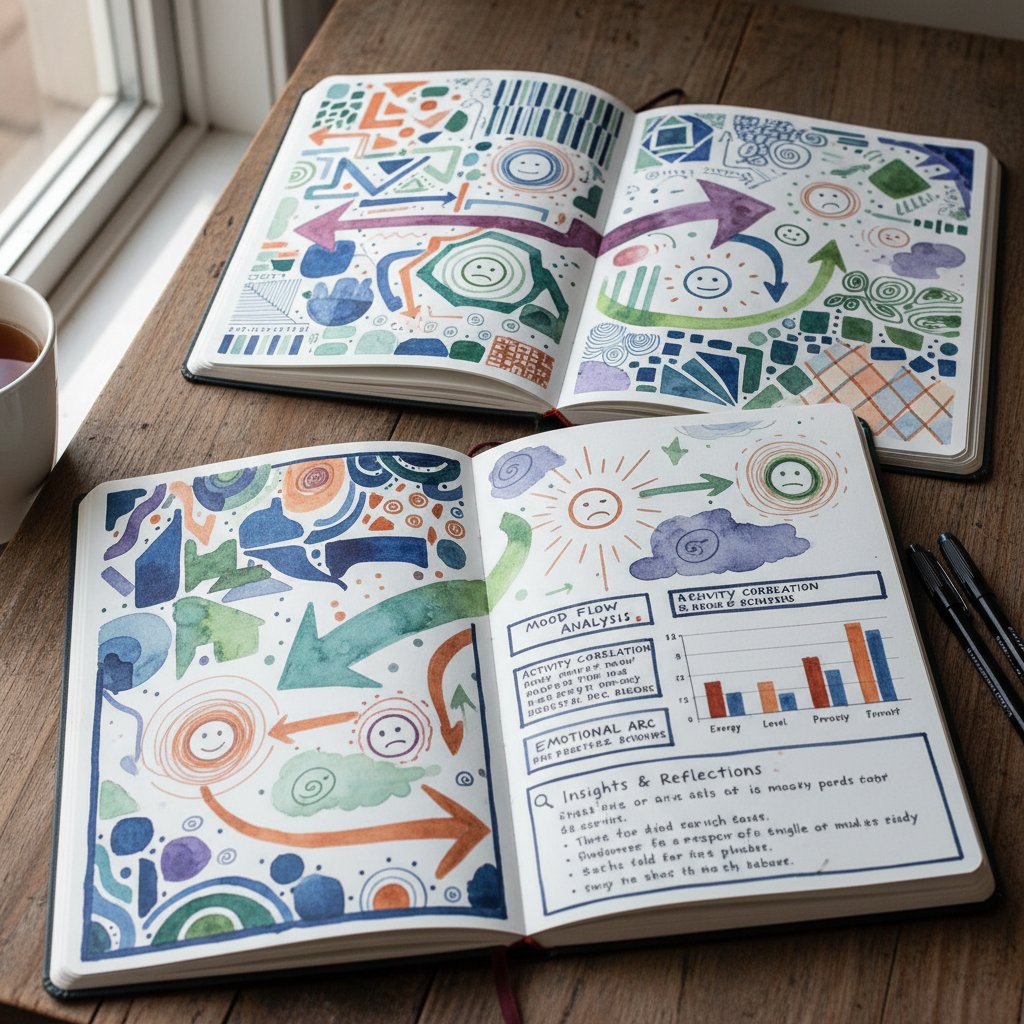
Journaling isn’t just about words—it’s data. By tracking emotional highs and lows, noting triggers, and mapping recurring scenarios, you start to see the hidden architecture of your psyche. Use color coding, mood icons, or even spreadsheets to visualize patterns. Over time, this emotional mapping exposes deep-seated habits and opens doors to real change.
Meta-cognition hacks: journaling to change your thinking
Techniques that help you observe your own thinking, like “thought tagging” (labeling thoughts as anxiety, judgment, curiosity), perspective shifting (writing from another person’s viewpoint), and challenging cognitive distortions. Example: After a stressful event, rewrite your narrative from a neutral observer’s stance. This interrupts automatic patterns and builds self-mastery.
Combining mindfulness and journaling for next-level insight
- Begin with a 3-minute mindfulness exercise (focus on breath, drop into body).
- Identify one core emotion before writing—name it, don’t judge it.
- Journal for 10–20 minutes using a prompt or free writing.
- Conclude with another brief mindfulness scan—notice shifts in mood or clarity.
- Review entries weekly for patterns and breakthroughs.
The dark side: when journaling backfires (and how to fix it)
Signs your journaling is making things worse
- You feel more anxious or stuck after writing.
- Entries spiral into relentless self-criticism.
- Patterns of rumination (rehashing the same story) dominate.
- You’re journaling to avoid action or real-world feedback.
- You ignore positive experiences, focusing only on problems.
- Your privacy is compromised, increasing stress.
How to recalibrate for healthy self-reflection
If writing leaves you more depleted than empowered, it’s time to pivot. Use solution-focused prompts. Set boundaries—limit venting sessions, and balance with gratitude or action plans. Seek feedback from a trusted friend or therapist. Digital platforms like mirrormind.ai offer structured support, guided prompts, and peer forums to keep journaling productive and safe.
Critical mistakes even experienced journalers make
- Chasing perfection rather than honesty.
- Getting lost in analysis, neglecting real-world action.
- Ignoring recurring themes—your patterns are the point.
- Relying solely on digital tools without reflection time.
- Allowing journaling to replace, rather than supplement, therapy or genuine connection.
- Hoarding insights without sharing or testing them.
- Failing to adapt techniques as needs evolve.
The tech revolution: AI, digital tools, and the future of self-awareness journaling
The rise of AI-powered journaling companions
The next frontier: AI-driven journaling tools that analyze emotional language, track progress, and suggest tailored prompts. These platforms—like mirrormind.ai—use natural language processing to reveal subtle mood patterns, nudging users toward deeper inquiry and growth. AI can’t replace your humanity, but it can shine a light on your hidden scripts.

Analog vs. digital: does the medium shape your self-awareness?
| Feature | Analog Journal | Digital Journal | AI Companion (e.g., mirrormind.ai) |
|---|---|---|---|
| Privacy | High | Moderate | Encrypted, variable |
| Pattern Recognition | Manual (slow) | Automated (logs) | Real-time, analytics |
| Accessibility | Physical only | Multiplatform | Cloud/mobile |
| Prompt Guidance | Self-directed | Template-based | Adaptive, personalized |
| Emotional Tracking | Subjective | Basic | Advanced, integrated |
Table 5: Feature comparison—analog journal vs. digital journal vs. AI companion. Source: Original analysis based on public platform documentation and user reviews.
What’s next: journaling and self-awareness in a hyperconnected world
In an ecosystem obsessed with outward sharing, reclaiming private, honest self-reflection is its own kind of rebellion. As Sam, a digital futurist, notes:
"In a world obsessed with sharing, private self-awareness is a radical act." — Sam, Futurist
The tools will keep evolving, but the need for daring introspection will always outpace the algorithm.
Journaling for leadership, activism, and beyond: unexpected applications
How leaders use journaling for powerful decision-making
From corporate CEOs to grassroots organizers, journaling is the secret weapon behind bold decisions and resilient mindsets. Leaders use self-awareness journaling to clarify values, rehearse tough conversations, and debrief from failure.
- Reflecting on role models and past decisions to refine judgment.
- Documenting emotional triggers before and after high-stakes interactions.
- Using gratitude and failure lists to maintain humility and perspective.
- Tracking personal growth in real-time, not just at annual reviews.
- Translating insights into action plans, not just self-affirmations.
Activists and changemakers: the role of self-awareness in social impact
For activists, journaling isn’t navel-gazing—it’s survival. Documenting experiences builds empathy and resilience, ensuring the work doesn’t devour the worker. Self-aware changemakers are less susceptible to burnout and more likely to sustain impact.

Other surprising fields where self-awareness journaling makes a difference
- Sports psychology: athletes log emotions to optimize performance and recovery.
- Addiction/recovery: tracking cravings and triggers supports sobriety.
- Creative arts: mapping thought patterns unlocks new artistic directions.
- Therapy: clients use journals to bridge sessions.
- Education: students reflect on learning habits, boosting academic outcomes.
- Healthcare: patients process chronic illness journeys.
- Parenting: caregivers reflect to break generational patterns.
Supplementary deep dives: what else you need to know
Journaling for self-awareness vs. other self-improvement techniques
Journaling isn’t a panacea, but it stands apart from other methods in its accessibility, adaptability, and potential for personalized insight. Unlike meditation (which centers on non-judgmental awareness), journaling externalizes thoughts for later analysis. Therapy provides expert guidance, while journaling fosters self-guided exploration. Coaching and self-help books offer frameworks, but journaling is your raw, unfiltered laboratory.
| Method | Effectiveness | Accessibility | Sustainability |
|---|---|---|---|
| Journaling | High | Very high | High |
| Meditation | High | High | Moderate |
| Therapy | Very high | Moderate | Moderate |
| Coaching | Moderate | Moderate | Low |
| Self-help Books | Moderate | High | Low |
Table 6: Comparative analysis of self-improvement methods. Source: Original analysis based on published studies and user reports.
How to spot pseudoscience in self-awareness advice
The self-help market is rife with empty promises. Here’s how to tell the real from the ridiculous:
- Claims “guaranteed” results without research citations.
- Overreliance on anecdotal evidence.
- Cherry-picking studies or using outdated research.
- Promoting “one-size-fits-all” solutions.
- Selling high-ticket miracle cures.
- Using vague, untestable language (“raise your vibration”).
- Dismissing skepticism or critical questions.
Building a community of self-aware journalers
Going it alone is optional. Online and offline journaling communities provide feedback, accountability, and inspiration. Share what feels right, learn from diverse perspectives, and consider platforms like mirrormind.ai forums for peer support. A trusted network turns solitary reflection into a collective evolution.
Key terms and concepts: the self-awareness journaling glossary
The ongoing process of recognizing and understanding your thoughts, emotions, and behaviors—beyond surface impressions. True self-awareness is grounded in honest, evidence-based reflection.
The structured (or semi-structured) practice of documenting thoughts, feelings, and experiences to deepen insight and drive intentional change.
Purposeful, non-judgmental attention to the present moment, often used before or after journaling to enhance awareness.
Systematic patterns of deviation from rational judgment. Recognizing cognitive biases through journaling can prevent self-sabotage and improve decision-making.
The act of thinking about your own thinking. In journaling, meta-cognition enables you to observe and rewire thought patterns.
Understanding these tools is the difference between aimless writing and meaningful transformation.
Your next move: actionable takeaways, resources, and reflection
Quick reference: the ultimate self-awareness journaling checklist
- Define your “why”—clarify motivation.
- Choose your medium (analog, digital, or hybrid).
- Schedule consistent journaling sessions.
- Use a mix of free writing and structured prompts.
- Map patterns and triggers in entries.
- Balance reflection with action—translate insights into next steps.
- Guard your privacy—physical journal or encrypted app.
- Seek feedback from a community or peer.
- Avoid perfectionism—focus on honesty.
- Check your tone—watch for rumination traps.
- Periodically revisit and reflect on past entries.
- Celebrate progress, not just “aha” moments.
Expect resistance, boredom, even discomfort. That’s how you know you’re getting somewhere.
Resources for going deeper
Recommended reading: “Opening Up by Writing It Down” by James Pennebaker, “The Artist’s Way” by Julia Cameron, “Insight” by Tasha Eurich. Explore digital tools and communities like mirrormind.ai for guided prompts and emotional pattern analysis.
Final call to reflection: are you ready to confront your real self?
Self-awareness isn’t an achievement—it’s an ongoing confrontation with your own complexity. Journaling is the flashlight and the map. The question isn’t whether the journey will be comfortable (it won’t), but whether you’re willing to see yourself, unfiltered, and do something about it. The real breakthrough? Choosing to look, day after day.

Sources
References cited in this article
- PMC, 2023(pmc.ncbi.nlm.nih.gov)
- People Development Magazine, 2024(peopledevelopmentmagazine.com)
- Day One App, 2024(dayoneapp.com)
- Cambridge Behaviour Change Journal, 2023(cambridge.org)
- Full Focus, 2023(fullfocus.co)
- Duke Health(dhwblog.dukehealth.org)
- Safer Society 2023(safersociety.org)
- Huntington Psych 2024(huntingtonpsych.com)
- Forbes 2023(forbes.com)
- Annual Reviews 2023(annualreviews.org)
- APA, 2024(apa.org)
- Sage Journals, 2023(journals.sagepub.com)
- Harvard Business Review(hbr.org)
- Stationery Snobs(stationerysnobs.com)
- Journal Therapy(journaltherapy.com)
- WriteDiary(writediary.com)
- Facing History(facinghistory.org)
- Zimbardo(zimbardo.com)
- Just Start Journaling(juststartjournaling.com)
- JournalPrompts.net(journalprompts.net)
- Greater Good Science Center(greatergood.berkeley.edu)
- Psychology Today(psychologytoday.com)
- Journal Junk Box(journaljunkbox.com)
- Medium(medium.com)
- Elevate Edit(elevateedit.com)
- Divuni(divuni.com)
- ResearchGate, 2024(researchgate.net)
- Frontiers in Education, 2024(frontiersin.org)
- Training Industry, 2024(trainingindustry.com)
- Partnership for Public Service, 2024(ourpublicservice.org)
- HR Katha(hrkatha.com)
- Creative Alliance(creativealliance.org.uk)
- Inklattice(inklattice.com)
- Prosper Liverpool(prosper.liverpool.ac.uk)
- LinkedIn(linkedin.com)
Unlock Your Inner Clarity
MirrorMind is your personalized AI journaling companion designed to help you achieve emotional clarity, mindfulness, and profound self-awareness. Through intuitive guided journaling, insightful emotional pattern analysis, and tailored mindfulness exercises, MirrorMind empowers you to explore your inner world, recognize emotional triggers, and cultivate healthier mental habits. Ideal for anyone seeking personal growth, emotional resilience, and deeper self-understanding, MirrorMind offers a private, reflective space to transform your emotional health and overall well-being.
Get startedReady to unlock your inner clarity?
Join thousands who have transformed their emotional well-being with MirrorMind
Frequently Asked Questions
What does the article say about how many people are truly self-aware?
According to a 2023 Forbes report cited in the article, only 10-15% of people are truly self-aware, and these individuals exhibit higher job satisfaction, leadership efficacy, and emotional intelligence.
What are the main negative consequences of low self-awareness mentioned in the article?
The article states that low self-awareness breeds impulsive decisions, broken relationships, ethical blind spots, feeds into groupthink, makes us vulnerable to manipulative algorithms, and keeps us stuck in cycles of stress and burnout.
Why does the article say self-awareness is difficult to achieve in the digital age?
The article explains that the digital world is engineered for distraction rather than introspection, and that an always-on culture breeds disconnection from our inner lives, especially when people are curating digital personas.
What does the article claim about the relationship between self-awareness and success?
The article states that research consistently links high self-awareness to better career trajectories, healthier relationships, and improved mental health outcomes, calling self-awareness a 'superpower' rather than a luxury.
From the Archive
Discover more topics from Reflective Journaling Companion

When Journaling to Boost Self-Awareness Becomes Harmful

How Journaling for Self-Awareness Actually Works

Journaling for Emotional Self-Awareness in an Age of Digital Noise

Journaling to Facilitate Deep Reflection in the Age of AI

Journaling for Deeper Self-Understanding: Moving Beyond Surface Reflection


